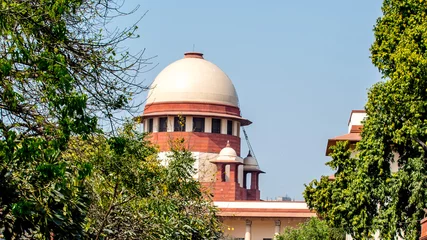
Use Of Abusive Or Vulgar Expletives Does Not Amount To Criminal Obscenity: Supreme Court
✍️ By Roojhal Jain📅 25 Jul 2026🔄 Updated 20 Oct 2026👤 For: All Legal Professionals📰 Source:
Bar and Bench👁 102 views
The Supreme Court has held that the mere use of abusive or vulgar expletives, however distasteful or uncivil, does not satisfy the legal threshold for the offence of obscenity under Section 294(b) IPC unless it appeals to prurient interests.
⚖️ Case Details
Mani v. State Represented by Inspector of Police
Supreme Court of India
Justice Sanjay Karol and Justice Vipul M. Pancholi
17 Jul 2026
2026 Bar&Bench (SC) / Criminal Appeal
Whether the utterance of vulgar and abusive expletives during a public altercation constitutes the offence of obscenity under Section 294(b) IPC.
The Supreme Court of India has clarified that the use of abusive or vulgar language, no matter how offensive or uncivil, does not by itself constitute the criminal offence of obscenity under Indian penal law. A Bench comprising Justice Sanjay Karol and Justice Vipul M. Pancholi held that for words to attract obscenity provisions, they must be lascivious, appeal to prurient interests, and have a tendency to deprave or corrupt those exposed to them.
Distinction Between Vulgarity and Legal Obscenity
The apex court emphasized that legal obscenity is not synonymous with mere vulgarity, abuse, or profanity. The Bench observed: "Use of mere swear words, profanities and vulgar expletives, however distasteful or uncivil they may be, cannot be equated with obscenity. Words which are merely vulgar or abusive may evoke a feeling of disgust, revulsion or shock, but that by itself does not make them obscene in law."
Mandatory Ingredients under Section 294(b) IPC
Examining the statutory requirements, the Court noted that to prove an offence under Section 294(b) of the Indian Penal Code (IPC), the prosecution must establish two crucial elements:
The utterance must meet the legal threshold of being lascivious or appealing to prurient interests.
The act or words must cause actual annoyance to others in a public place.
While the Court set aside the appellant's conviction for obscenity and criminal intimidation, it upheld his conviction for causing grievous hurt during the altercation.
📌 Held by the Court
Held that abusive or vulgar remarks, howsoever unpalatable, do not meet the legal threshold of obscenity under Section 294(b) IPC unless they appeal to prurient interests and cause public annoyance. The conviction for obscenity was set aside, while the conviction for causing grievous hurt was upheld.
⚡ Practical Impact
Reaffirms a high statutory threshold for criminalizing speech under obscenity laws, ensuring that verbal altercations involving swearing are not routinely prosecuted under Section 294(b) IPC without proof of prurient appeal.
👔 For Lawyers & Advocates
Critical ruling for criminal defense advocates dealing with charges under Section 294(b) IPC and defining the evidentiary requirements for public annoyance and obscenity.
🤖 Key Takeaway
Mere profanity or vulgar expletives during an altercation do not satisfy the legal definition of obscenity without prurient appeal and public annoyance.
About the author:Roojhal Jain, Legal Content Writer, Lexnomik
Roojhal Jain is a legal content writer at Lexnomik. He writes case updates, legal news and explainers that help legal professionals see what changed and why it matters. His work follows Lexnomik's editorial policy of checking every item aga…