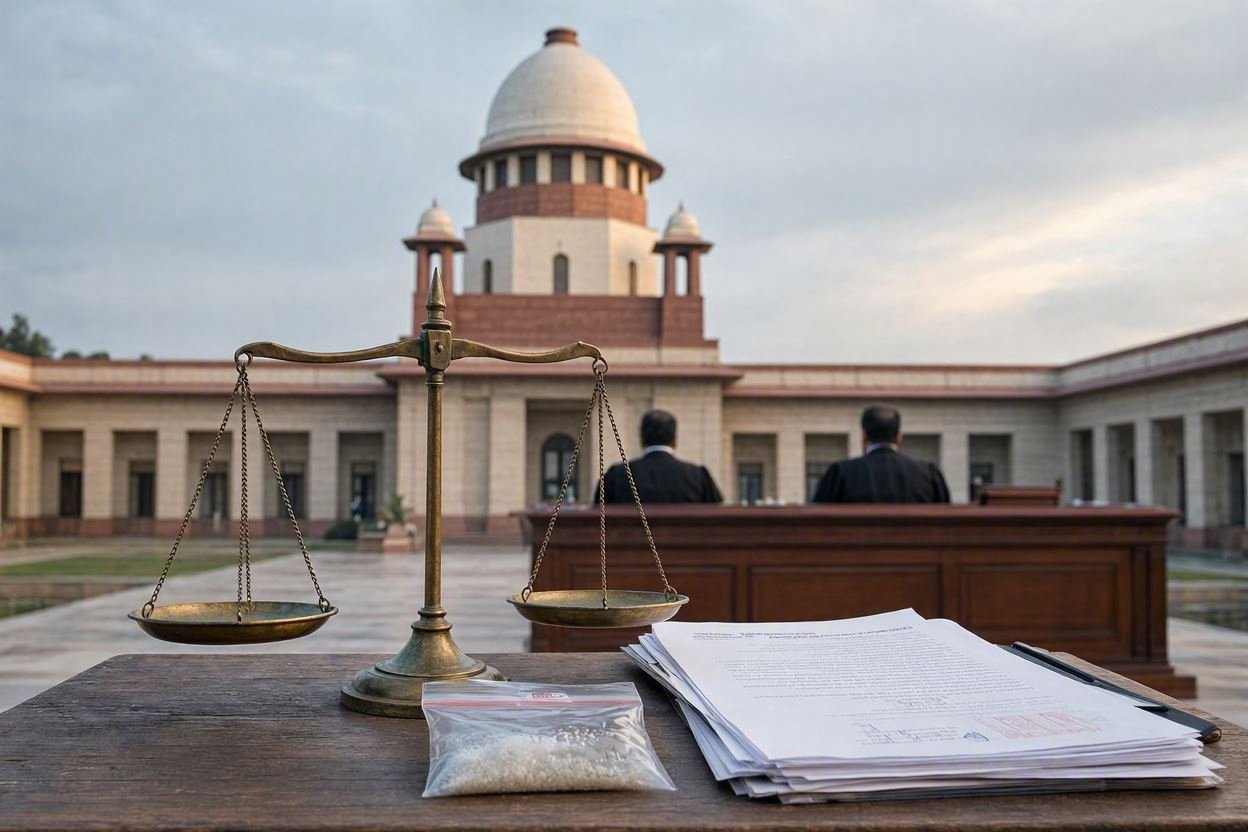
Supreme Court Introduces Stricter Bail Safeguards for Foreign Nationals in NDPS Cases
The Supreme Court of India has laid down a comprehensive framework aimed at strengthening the monitoring of foreign nationals accused under the Narcotic Drugs and Psychotropic Substances (NDPS) Act. The move comes amid growing concerns over instances where foreign accused persons allegedly secured bail through questionable sureties and later absconded, frustrating ongoing criminal proceedings.
A Bench of the Supreme Court observed that narcotics-related offences involving foreign nationals present unique challenges for investigating agencies and trial courts. While reiterating that the grant of bail remains a judicial determination based on established legal principles, the Court emphasized the need for additional safeguards to ensure that accused persons remain available to face trial.
The directions focus on enhancing verification mechanisms, strengthening oversight of sureties, and improving coordination among law enforcement authorities. The Court underscored that the objective is not to create an absolute bar against bail for foreign nationals but to ensure that the process is not misused.
The development follows concerns raised before the Court regarding cases where foreign nationals accused in commercial quantity narcotics offences allegedly disappeared after obtaining bail. The Court noted that such incidents undermine the administration of justice and create significant challenges for narcotics enforcement agencies.
As part of the framework, courts dealing with NDPS prosecutions involving foreign nationals may be required to undertake greater scrutiny of sureties, identity verification processes, and compliance with bail conditions. The Court also highlighted the importance of coordination between investigating agencies, immigration authorities, and other relevant government departments.
The ruling is expected to have a substantial impact on future NDPS bail proceedings involving foreign nationals. Legal experts note that the directions seek to strike a balance between protecting individual liberty and ensuring the effective prosecution of serious drug-related offences.
The judgment reinforces the judiciary's continuing focus on addressing procedural loopholes in narcotics prosecutions while preserving the integrity of the criminal justice system. Trial courts across the country are likely to apply heightened scrutiny in similar cases going forward.