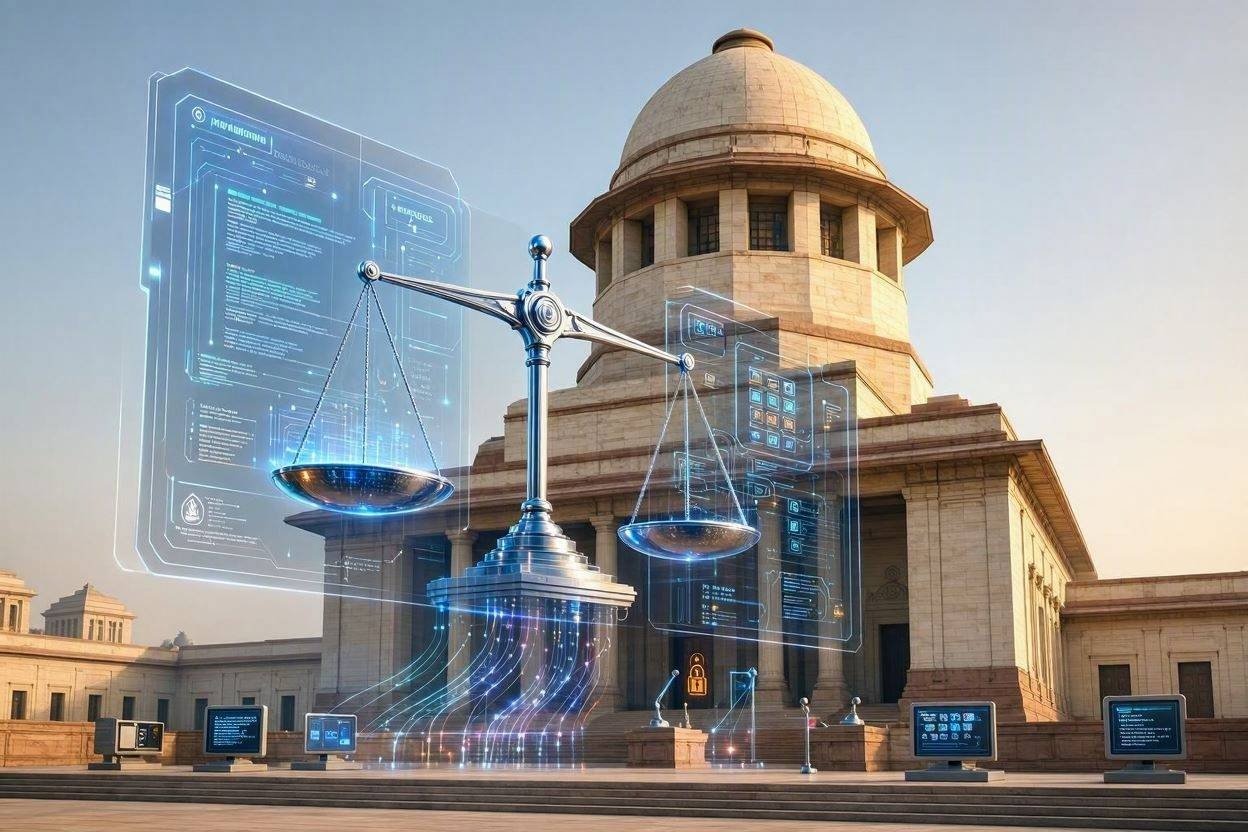
The Supreme Court of India’s July 2026 docket reflected an increasing judicial engagement with artificial intelligence and technology-related issues, underscoring the judiciary’s efforts to address both the opportunities and risks posed by rapidly evolving digital tools.
A key development came in Pooja Ramesh Singh v. Jammu and Kashmir Bank Ltd., where the Supreme Court examined the consequences of reliance on AI-generated fake or hallucinated legal citations. The Court set aside orders that had relied upon non-existent precedents and stressed that unchecked use of artificial intelligence could undermine the integrity of adjudication.
In its observations, the Court acknowledged that technology has long assisted judicial processes but emphasized that AI presents unique challenges because it can mimic reasoning and decision-making functions traditionally exercised by human actors. The Court warned that excessive dependence on AI without adequate safeguards could adversely affect legal research, advocacy, and judicial decision-making.
The judgment also highlighted the need for strict oversight and responsible deployment of AI within the justice system. According to the Court, human judgment must remain central to adjudication, and legal professionals must independently verify any AI-generated outputs before relying on them in proceedings.
The July docket also coincided with broader institutional efforts by the Supreme Court's Artificial Intelligence Committee. During the same period, stakeholders were invited to submit comments on the draft "Regulations for Use of Artificial Intelligence (AI) in Courts, 2026," reflecting the judiciary’s proactive approach toward establishing governance frameworks for AI deployment in courts.
Taken together, these developments indicate that Indian courts are increasingly confronting questions surrounding AI accountability, technological reliability, digital governance, and the future role of automation in legal systems. The July 2026 docket therefore marks an important milestone in the judiciary’s evolving approach to technology regulation and responsible AI adoption.