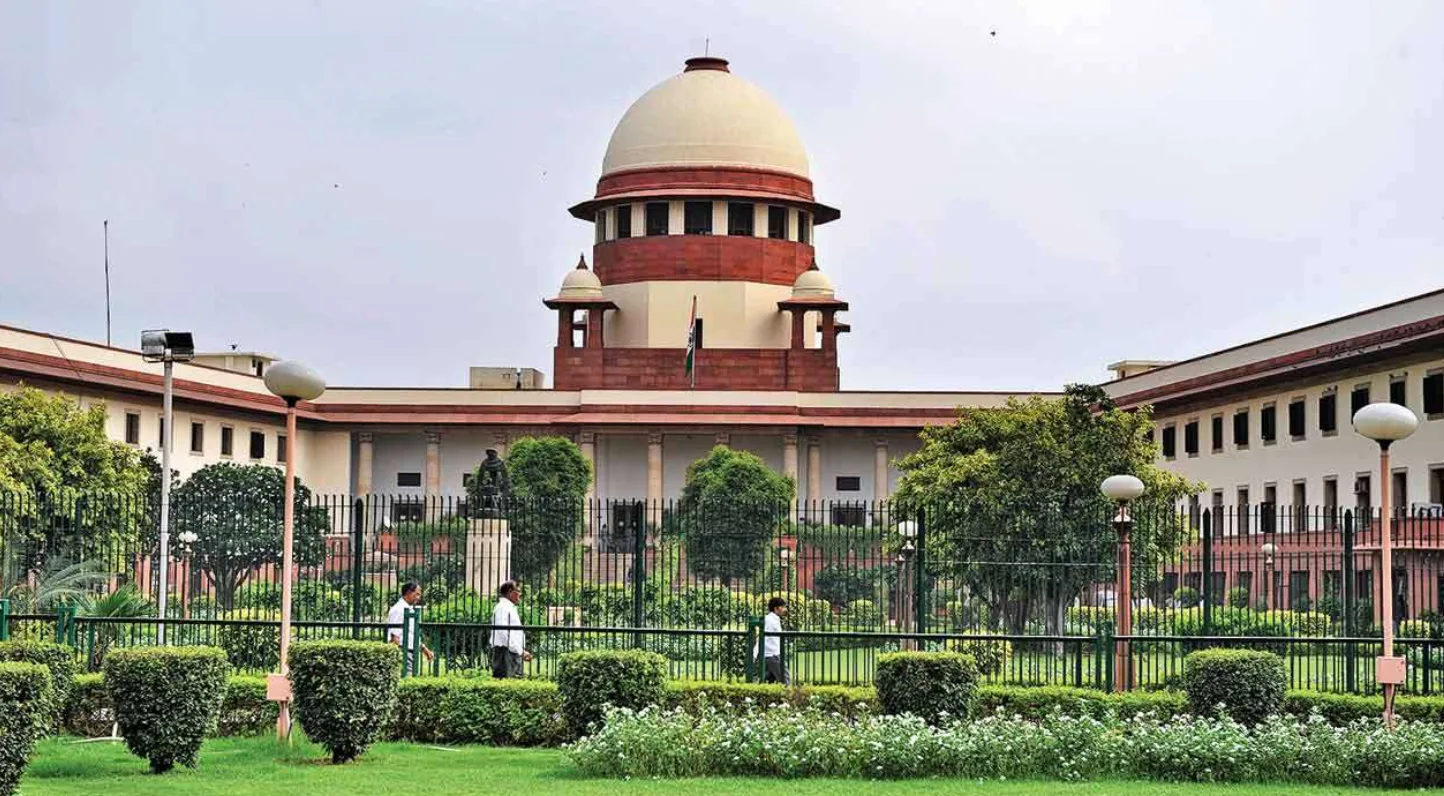
Supreme Court: Foreign Nationality Alone Cannot Bar Bail Under UAPA
New Delhi, October 27, 2026: The Supreme Court of India has clarified that a foreign national accused under the Unlawful Activities (Prevention) Act, 1967 (UAPA) cannot automatically be denied bail merely because they are not an Indian citizen. The prosecution must also establish that the accused entered India illegally or without authorisation to invoke the specific restriction under Section 43D(7) of the Act.
A Bench comprising Justice Aravind Kumar and Justice Vipul M. Pancholi delivered the judgment in Union of India v. Mohamed Rifas @ Mohamed Rigbas, dismissing the Union government's appeal and affirming the Madras High Court's decision restoring the accused's bail.
Background of the Case
The respondent was accused in a case involving alleged offences under the Indian Penal Code, the UAPA and the Arms Act. He was granted default bail on July 5, 2018, after the investigating agency failed to file the chargesheet within the prescribed statutory period.
Subsequently, allegations emerged that the respondent was a Sri Lankan national who had entered India in 2009 and overstayed his visa. The prosecution also alleged that he had obtained Indian identity documents. In July 2022, the Special Court cancelled his bail by invoking Section 43D(7) of the UAPA.
The Madras High Court set aside the cancellation order on December 12, 2023. The Union government challenged that decision before the Supreme Court.
Supreme Court's Interpretation of Section 43D(7)
The Supreme Court examined the requirements of Section 43D(7), which restricts the grant of bail to a person accused of a UAPA offence who is not an Indian citizen and has entered India unauthorisedly or illegally, subject to the provision's narrowly framed exception.
The Court explained that the statutory conditions must be read together. The prosecution must establish that the accused is charged with a UAPA offence, is not an Indian citizen, and initially entered India illegally or without authorisation. Foreign nationality by itself is insufficient to activate the restriction.
The Bench further clarified that entering India on a valid visa and subsequently overstaying it does not retrospectively make the initial entry illegal for the purposes of Section 43D(7). The prosecution had failed to place sufficient material on record to establish that the respondent's original entry into India was unauthorised or illegal.
Distinction Between Illegal Entry and Visa Overstay
The judgment distinguishes between an unlawful initial entry into India and a situation in which a person enters lawfully but subsequently remains after their visa expires. According to the Court's interpretation, the latter circumstance does not, by itself, satisfy the entry-related requirement under Section 43D(7).
The Court also recognised that the provision maintains a stringent threshold where its statutory requirements are established. Any grant of bail under the express exception in Section 43D(7) requires very exceptional circumstances and reasons recorded in writing.
Final Decision
The Supreme Court dismissed the Union government's appeal and affirmed the Madras High Court's order restoring the respondent's bail. The ruling clarifies the scope of Section 43D(7) while preserving the stringent statutory safeguards applicable to UAPA cases.
Case: Union of India v. Mohamed Rifas @ Mohamed Rigbas
Case reference: Criminal Appeal arising out of SLP (Criminal) No. 7177 of 2024
Decision date: October 27, 2026
Key provision: Section 43D(7), Unlawful Activities (Prevention) Act, 1967