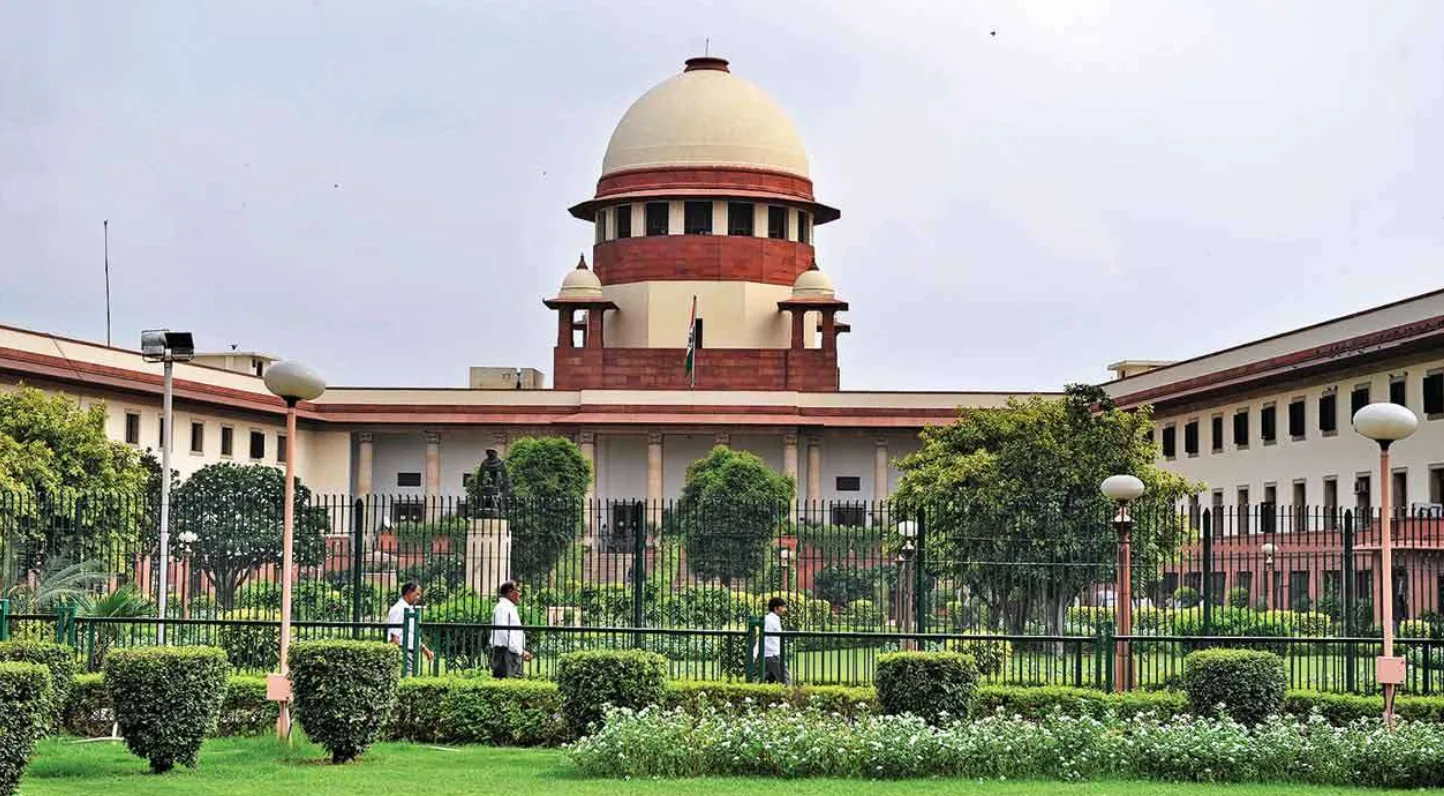
Supreme Court: Criminal Antecedents Alone Cannot Establish Guilt
The Supreme Court of India has granted regular bail to Mohammad Aarif Abdul Razak Samol, who was accused of procuring and storing 23 kilograms of cow meat in Gujarat, despite having five previous criminal antecedents involving similar allegations. The Court observed that previous criminal records cannot, by themselves, constitute definitive proof of guilt in a separate pending case.
A Bench comprising Justice Aravind Kumar and Justice Vipul M. Pancholi passed the order on October 14, 2026, in Mohammad Aarif Abdul Razak Samol v. State of Gujarat (Criminal Appeal No. 4922 of 2026, arising out of SLP (Crl.) No. 13280 of 2026).
Background of the Case
The prosecution alleged that the appellant had illegally procured 23 kilograms of cow meat, transported it in a Swift car and stored it in an open plot near his residence for retail sale. He was also alleged to have fled from the spot following a police raid.
He was booked under Sections 5(1), 6(b), 8(2), 8(4) and 10 of the Gujarat Animal Preservation Act, 2011, Section 325 of the Bharatiya Nyaya Sanhita, 2023, and Section 119 of the Gujarat Police Act. He was arrested on January 3, 2026, and had remained in custody for more than eight months.
State Opposed Bail Citing Five Criminal Antecedents
The State of Gujarat opposed the bail application, submitting that the trial was nearing completion and could conclude within approximately two months. It further argued that the appellant had five criminal antecedents involving similar allegations and might engage in similar activities if released.
On the other hand, the appellant's counsel argued that the prosecution case relied primarily on circumstantial evidence and presumptions. It was submitted that the appellant had not been arrested at the spot, the alleged meat was recovered from an open plot accessible to everyone, and the plot did not belong to him. The vehicle allegedly used for transportation also did not belong to the appellant.
Supreme Court's Observations
The Supreme Court considered that the appellant had remained in custody for more than eight months, the charge-sheet had already been filed and the trial had commenced. It also took note of the fact that the alleged meat had been recovered from an open plot near his residence.
The Bench observed that the prosecution must establish the appellant's alleged involvement in procuring and storing the meat by examining its witnesses. Rejecting the argument that previous criminal antecedents alone justified continued detention, the Court stated:
"Merely because the appellant's antecedents are there, would not be definitive proof of guilt in the present case."
The Court further clarified that it was not expressing any opinion on the merits of the case while considering the appellant's entitlement to regular bail.
Decision of the Supreme Court
Allowing the appeal, the Supreme Court set aside the impugned order and directed that the appellant be released on regular bail, subject to terms and conditions imposed by the jurisdictional court.
The decision highlights the distinction between considering criminal antecedents while assessing a bail application and treating previous allegations as proof of guilt in the present proceedings. The prosecution must establish the charges through evidence, and the accused's guilt remains to be determined at trial.
Case: Mohammad Aarif Abdul Razak Samol v. State of Gujarat
Case Number: Criminal Appeal No. 4922 of 2026 (arising out of SLP (Crl.) No. 13280 of 2026)
Bench: Justice Aravind Kumar and Justice Vipul M. Pancholi
Date of Order: October 14, 2026
Source: Supreme Court of India Order