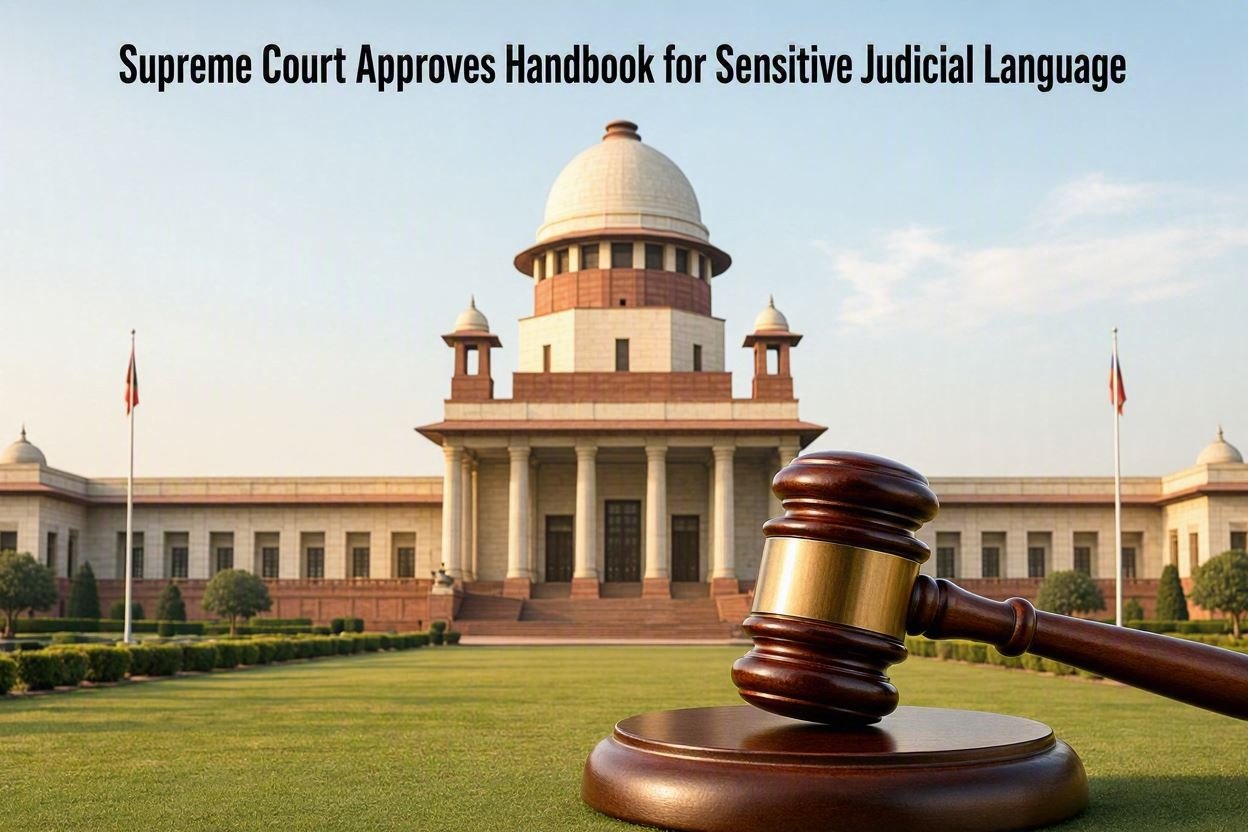
Supreme Court Approves Handbook for Sensitive Judicial Language
In a significant step toward promoting dignity, empathy, and fairness in the justice system, the Supreme Court of India has approved a comprehensive handbook aimed at encouraging sensitive judicial language and practices in cases involving sexual offences and other vulnerable individuals.
The handbook was prepared by an Expert Committee constituted by the National Judicial Academy (NJA) pursuant to directions issued by the Supreme Court in February 2026. The initiative emerged from a suo motu proceeding concerning a controversial judgment of the Allahabad High Court relating to offences against a minor girl.
A Bench comprising Chief Justice of India Surya Kant, Justice Joymalya Bagchi, and Justice V. Mohana approved the committee's report and directed that the handbook and its guidelines be treated as an authoritative resource for courts across the country.
The Court ordered that the handbook be uploaded on the websites of the Supreme Court, High Courts, and District Courts. It also directed its circulation to the National Judicial Academy, State Judicial Academies, National Law Universities, and law departments of universities for training and educational purposes.
Importantly, the Supreme Court instructed Directors of Prosecution and Directors General of Police in all States and Union Territories to issue necessary directions so that the language and principles contained in the handbook are followed while recording First Information Reports (FIRs), conducting investigations, and filing charge sheets.
The guidelines seek to eliminate victim-shaming expressions, gender stereotypes, prejudicial assumptions, and insensitive terminology from judicial proceedings. They emphasize that judicial language is not merely a matter of style but an essential component of access to justice, dignity, and fairness.
While preparing the framework, the Court had emphasized that the guidelines should reflect India's linguistic diversity, social realities, and cultural context. The Expert Committee was specifically asked to develop practical and accessible standards capable of being understood by victims, witnesses, and litigants from varied backgrounds.
The approval of the handbook marks a broader institutional effort to ensure that courts, police agencies, and prosecutors adopt language that respects the experiences of victims and vulnerable persons while maintaining impartiality and judicial rigor. Legal observers view the initiative as a major step toward strengthening victim-centric justice and improving public confidence in the justice delivery system.