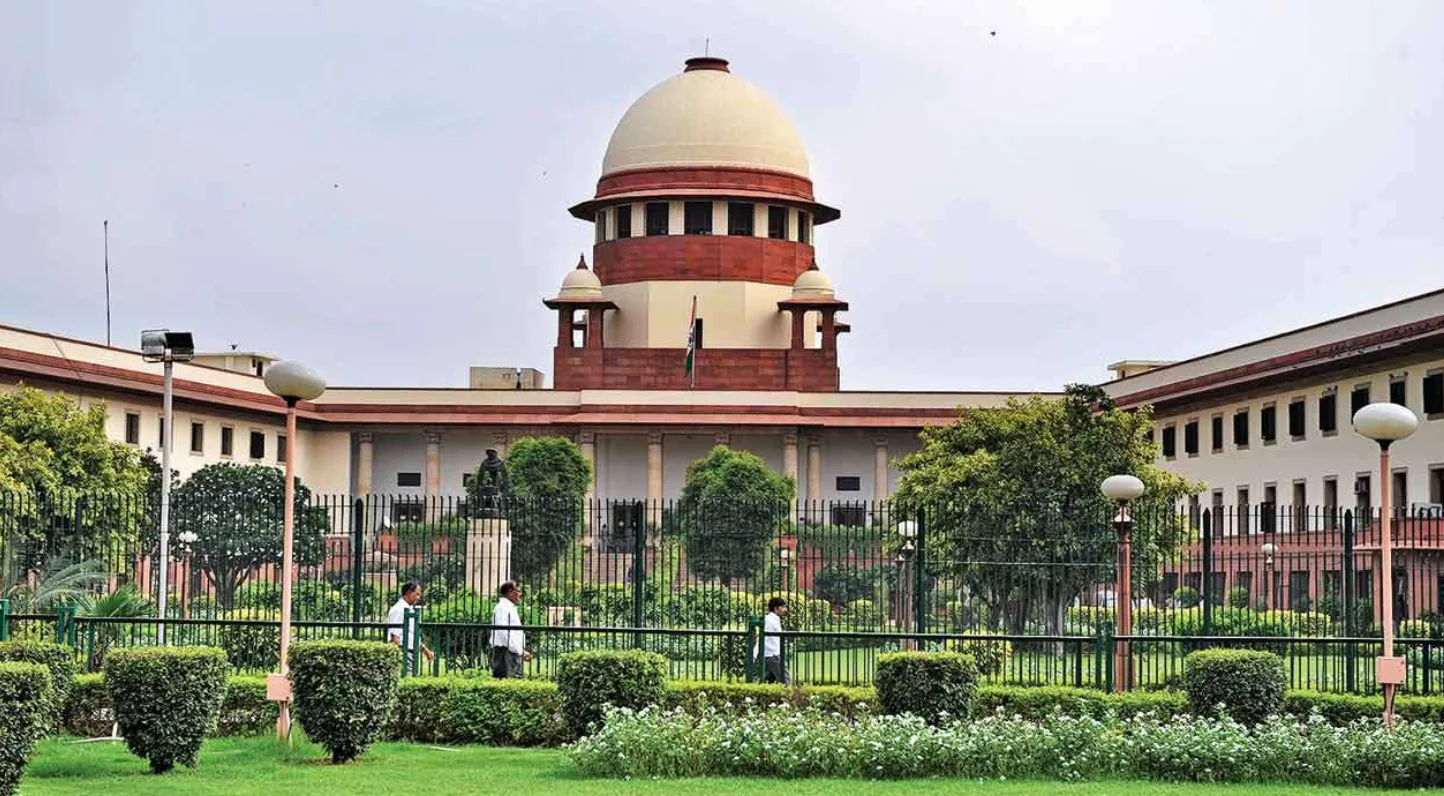
Supreme Court Rules 24-Hour Arrest Deadline Begins from Actual Detention, Not Formal Arrest
New Delhi, 5 November 2026: The Supreme Court of India has held that the constitutional 24-hour deadline for producing a detained person before a Magistrate begins from the moment their liberty is effectively curtailed, rather than from the time the investigating agency formally records the arrest.
A Bench comprising Justice Ujjal Bhuyan and Justice Atul S. Chandurkar ruled that authorities cannot create an artificial distinction between detention and formal arrest to exclude the period of pre-arrest custody from the constitutional deadline. The ruling interprets Article 22(2) of the Constitution and Section 56 of the Bharatiya Nagarik Suraksha Sanhita (BNSS), 2023.
Background of the Case
The matter arose from appeals filed by four persons accused in a narcotics-related case under the Narcotic Drugs and Psychotropic Substances (NDPS) Act. The accused were detained during a search and seizure operation at approximately 2 PM on 29 September 2025. However, their formal arrest was recorded only at around 11 AM on 30 September 2025.
The accused challenged the delay, arguing that the investigating agency had effectively kept them in custody without complying with the constitutional requirement of producing them before a Magistrate within 24 hours.
Supreme Court's Observations
The Bench rejected the argument that the 24-hour period begins only after the formal arrest is recorded. It clarified that the constitutional clock starts when a person's liberty is actually curtailed by the investigating authority.
The Court held that the only permissible exclusion while calculating the 24-hour period is the time reasonably necessary for travelling from the place of arrest to the Magistrate's court. Time spent on inquiry, investigation, search or seizure before formal arrest cannot be excluded.
The Bench emphasised that Article 22(2) does not permit the creation of an investigative buffer period during which a person's liberty can be restricted without judicial oversight. It also highlighted the importance of constitutional safeguards in preventing custodial violence and arbitrary detention.
Immediate Release and Directions to Magistrates
Applying these principles, the Court found that the accused should have been produced before the Magistrate by 2 PM on 30 September 2025. Their production at approximately 4:45 PM constituted a breach of Article 22(2). The Court consequently held their continued detention illegal and ordered their immediate release.
The Supreme Court further directed Magistrates to record the actual date and time from which a person's liberty was curtailed and independently verify compliance with the constitutional deadline. Magistrates must also examine whether the period of detention is reasonable, even when it falls within the 24-hour limit, and may refuse remand where detention is excessive.
Legal Significance
The ruling strengthens the constitutional protection of personal liberty and reinforces judicial supervision over police custody. It makes clear that investigating agencies cannot avoid constitutional safeguards merely by delaying the formal documentation of an arrest.
The judgment is particularly significant for criminal investigations involving search, seizure and prolonged questioning, as it places the actual circumstances of detention above the timing of paperwork.
Source: Supreme Court of India reporting, 5 November 2026; Bar & Bench and LiveLaw.