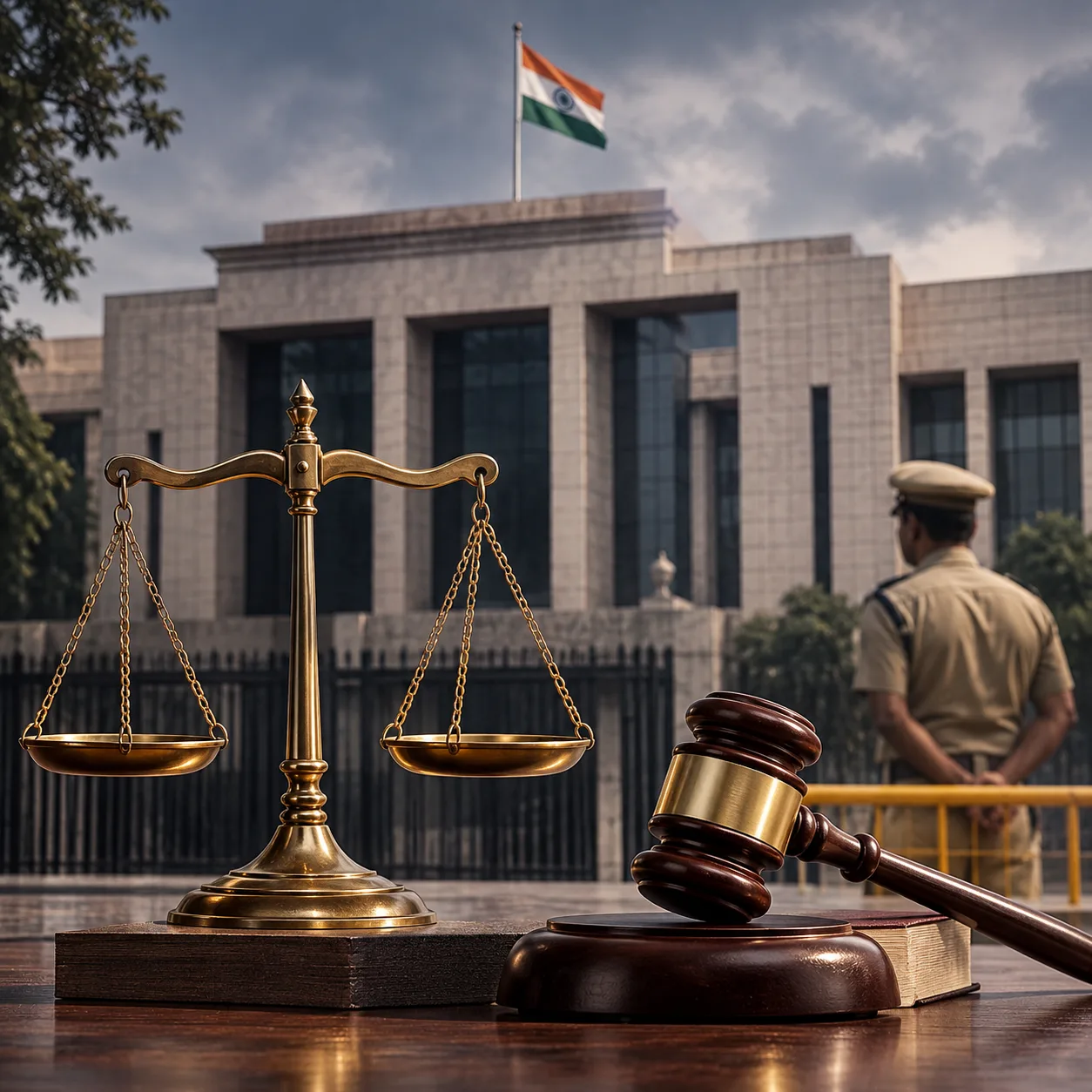
The Andhra Pradesh High Court has reiterated that police authorities cannot adjudicate, determine or settle civil disputes between private parties. The Court emphasised that disputes concerning property rights, ownership, possession and monetary claims must be resolved by competent civil courts or other legally authorised forums.
Background of the Case
A batch of eight writ petitions was heard by the Andhra Pradesh High Court at Amaravati before Justice Maheswara Rao Kuncheam. The petitioners alleged that police personnel had interfered in various civil disputes, including property disagreements and monetary transactions.
Some petitioners also complained of being repeatedly summoned to police stations, threatened with criminal proceedings and pressured to compromise or make payments to opposing parties. Several of these disputes were already pending before competent civil courts or other statutory authorities.
High Court's Observations
The Court observed that the primary responsibilities of the police include maintaining public order, preventing crime, protecting life and property, and taking lawful preventive measures wherever necessary. However, these responsibilities do not empower police officers to determine the civil rights of individuals.
The Court emphasised that judicial and quasi-judicial authorities exercise powers conferred upon them by the Constitution or relevant statutes. Police authorities cannot assume these adjudicatory functions or interfere with matters pending before competent legal forums.
The Court also considered the powers of an Executive Magistrate under Section 164 of the Bharatiya Nagarik Suraksha Sanhita (BNSS), 2023, concerning disputes likely to cause a breach of peace. It clarified that such preventive jurisdiction cannot be used to determine ownership rights or override proceedings before a competent civil court.
Directions Issued by the Court
The High Court directed police authorities not to interfere in, adjudicate, determine or settle the civil rights of parties without lawful authority.
It further instructed police personnel to strictly comply with the guidelines issued by the Director General of Police, Andhra Pradesh, through Communication No. 76/DGP's Peshi/2025 dated 24 October 2025.
The Court clarified that parties remain free to pursue appropriate remedies before competent civil courts or other legally authorised forums.
Importantly, the ruling does not prevent police authorities from taking lawful action where a cognizable offence is disclosed. Police may investigate such offences and proceed in accordance with law.
Legal Significance
The ruling reinforces the distinction between police functions and judicial powers. It makes clear that police machinery cannot be used to compel settlements, recover private dues or determine civil rights outside the procedure established by law.
The judgment also highlights the importance of approaching the appropriate legal forum for resolving disputes rather than seeking unauthorised intervention from police authorities.
Conclusion
The Andhra Pradesh High Court's decision serves as an important reminder that police officers must exercise their powers within the limits prescribed by law. While police authorities remain responsible for preventing and investigating criminal offences, the adjudication of civil rights belongs to competent courts and legally authorised forums.
Case: Muhamed Saeed Sultana Begum and Others v. State of Andhra Pradesh and Others
Court: Andhra Pradesh High Court
Judge: Justice Maheswara Rao Kuncheam
Date of Judgment: 4 November 2026
Case Number: W.P. No. 24281 of 2026 and connected petitions