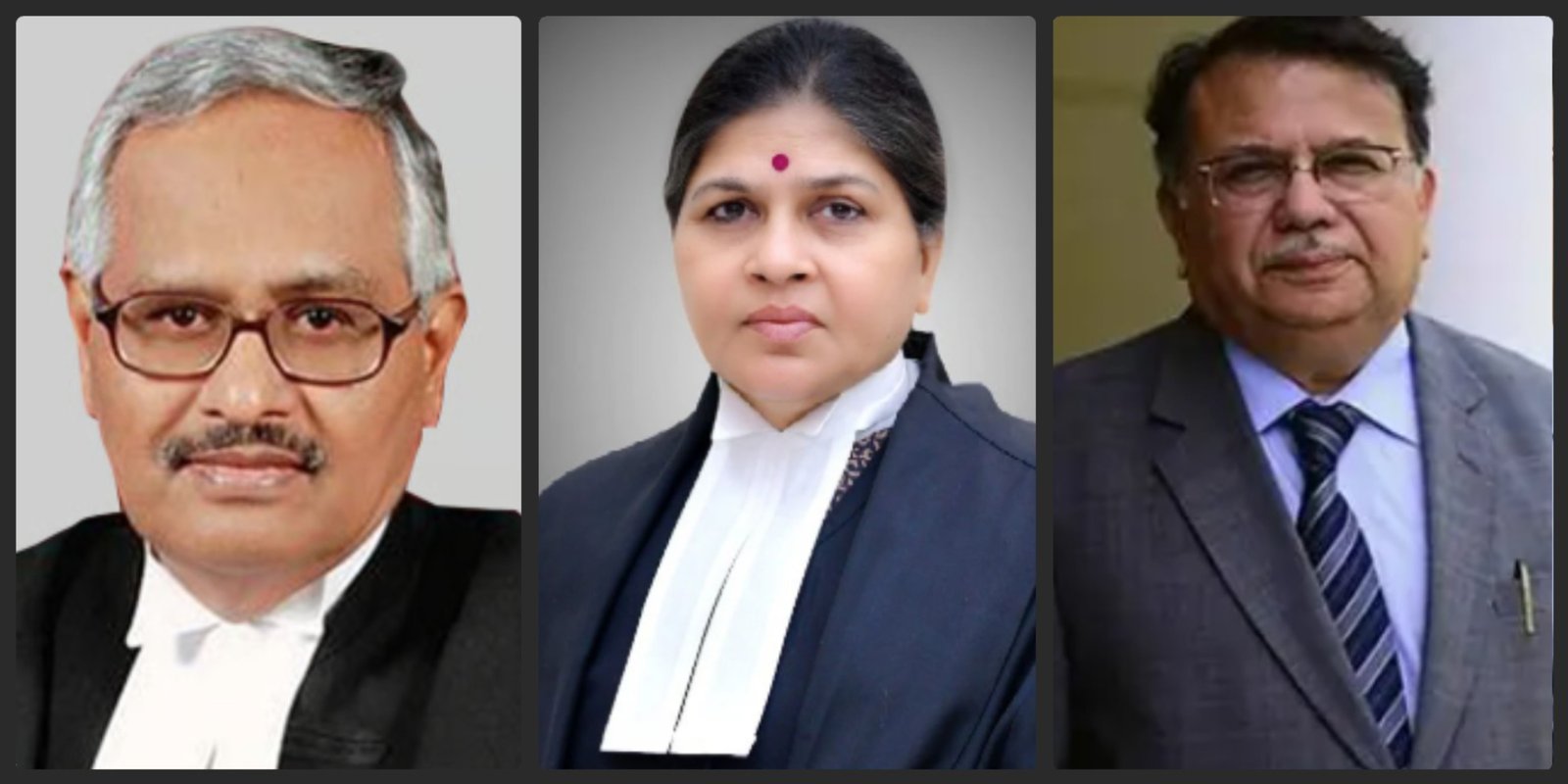
Former Supreme Court judge Justice R.V. Raveendran has voiced strong opposition to former Supreme Court judge Justice Rohinton F. Nariman's recent proposal to introduce a full-fledged appeal against domestic arbitral awards on both facts and law.
Speaking at a panel discussion during the concluding session of GHAC Arbitration Week 2026 in Gandhinagar, Justice Raveendran said he was "shocked" by the suggestion, emphasizing that it would defeat the core objective of arbitration—finality and speedy dispute resolution.
Justice Nariman had earlier proposed a reform under which parties could challenge domestic arbitral awards before a Division Bench of a High Court through a comprehensive appeal covering both factual and legal issues. He argued that modern commercial disputes require not only efficiency but also accuracy, and that erroneous awards should not escape judicial scrutiny.
Responding to the proposal, Justice Raveendran stated that expanding appellate review would blur the distinction between arbitration and traditional litigation. According to him, arbitration derives its value from minimizing prolonged judicial intervention and providing finality to commercial disputes.
"If you have a first appeal, then why have an arbitration? The entire purpose of arbitration is to have finality," Justice Raveendran remarked.
He further expressed concern about inconsistencies in Supreme Court arbitration jurisprudence, noting that different benches often adopt varying interpretations of legal principles governing arbitral awards. Such fluctuations, he warned, generate uncertainty for lower courts, arbitral tribunals, and commercial parties.
Justice Raveendran particularly highlighted the expanding application of the "patent illegality" doctrine as a ground for setting aside arbitral awards. He observed that repeated shifts in judicial standards create confusion and unpredictability in arbitration law.
At the same time, he noted that arbitrators themselves must improve the quality of awards by adhering to contractual terms, considering material evidence, and providing well-reasoned decisions.
The discussion formed part of a broader debate on the future of India's arbitration framework. Gujarat High Court Chief Justice Sunita Agarwal also suggested reforms, including greater reliance on arbitral institutions for appointments and restructuring challenge mechanisms under the Arbitration and Conciliation Act, 1996.
The exchange between Justices Nariman and Raveendran highlights a growing debate within India's arbitration community over balancing finality, efficiency, and accuracy in arbitral adjudication as the country seeks to strengthen its position as a preferred arbitration hub.