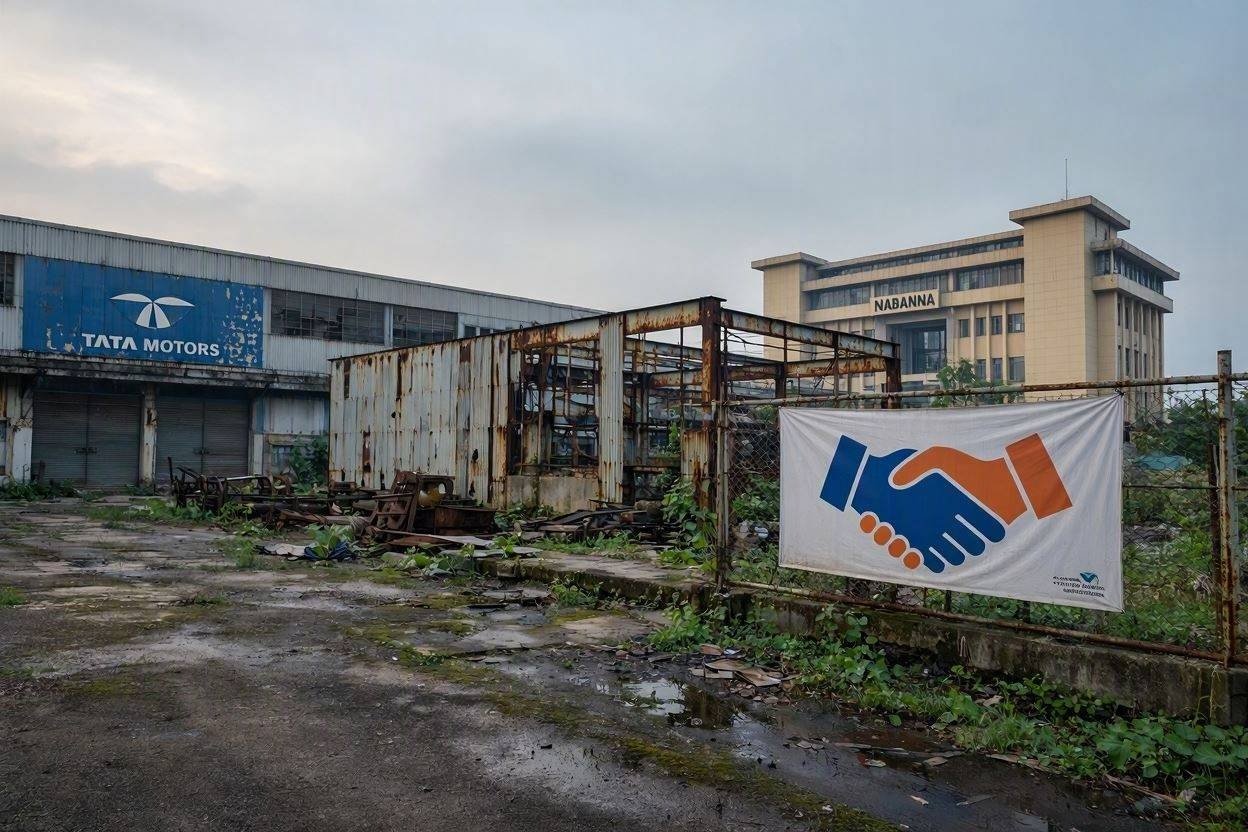
The West Bengal Government has begun negotiations with Tata Motors and the Tata Group to explore an out-of-court settlement in the long-running Singur compensation dispute, marking a significant development in one of India's most prominent industrial and legal controversies.
The discussions come after the Calcutta High Court declined to grant an unconditional stay on an arbitral award directing the West Bengal Industrial Development Corporation (WBIDC) to pay Tata Motors ₹765.78 crore along with annual interest. The award relates to losses allegedly suffered by Tata Motors after abandoning its Nano manufacturing project in Singur in 2008.
According to reports, senior officials from the state's Commerce and Industry Department recently met representatives of Tata Motors in Mumbai to discuss the possibility of resolving the matter without further litigation. The move is aimed at reducing prolonged legal uncertainty while rebuilding industrial relations between the state government and the Tata Group.
The Singur dispute traces its origins to the acquisition of approximately 997 acres of agricultural land for Tata Motors' Nano car project. Following widespread protests and political opposition, the company relocated the project to Gujarat in 2008. In 2016, the Supreme Court declared the land acquisition invalid and ordered the return of land to farmers.
Subsequently, Tata Motors initiated arbitration proceedings seeking compensation for investments and losses incurred due to the project's abandonment. In October 2023, an arbitral tribunal awarded the company ₹765.78 crore plus interest. The award has since been challenged by WBIDC before the Calcutta High Court.
The latest settlement discussions indicate a possible effort by the state government to bring closure to the dispute while simultaneously encouraging renewed industrial engagement and investment by the Tata Group in West Bengal.
If successful, the negotiations could conclude a legal battle that has shaped discussions around land acquisition, industrial development, arbitration, and investor confidence in India for nearly two decades.