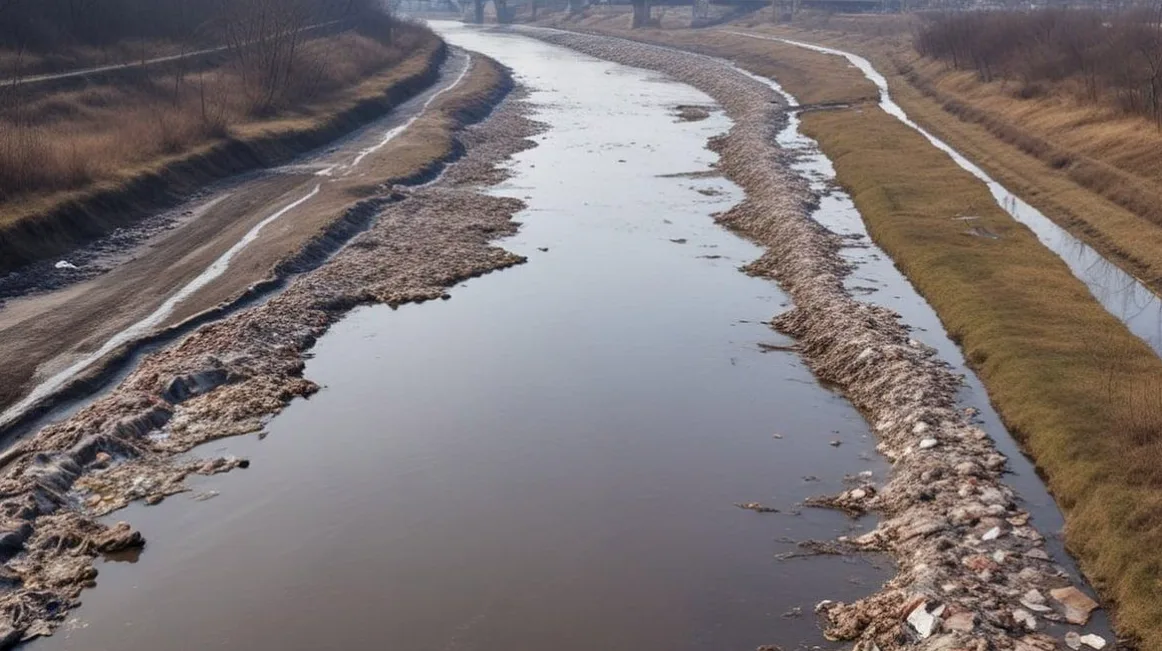
New Delhi, 26 October 2026: The Supreme Court of India has warned the Rajasthan government that it may order a Central Bureau of Investigation (CBI) probe into alleged illegal mining and the regularisation of mining leases along the Jojari-Luni-Bandi river system. The Court questioned the State's handling of mining violations and its compliance with earlier directions aimed at protecting the river ecosystem.
A Bench comprising Justice Vikram Nath and Justice Sandeep Mehta was hearing suo motu proceedings concerning pollution and environmental degradation affecting the Jojari, Luni and Bandi rivers in Rajasthan. The proceedings concern the environmental and public health consequences of river contamination affecting approximately 20 lakh people.
Supreme Court Questions Regularisation of Mining Leases
During the hearing, the Bench questioned why mining areas in which illegal activities had reportedly been detected were subsequently regularised through mining leases. The Court was dissatisfied with the State's explanation that cases had been registered against illegal mining, observing that registering cases did not adequately address the subsequent regularisation of the disputed areas.
Justice Sandeep Mehta cautioned that the Court could direct a CBI investigation if the State failed to take corrective action. The Bench raised concerns about the conduct of officials and the possible consequences of permitting mining activities in areas previously identified for illegal extraction.
The Court also questioned how the natural flow of rivers could be maintained if contiguous stretches along their courses were allocated for mining. It sought a clear explanation of the mining activities, the leases granted and the steps taken by the authorities to prevent further environmental damage.
Concerns Over River Boundaries and Flood Lines
The Bench also examined concerns about the interpretation of earlier judicial directions concerning river corridors and the determination of High Flood Lines. It questioned the use of dry-season river flow measurements to define the river's boundaries, emphasising the need to account for flood conditions.
The Court referred to discrepancies concerning the recorded width of the Luni River near Balotra, where the reported river-flow width was significantly narrower than the span of a bridge crossing it. The observations highlighted concerns about whether the river's actual flood corridor was being adequately recognised.
The Court accepted the recommendation that the State protect the entire recorded river corridor, applying the wider boundary where the records of the Revenue Department and Water Resources Department differ.
State Asked to Propose Measures for River Restoration
The Court also directed Rajasthan to return with a practical financial proposal for establishing Common Effluent Treatment Plants (CETPs) equipped with Zero Liquid Discharge (ZLD) technology. These facilities are intended to help prevent untreated industrial effluents from contaminating the river system.
The Bench indicated that the State would have to contribute financially towards the restoration effort rather than placing the entire burden on industries and municipal bodies. Industrial units would also be expected to contribute to the treatment infrastructure.
The Court further warned that it could examine pollution-related concerns in the Sanganer industrial area if Rajasthan failed to submit an acceptable proposal. The hearing report noted that the State's affidavit indicated that a substantial proportion of industries in that area were operating without no-objection certificates.
Environmental and Legal Significance
The proceedings highlight the responsibilities of State authorities in preventing environmental degradation, regulating mining activities and enforcing pollution-control requirements. They also raise questions about administrative accountability where earlier judicial directions have not resulted in adequate corrective measures.
The matter engages principles of environmental protection, sustainable development and the polluter-pays principle. The Court's demand for a practical restoration plan underscores the importance of effective enforcement and coordination among government departments and industrial operators.
The warning of a possible CBI investigation is not itself an order directing such an investigation, nor does it establish criminal liability against any individual. The matter remains pending before the Supreme Court.
The case, titled In Re: 2 Million Lives At Risk, Contamination in Jojari River, Rajasthan, is registered as Suo Motu Writ Petition (Civil) No. 8 of 2025. The next hearing was scheduled for 27 November 2026.
Source: LiveLaw, 26 October 2026.