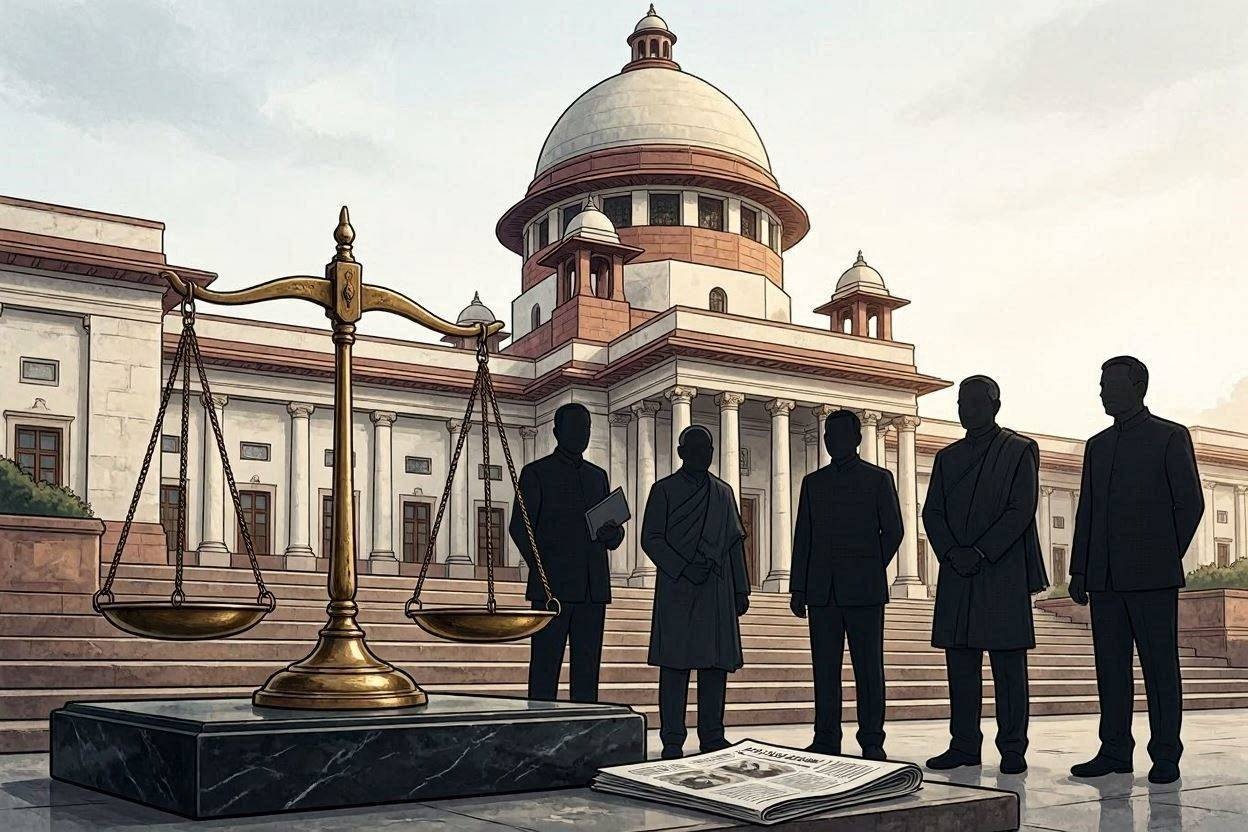
The Supreme Court of India has raised serious concerns regarding the disparities in post-retirement benefits and compensation provided to former Chief Justices and judges of various High Courts across the country. Observing that the benefits currently available differ significantly from one state to another, the Court emphasized the need for a uniform national framework.
A bench of the Supreme Court noted that retired High Court judges perform constitutional functions during their tenure and therefore deserve fair and consistent treatment after retirement. The Court reportedly described the existing compensation structure as inadequate and lacking uniformity.
During the proceedings, the Court highlighted that some states provide better facilities and financial support to retired judges, while others offer comparatively limited benefits. Such variations, the bench observed, create inequality among individuals who have served in the same constitutional office.
To address this issue, the Supreme Court asked the Union Government to constitute an appropriate committee for examining the matter and formulating pan-India guidelines governing post-retirement benefits for former High Court judges.
The proposed framework is expected to address concerns relating to monetary compensation, facilities, and other retirement-related benefits, ensuring that former judges are treated consistently regardless of the state in which they served.
The development is significant in the broader context of judicial independence and institutional dignity. Adequate retirement benefits are often viewed as an important safeguard that helps preserve the independence of constitutional office holders and recognizes their public service.
The matter is likely to have far-reaching implications for judicial administration and may eventually lead to standardized retirement benefits for all retired High Court judges across India.