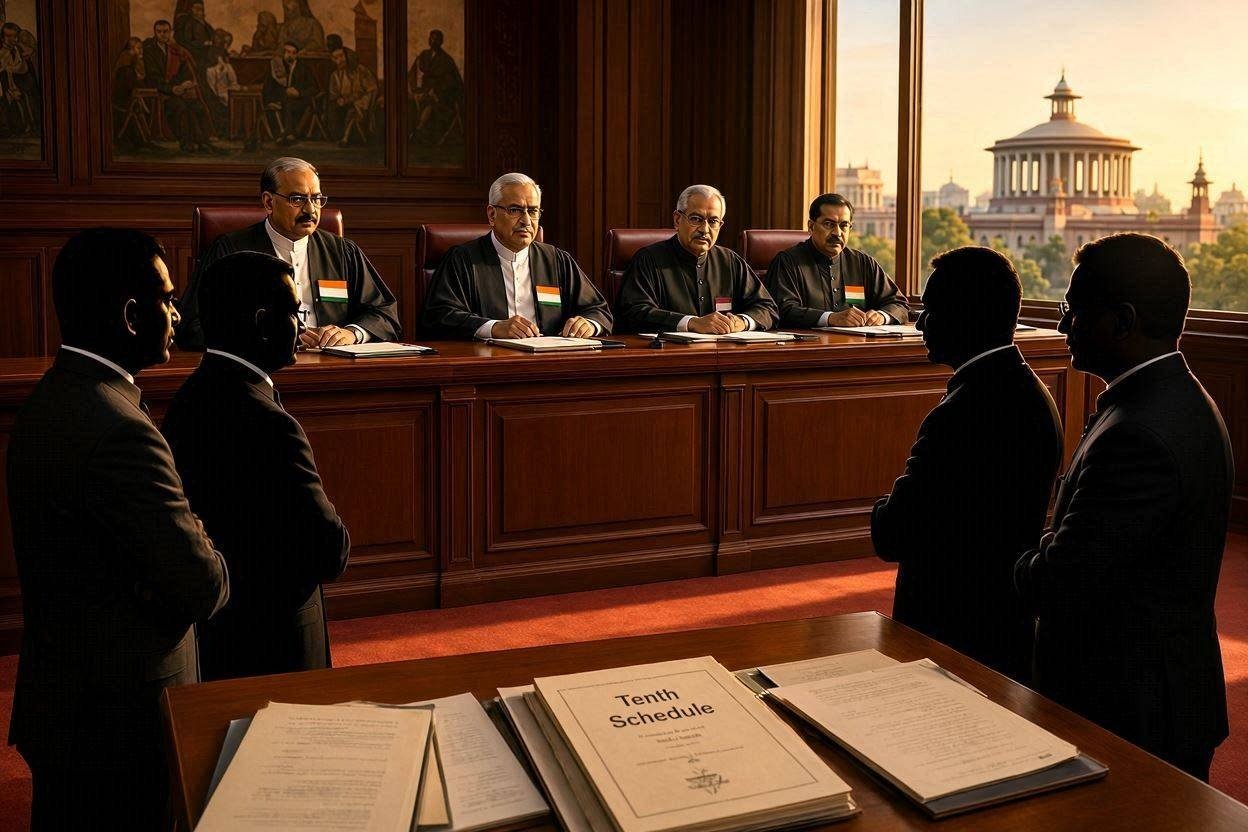
The Supreme Court has agreed to examine the legality of the merger of six Shiv Sena (Uddhav Balasaheb Thackeray) MPs with the Eknath Shinde-led Shiv Sena faction and has sought responses from the Lok Sabha Speaker's office and other respondents.
The petition was filed by the Shiv Sena (UBT), challenging Lok Sabha Speaker Om Birla's decision to recognise the merger of six MPs into the Shinde-led faction. According to the petitioner, the Speaker's recognition of the merger violates constitutional principles and undermines the safeguards embedded in India's anti-defection framework.
The dispute stems from the Speaker's approval of the merger shortly before the Monsoon Session of Parliament. Following the approval, the strength of the Uddhav Thackeray-led faction in the Lok Sabha reportedly reduced significantly, while the Shinde-led faction's parliamentary strength increased.
Senior counsel appearing for the petitioners argued that the matter raises wider constitutional concerns regarding the interpretation and application of the Tenth Schedule of the Constitution. The petition contends that legislators cannot independently engineer a merger without satisfying the constitutional requirements governing party mergers and defections.
During the hearing, the Supreme Court issued notices to the Speaker's office, the Lok Sabha Secretariat, and the concerned MPs. However, the Court declined to grant an interim stay on the Speaker's decision at this stage and indicated that it would hear the matter further after receiving responses from the respondents.
The case is expected to have significant implications for the interpretation of anti-defection provisions, the powers of the Speaker in recognising legislative mergers, and the broader framework governing political party splits and realignments.
The litigation also forms part of the continuing legal and political disputes arising from the split within the Shiv Sena, which has generated multiple proceedings before constitutional authorities and courts in recent years.