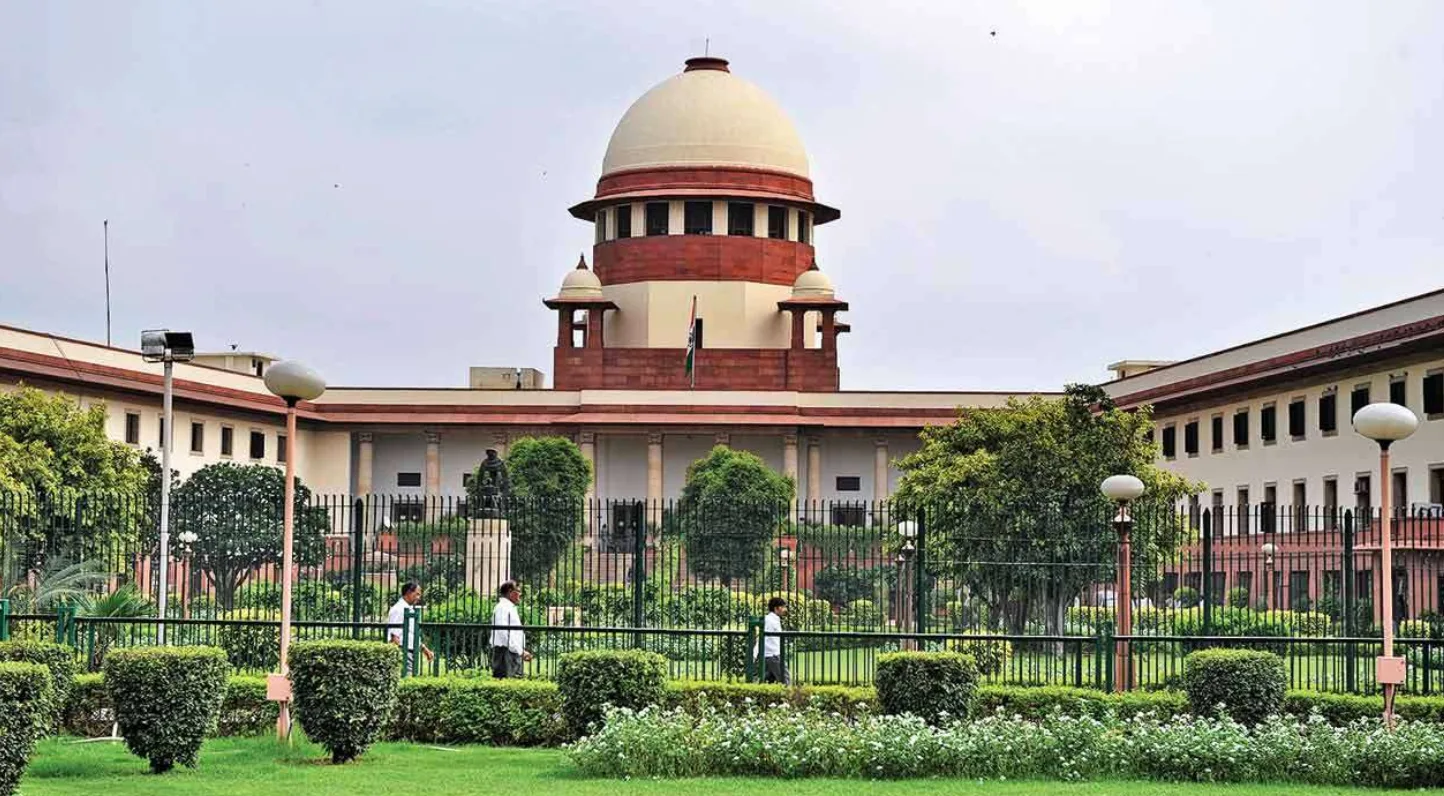
Supreme Court: Delay Condonation Must Be Assessed on Cumulative Circumstances, Not Isolated Reasons
New Delhi, November 21, 2026: The Supreme Court of India has held that applications seeking condonation of delay must be evaluated by considering all relevant circumstances cumulatively rather than examining individual explanations in isolation. The ruling came in Delhi Development Authority v. Sudarshan Manjhi & Ors., where the Court condoned a delay of 95 days in filing a revision petition before the National Consumer Disputes Redressal Commission (NCDRC).
Background of the Case
The dispute originated from the allotment of a residential flat to Smt. Bachhi Devi under the Delhi Development Authority's Expandable Housing Scheme, 1996. Following the cancellation of the allotment, a consumer complaint was filed. Although the District Consumer Forum dismissed the complaint, the Delhi State Consumer Commission subsequently allowed the allottee's appeal and directed the DDA to provide an alternative flat.
Challenging this decision, the DDA approached the NCDRC through a revision petition filed with a reported delay of 512 days. After excluding the period covered by the Supreme Court's COVID-19 limitation extension orders, the remaining delay was calculated at 95 days. The DDA attributed this delay to administrative approvals, a change of panel counsel and the procurement of a certified copy of the order.
The NCDRC rejected the application for condonation of delay, holding that sufficient cause had not been established. The Delhi High Court subsequently upheld that decision, prompting the DDA to approach the Supreme Court.
Supreme Court's Observations
A Bench comprising Justice Vikram Nath and Justice Aparesh Kumar Singh considered whether the NCDRC and the High Court had correctly assessed the explanation offered for the delay.
The Court referred to established principles laid down in Collector, Land Acquisition, Anantnag v. Mst. Katiji (1987) and N. Balakrishnan v. M. Krishnamurthy (1998). It reiterated that the expression "sufficient cause" should receive a liberal interpretation to advance substantial justice, while ensuring that the requirement is not rendered meaningless.
The Bench observed that administrative procedures, changes in legal representation and the process of obtaining certified copies cannot automatically justify every delay. However, such circumstances must be evaluated collectively instead of being rejected individually.
The Court also noted that although the DDA should have exercised greater diligence, there was no material indicating that the delay was deliberate or intended to secure an undue advantage. The differing conclusions reached by the District Forum and the State Commission further supported allowing the dispute to be examined on merits.
Final Decision
The Supreme Court allowed the appeal and set aside the orders passed by the Delhi High Court and the NCDRC. It condoned the delay in filing Revision Petition No. 1621 of 2022 and restored the matter before the NCDRC for consideration on merits after hearing the parties.
The Court clarified that it had not expressed any opinion on the merits of the underlying consumer dispute and that all contentions of the parties remained open.
Legal Significance
The judgment reinforces the principle that applications for condonation of delay require a pragmatic and justice-oriented assessment. Courts must consider the overall circumstances, the bona fides of the explanation and whether the delay was deliberate, rather than mechanically rejecting applications based on isolated procedural shortcomings.
Case: Delhi Development Authority v. Sudarshan Manjhi & Ors.
Citation: 2026 INSC 1254
Decision Date: November 20, 2026
Bench: Justice Vikram Nath and Justice Aparesh Kumar Singh