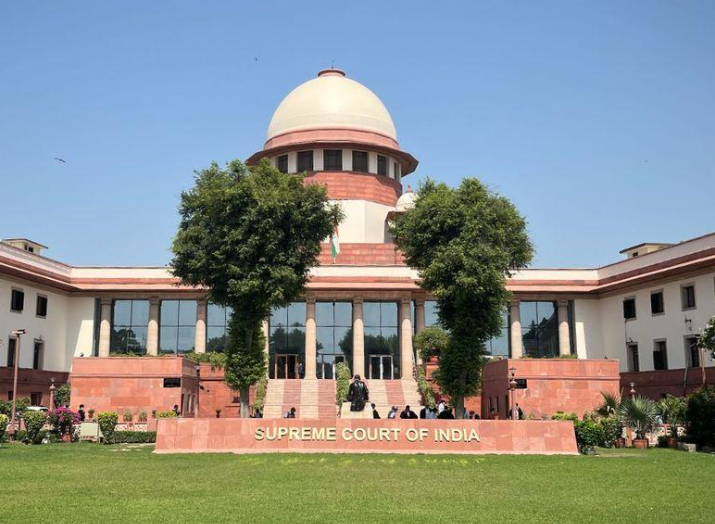
Supreme Court Pulls Up Centre and FSSAI Over Delay in Front-of-Pack Warning Labels
The Supreme Court of India has expressed strong displeasure over the prolonged delay in implementing Front-of-Pack Warning Labels (FOPWL) on packaged food products containing high levels of sugar, salt, and saturated fats. A Bench comprising Justice J.B. Pardiwala and Justice K. Vinod Chandran questioned the Centre and the Food Safety and Standards Authority of India (FSSAI) on their failure to act despite earlier judicial directions.
The matter arose during the hearing of a Public Interest Litigation filed by Kerala-based non-profit organisation 3S and Our Health Society, which seeks mandatory warning labels on packaged food products. The petition argues that consumers should be able to identify unhealthy products instantly through clear front-facing warnings rather than relying solely on nutritional information printed on the back of packaging.
During the hearing, the Court questioned whether regulatory authorities were yielding to pressure from the food manufacturing industry. Justice Pardiwala observed that the Court's concern was the health of citizens, particularly children, and not the commercial interests of manufacturers. The Bench warned that if the government failed to take a final decision, the Court itself might issue directions regarding the implementation of warning labels.
The FSSAI informed the Court that it was considering an alternative labelling mechanism based on recommended daily consumption limits of sugar, salt, and saturated fat. However, the petitioners argued that such a system would require consumers to interpret nutritional data, defeating the purpose of providing immediate and easily understandable warnings.
The Court rejected arguments that international standards or industry concerns justified further delay. It reiterated that consumers have the right to make informed choices and that transparent labelling is a critical public health measure in a country witnessing rising levels of obesity, diabetes, and other lifestyle-related diseases.
Granting what it described as a final opportunity, the Supreme Court directed the Centre to place its final decision on record within two weeks. The case highlights the growing judicial emphasis on consumer protection, nutritional transparency, and the constitutional importance of safeguarding public health.