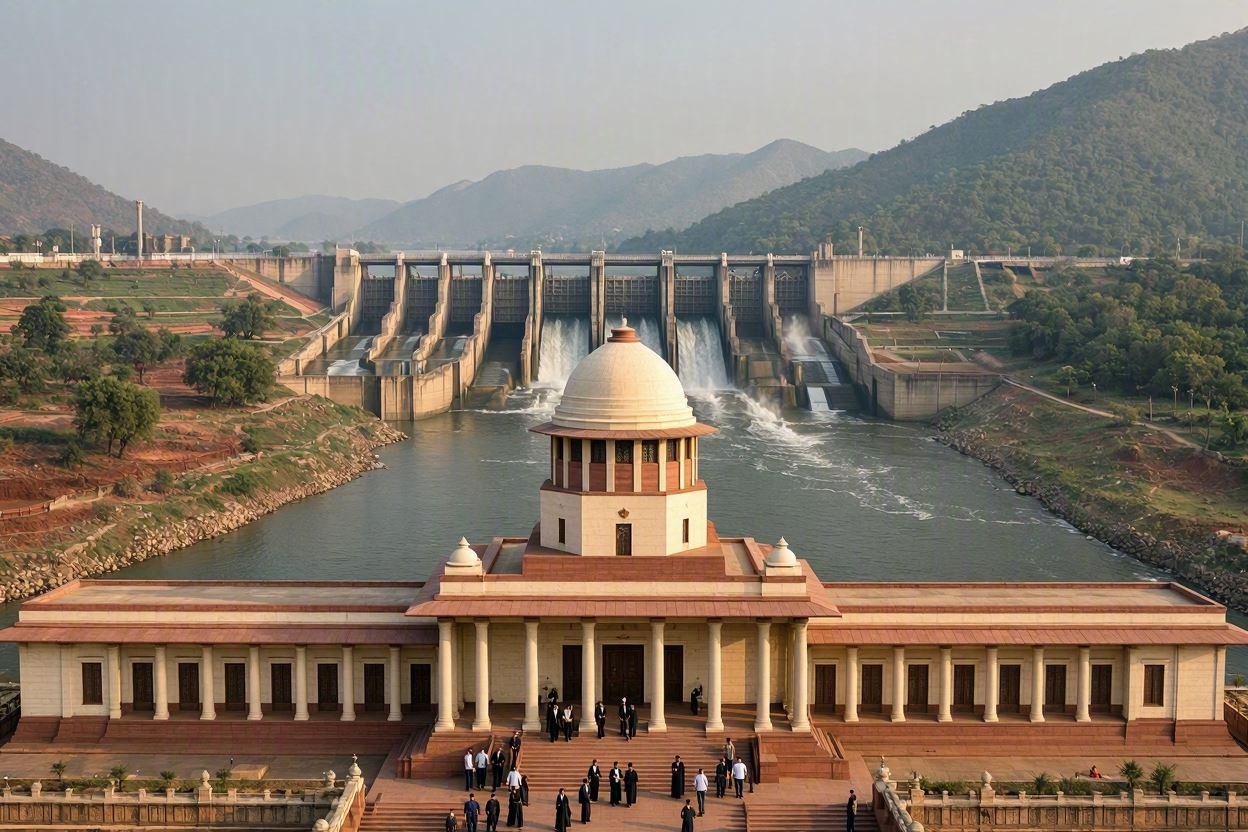
The Supreme Court has directed the State of Karnataka to comply with the Cauvery Water Management Authority's (CWMA) directions regarding the release of Cauvery river water to Tamil Nadu, bringing renewed attention to one of India's most enduring inter-state water disputes.
The dispute resurfaced after Tamil Nadu approached the apex court alleging that Karnataka had failed to release water in accordance with CWMA directives. Tamil Nadu argued that the shortfall adversely affected irrigation requirements and violated the established Cauvery water-sharing framework.
During the hearing, the Supreme Court emphasized that directions issued by the CWMA are intended to ensure implementation of the Cauvery water-sharing regime and must be respected by the basin states. The Court directed Karnataka to comply with the authority's orders while monitoring developments in the matter.
The litigation follows recent CWMA directions requiring Karnataka to release specified quantities of water to Tamil Nadu amid concerns over rainfall deficits and competing agricultural demands. Karnataka had contended that prevailing reservoir levels and local water requirements made compliance difficult, while Tamil Nadu maintained that it was entitled to its allocated share.
The case highlights the continuing challenges of balancing agricultural, drinking water, and ecological needs across state boundaries. It also underscores the crucial role played by statutory institutions such as the CWMA in implementing judicially approved water-sharing arrangements.
Beyond the immediate question of water release, the proceedings carry broader constitutional significance. Inter-state river disputes frequently test the principles of cooperative federalism, requiring courts and regulatory authorities to mediate competing state interests while ensuring adherence to legal frameworks.
The Supreme Court's intervention reinforces the principle that states must comply with directions issued under established river-management mechanisms. The matter is expected to remain under judicial scrutiny as the Court assesses compliance and considers concerns raised by both Karnataka and Tamil Nadu regarding water availability and allocation.