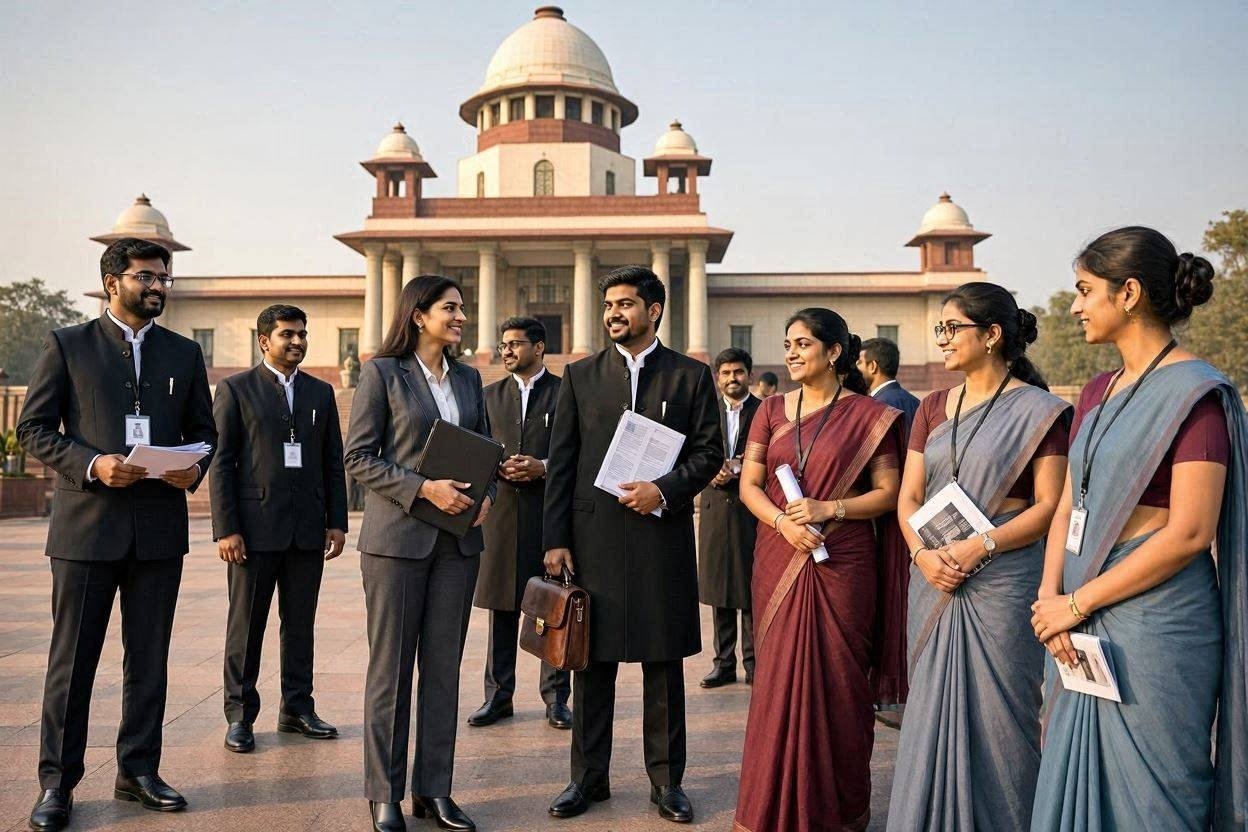
New Delhi: The Supreme Court is examining requests seeking an open-court review of its landmark judgment that restored the requirement of three years of legal practice for candidates aspiring to enter the lower judiciary.
The controversy stems from the Court's 2025 decision in the All India Judges Association matter, which reinstated a rule requiring aspiring Civil Judges (Junior Division) and Judicial Magistrates to possess a minimum of three years' experience as practicing advocates before becoming eligible for judicial service examinations.
The ruling reversed a position that had been in place for over two decades, during which fresh law graduates were permitted to directly compete for entry-level judicial posts. The Supreme Court reasoned that practical courtroom exposure is essential for developing the skills, judgment, and professional maturity required of judicial officers.
Subsequently, several stakeholders, including judicial aspirants and legal organizations, raised concerns regarding the impact of the rule on access to judicial careers. Critics contend that the mandatory practice period may disproportionately affect candidates from economically weaker backgrounds who may find it difficult to sustain themselves during the initial years of legal practice.
Supporters of the requirement argue that first-hand experience of court proceedings equips future judges with a deeper understanding of litigation, procedural law, and courtroom management. They maintain that practical experience enhances the quality of adjudication and strengthens public confidence in the justice system.
The present proceedings concern pleas seeking reconsideration of the judgment through an open-court review. The petitioners argue that the issue has far-reaching implications for judicial recruitment across India and warrants a more extensive hearing. The Supreme Court is now considering whether the review petitions should be listed and heard in open court.
The outcome could have significant implications for future judicial service examinations, recruitment policies adopted by states and high courts, and the broader debate on balancing professional experience with inclusivity in judicial appointments.
The matter continues to be closely watched by law students, judicial aspirants, bar associations, and state recruitment authorities across the country.