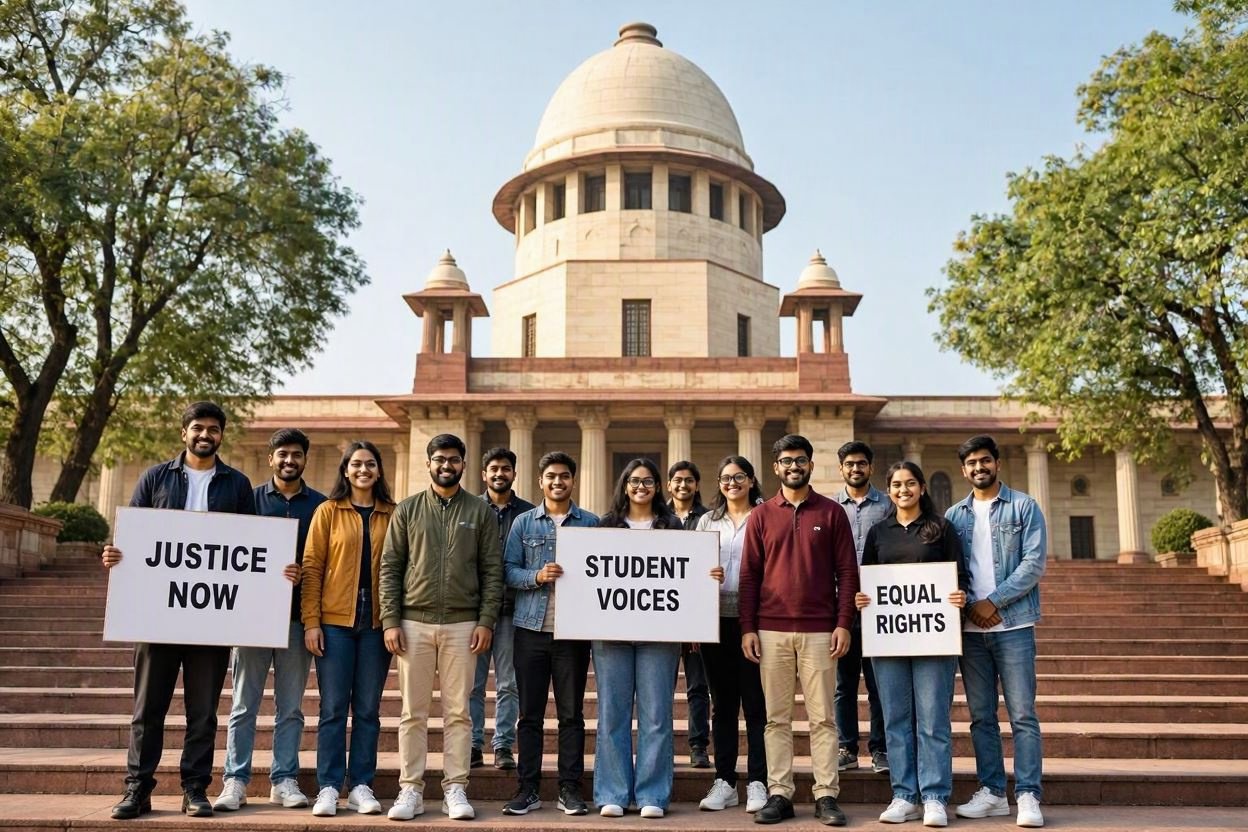
The Supreme Court has been requested to examine allegations that its previous directions in the NEET protest case have not been fully complied with, bringing renewed judicial attention to the handling of investigations arising from the nationwide student demonstrations linked to NEET-related controversies.
The matter stems from proceedings concerning allegations of police excesses during protests organized over alleged irregularities in the NEET examination process. Earlier, the Supreme Court constituted a High-Powered Enquiry Committee (HPEC) headed by former Supreme Court judge Justice R. Subhash Reddy to investigate claims of excessive force against protesters as well as allegations of violence against police personnel.
The Court had emphasized that the committee was functioning under judicial supervision and expressed confidence in its ability to conduct an independent and comprehensive inquiry. The committee was tasked with examining the chain of events, accountability mechanisms, and allegations raised by both protesters and law enforcement authorities.
The latest plea reportedly contends that certain actions taken by authorities may be inconsistent with the spirit or letter of the Supreme Court's earlier directions. Petitioners have therefore sought judicial scrutiny to determine whether there has been any deviation from the Court's mandate.
The issue raises broader questions regarding compliance with judicial orders, accountability of public authorities, and the effectiveness of court-monitored investigations in matters involving civil liberties and public protests.
The Supreme Court is expected to consider the allegations and determine whether any further directions are required to ensure adherence to its previous orders and the integrity of the ongoing inquiry process.