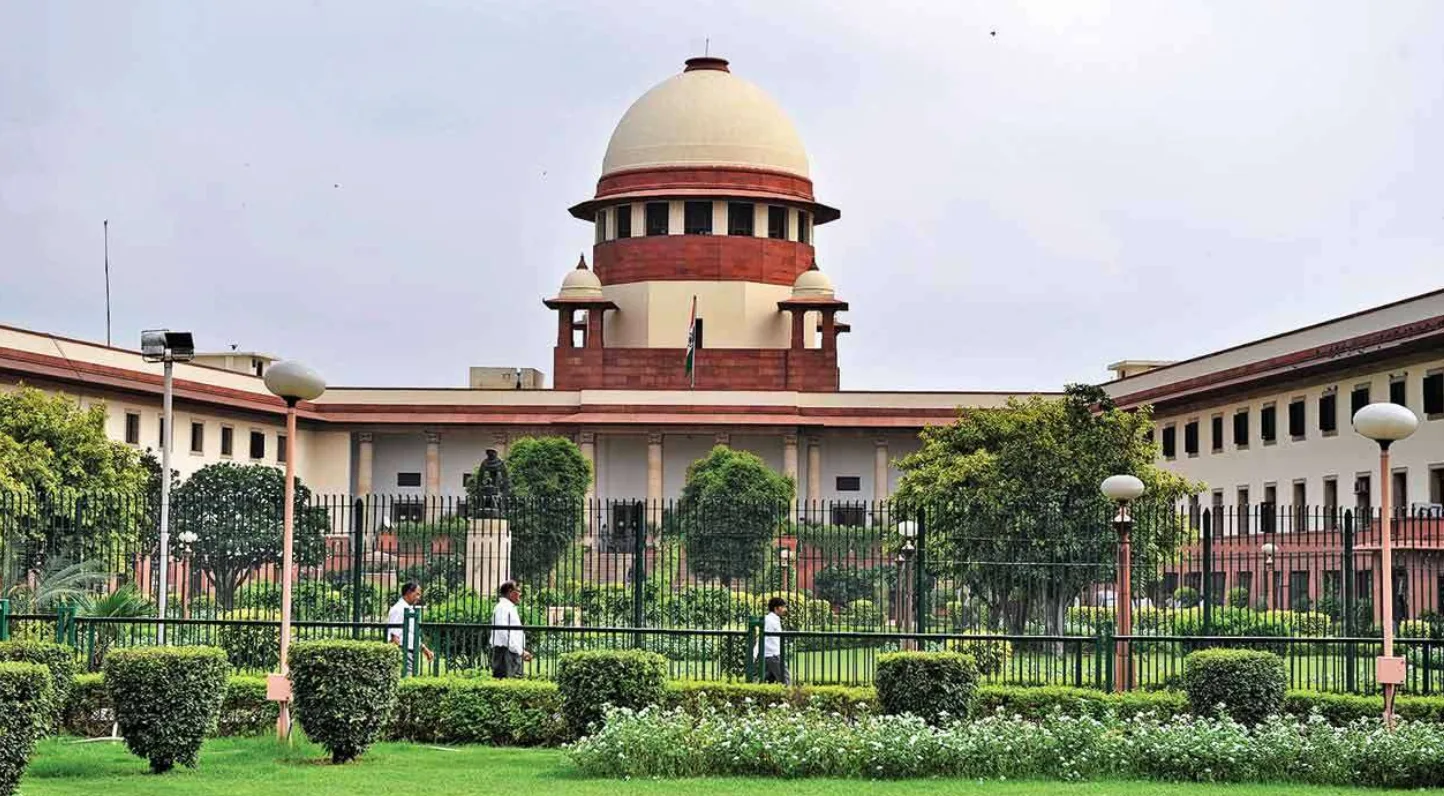
Supreme Court: Arbitrators Cannot Rewrite Contractual Terms or Grant Relief Contrary to the Agreement
New Delhi, October 29, 2026: The Supreme Court of India has reaffirmed that an arbitral tribunal cannot rewrite the contractual terms agreed upon by parties or grant relief that contradicts their agreement. The Court held that arbitral tribunals must decide disputes in accordance with the contractual framework, as mandated under Section 28(3) of the Arbitration and Conciliation Act, 1996.
The ruling was delivered in Shreeram Builders v. Upendra Kantilal Thanawala and Others (2026 INSC 1176), by a Bench comprising Justice Sanjay Kumar and Justice Sanjeev Sachdeva.
Background of the Dispute
The dispute arose from an Agreement for Development dated August 6, 2003, between Shreeram Builders and a group of landowners concerning their undivided 2/9th share in certain properties situated at Panchpakhadi, Thane, Maharashtra.
The agreement established specific payment obligations, conditions for development and conveyance, and a defined sequence for the performance of contractual responsibilities. Following disagreements regarding compliance with these obligations, the landowners terminated the agreement in April 2008, leading the parties to initiate arbitration proceedings.
The majority of the arbitral tribunal granted specific performance in favour of the developer, directing the execution of a conveyance deed upon payment of an enhanced consideration. It also granted alternative damages if the primary relief of specific performance was set aside.
The arbitral award was subsequently challenged under Section 34 of the Arbitration and Conciliation Act, 1996. After further proceedings, the Bombay High Court set aside the majority award on March 5, 2024. The developer then approached the Supreme Court under Section 37 of the Act.
Supreme Court's Observations
The Supreme Court examined whether the majority award had remained within the contractual framework agreed upon by the parties. It observed that Section 28(3) of the Arbitration and Conciliation Act, 1996, requires an arbitral tribunal to take into account the terms of the contract and applicable trade usages while deciding disputes.
The Court found that the majority arbitrators had departed from the express contractual provisions, introduced terms that the parties had never agreed upon and altered the agreed payment structure. The award also granted relief that lacked a proper foundation in the agreement.
The Bench emphasised that an arbitral tribunal cannot substitute its own understanding of the bargain for the terms expressly negotiated and accepted by the parties.
It further observed that the agreement did not provide for the alternative damages awarded by the majority tribunal. Granting such relief, particularly as an alternative to specific performance, was contrary to the established principles governing arbitral awards.
Application of the Arbitration and Conciliation Act, 1996
The Court also considered the applicable framework for challenging the arbitral award. Since the relevant applications under Section 34 had been filed before the 2015 amendment came into effect, the Court examined the matter under the unamended provision.
It considered the statutory requirements under Section 28(3), along with the principles governing judicial interference with arbitral awards under Section 34. The Court found that the majority award had fundamentally departed from the contractual terms, justifying the setting aside of the award.
Final Directions of the Supreme Court
While refusing to restore the majority arbitral award, the Supreme Court addressed the financial consequences of the terminated agreement. It observed that the landowners could not retain the consideration received from the developer when no construction had taken place on their 2/9th share of the property.
Exercising its powers under Article 142 of the Constitution of India to do complete justice, the Court directed the landowners to refund the amounts received under the agreement, together with simple interest at 9% per annum, calculated from the date of each payment until the actual refund.
The Court also permitted the return of the developer's amounts deposited with the courts, along with any accrued interest. The appeals were accordingly disposed of.
Legal Significance
The decision reinforces the importance of contractual certainty in arbitration proceedings. It clarifies that an arbitral tribunal's authority is not unlimited and that the tribunal must operate within the contractual framework and statutory requirements.
For parties entering into commercial and development agreements, the ruling highlights the importance of clearly drafted contractual obligations, payment conditions and dispute-resolution clauses. It also reiterates that arbitral autonomy does not permit tribunals to create a new bargain for the parties.
Case: Shreeram Builders v. Upendra Kantilal Thanawala and Others
Case Number: Civil Appeal Nos. 9817–9818 of 2024
Neutral Citation: 2026 INSC 1176
Decision Date: October 29, 2026
Bench: Justice Sanjay Kumar and Justice Sanjeev Sachdeva
Relevant Provisions: Sections 28(3), 34 and 37 of the Arbitration and Conciliation Act, 1996; Article 142 of the Constitution of India.