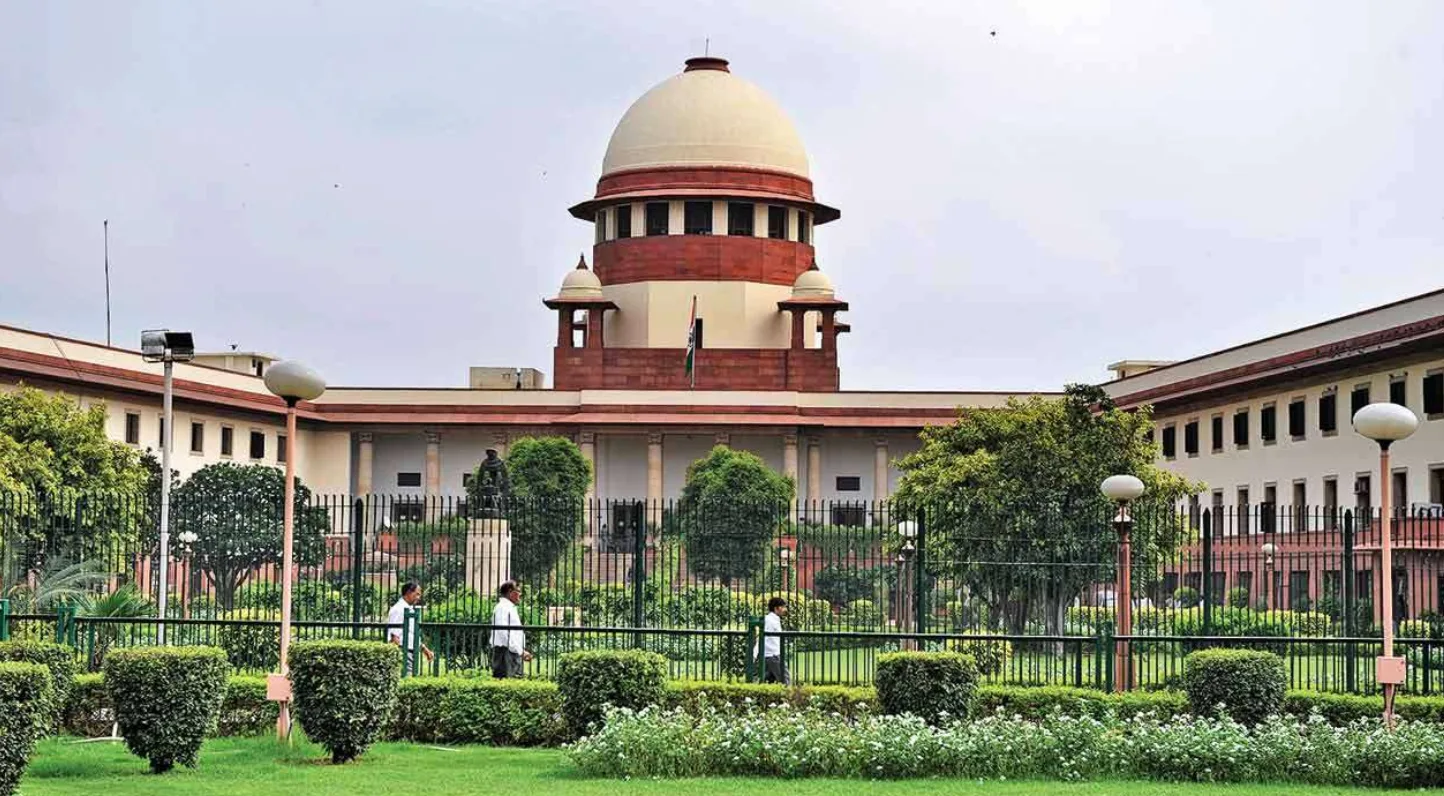
Supreme Court Appoints Former Judge Ranjana Prakash Desai as Mediator in $1.73 Billion Krishna-Godavari Gas Dispute
The Supreme Court of India has appointed former Supreme Court judge Justice Ranjana Prakash Desai as the sole mediator in the long-running $1.73 billion Krishna-Godavari (KG) basin gas migration dispute between the Union Government and a consortium led by Reliance Industries Limited (RIL). The decision was taken on October 30, 2026, after the parties informed the Court that their settlement discussions had failed to produce a viable resolution.
Supreme Court's Decision to Refer the Dispute to Mediation
A three-judge Bench comprising Chief Justice of India Surya Kant and Justices Joymalya Bagchi and Vipul M. Pancholi requested Justice Ranjana Prakash Desai to act as the sole mediator. The Court also permitted her to seek assistance from two domain experts, one suggested by each party, to facilitate the mediation process.
The development followed submissions by Attorney General R. Venkataramani, representing the Union Government, and Senior Advocate Kapil Sibal, appearing for the Reliance-led consortium, that their discussions had not resulted in a mutually acceptable settlement.
The Bench observed that the parties had repeatedly sought adjournments to explore an amicable resolution but had ultimately been unable to identify a viable solution. It therefore considered mediation an appropriate way forward.
The Court did not prescribe a fixed deadline for completing the mediation. Both parties were asked to coordinate with Justice Desai regarding the schedule and assured the Court of their cooperation. The matter is expected to be taken up again after four weeks to review the progress.
Background of the Krishna-Godavari Gas Migration Dispute
The dispute concerns allegations that natural gas migrated from adjoining offshore blocks operated by the state-owned Oil and Natural Gas Corporation (ONGC) into the KG-D6 block operated by the Reliance-led consortium between 2009 and 2013.
ONGC alleged that the consortium extracted and commercially utilised gas originating from its adjoining reservoirs, resulting in unjust enrichment. The controversy emerged in 2013 and subsequently led to proceedings involving the Union Government, RIL and its consortium partners, including BP and Niko Resources.
The Union Government sought recovery of the alleged gains, with reports describing the claim as approximately $1.55 billion, together with around $174 million in interest. Some recent reports have described the overall dispute as a $1.73 billion matter.
Arbitration Proceedings and Delhi High Court Intervention
The dispute arose from a Production Sharing Contract executed in 2000 governing exploration and extraction activities in the KG basin. RIL invoked the arbitration mechanism under the contract to challenge the Government's demand.
In July 2018, a majority of the arbitral tribunal ruled in favour of the Reliance-led consortium, holding that the contract did not prohibit the extraction and sale of gas that had naturally migrated from adjoining reservoirs.
The Union Government subsequently challenged the arbitral award before the Delhi High Court. A single-judge Bench upheld the award in May 2024. However, on February 14, 2025, a Division Bench overturned that decision and set aside the arbitral award, finding legal flaws in the tribunal's approach, including issues concerning the contractual obligations and the protection of natural resources.
The Reliance-led consortium subsequently approached the Supreme Court challenging the Delhi High Court Division Bench's decision.
Significance of the Mediation
The Supreme Court's decision highlights the role of alternative dispute resolution in complex commercial and energy-sector litigation. By appointing an experienced former Supreme Court judge and permitting expert assistance, the Court has created an opportunity for a negotiated settlement in a dispute involving substantial financial claims and questions concerning the exploitation of natural resources.
However, the appointment of a mediator does not amount to a final determination of liability or an acceptance of either party's claims. The underlying legal dispute remains unresolved unless the parties reach a settlement or the matter is subsequently adjudicated by the Court.
The outcome of the mediation may have wider implications for production-sharing contracts, commercial arbitration, natural resource management and the legal responsibilities of entities engaged in the extraction of public resources.
Source: The Economic Times, Hindustan Times, The Indian Express and LiveLaw, reporting on the Supreme Court's mediation order dated October 30, 2026.