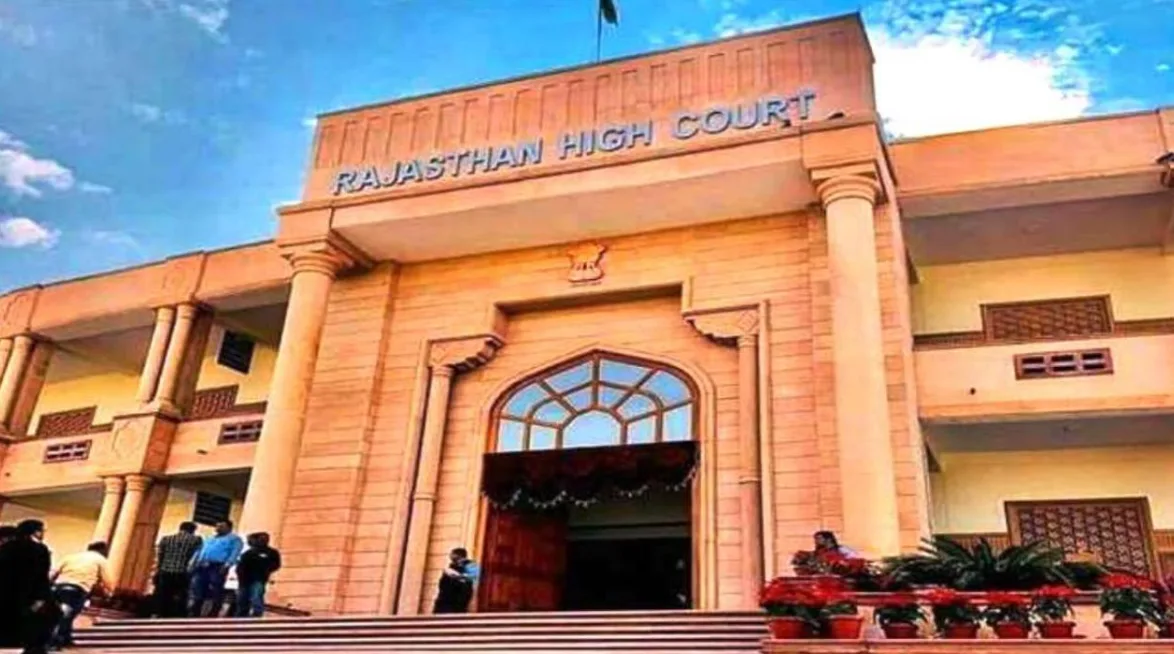
Rajasthan High Court Grants Bail After DCP Admits Police Letter Was Forged to Conceal FSL Report Delay
The Rajasthan High Court has granted bail to an accused in a Narcotic Drugs and Psychotropic Substances (NDPS) Act case after serious irregularities emerged concerning the concealment of a Forensic Science Laboratory (FSL) report and the production of a forged police document before the Court.
Justice Ravi Chirania passed the order on November 5, 2026, while hearing the third bail application filed by Prem Dudi in Prem Dudi v. State of Rajasthan, S.B. Criminal Miscellaneous 3rd Bail Application No. 17322/2026.
Background of the Case
The petitioner was arrested on January 13, 2026, in connection with an FIR registered at Mansarovar Police Station, Jaipur, under Sections 8 and 22 of the NDPS Act, 1985. His first two bail applications had been rejected in March and April 2026.
The defence highlighted discrepancies between the substance described in the FIR as methamphetamine and the substance identified in the FSL report as mephedrone. It was also argued that the FSL report, dated January 27, 2026, had not been attached to the charge sheet filed on March 11, 2026, despite having been received by the police.
Police Letter Found to Be Forged
During the proceedings, the Investigating Officer produced a letter dated August 26, 2026, claiming that the FSL report had been received and submitted without delay.
However, the Court summoned the DCP (South), Jaipur, along with an FSL official to verify the circumstances. The DCP informed the Court that the letter was forged and that its dates had been deliberately altered through overwriting to conceal the actual delay in submitting the forensic report.
The Court was further informed that the FSL report had been collected by the police in February 2026 but was not placed before the concerned SHO. A constable responsible for collecting and delivering documents was suspended on November 4, 2026.
Court's Observations
The High Court observed that the FSL report had remained concealed for approximately six to seven months, seriously affecting the earlier bail proceedings and the progress of the trial.
The Court also expressed dissatisfaction with the suggestion that the suspended constable alone could have been responsible, observing that his role was primarily that of a messenger collecting and delivering documents.
Considering that the petitioner had no criminal antecedents, that the alleged recovery had been made from another person named Kamlesh rather than from the petitioner, and that the trial was likely to take considerable time, the Court considered it appropriate to grant bail. It clarified that these observations would not affect the merits of the pending trial.
Directions Issued by the Court
The High Court directed the Commissioner of Police, Jaipur, to conduct an inquiry into the involvement of the concerned constable, investigating officer, former SHO and any other responsible officials. A report must be submitted before the Court within four months.
The Court further directed the Commissioner of Police to ensure that FSL reports are collected and delivered to the concerned police stations within 15 days of their preparation or communication by the laboratory.
Final Decision
The third bail application was allowed under Section 483 of the Bharatiya Nagarik Suraksha Sanhita, 2023. The petitioner was directed to furnish a personal bond of Rs. 1,00,000 along with two sureties of Rs. 50,000 each.
The Court listed the matter for compliance on March 3, 2027.
The decision highlights the importance of transparency in criminal investigations, proper handling of forensic evidence and accountability of police officials in protecting the rights and liberty of accused persons.