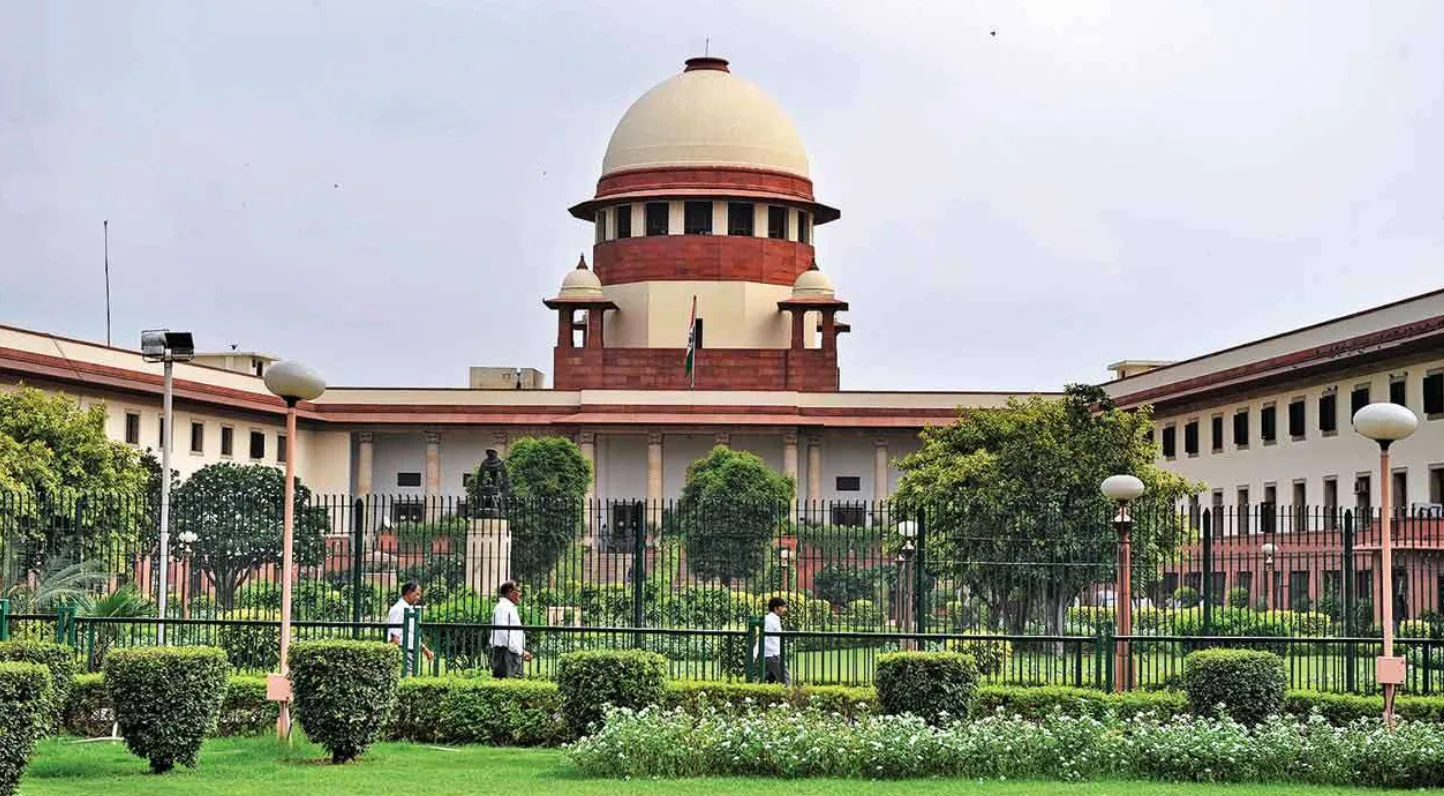
The Supreme Court of India witnessed a discussion on Delhi’s worsening air pollution on October 28, 2026, when Justice Vikram Nath remarked that the city’s air quality could deteriorate further after Diwali. His comments highlighted the difficulties of avoiding pollution while carrying out judicial responsibilities.
The observation came while the Court was considering a request by Senior Advocate Indira Jaising to list a matter after the Diwali vacation, on November 17. During the exchange, Justice Nath suggested that the matter could be heard before the festival, observing that the environment was likely to be cleaner before Diwali and more polluted afterwards.
Jaising pointed out that pollution affected people both before and after the festival and remarked that judges also had to face the city’s polluted air. Responding to her virtual appearance, Justice Nath observed that lawyers could sometimes participate remotely to avoid exposure, whereas judges were required to attend court to conduct proceedings.
Supreme Court’s Ongoing Monitoring of Air Pollution
The remarks come against the background of the Supreme Court’s continuing scrutiny of air pollution in Delhi-NCR. The Court has considered several pollution sources, including vehicular emissions, industrial activity, construction dust, stubble burning, waste burning and firecrackers.
In proceedings concerning MC Mehta v. Union of India, the Court has issued directions over the years aimed at controlling pollution and improving enforcement. Restrictions on firecrackers have also been the subject of repeated hearings, with the Court considering public health concerns alongside arguments concerning religious observances and the regulation of celebrations.
Firecracker Restrictions Ahead of Diwali 2026
The Supreme Court has recently considered whether firecracker use should be completely prohibited or permitted under regulated conditions. In September 2026, a bench indicated that it would not support either a complete ban or unrestricted use throughout the day. Questions concerning green crackers, emissions and compliance with restrictions remain part of the wider legal debate.
The Commission for Air Quality Management invoked Stage I of the Graded Response Action Plan across Delhi-NCR on October 21, 2026, amid deteriorating air quality. The seasonal pollution crisis continues to raise questions about the effective implementation of environmental safeguards and the protection of public health.
Legal Significance
Justice Nath’s observation was made during a scheduling discussion and should not be interpreted as a new judicial direction or a binding ruling on pollution control. Nevertheless, it underscores the continuing public and institutional impact of Delhi’s air pollution problem. The Supreme Court’s separate proceedings on air pollution and firecracker restrictions remain the relevant legal context.
Source: LiveLaw, October 28, 2026.