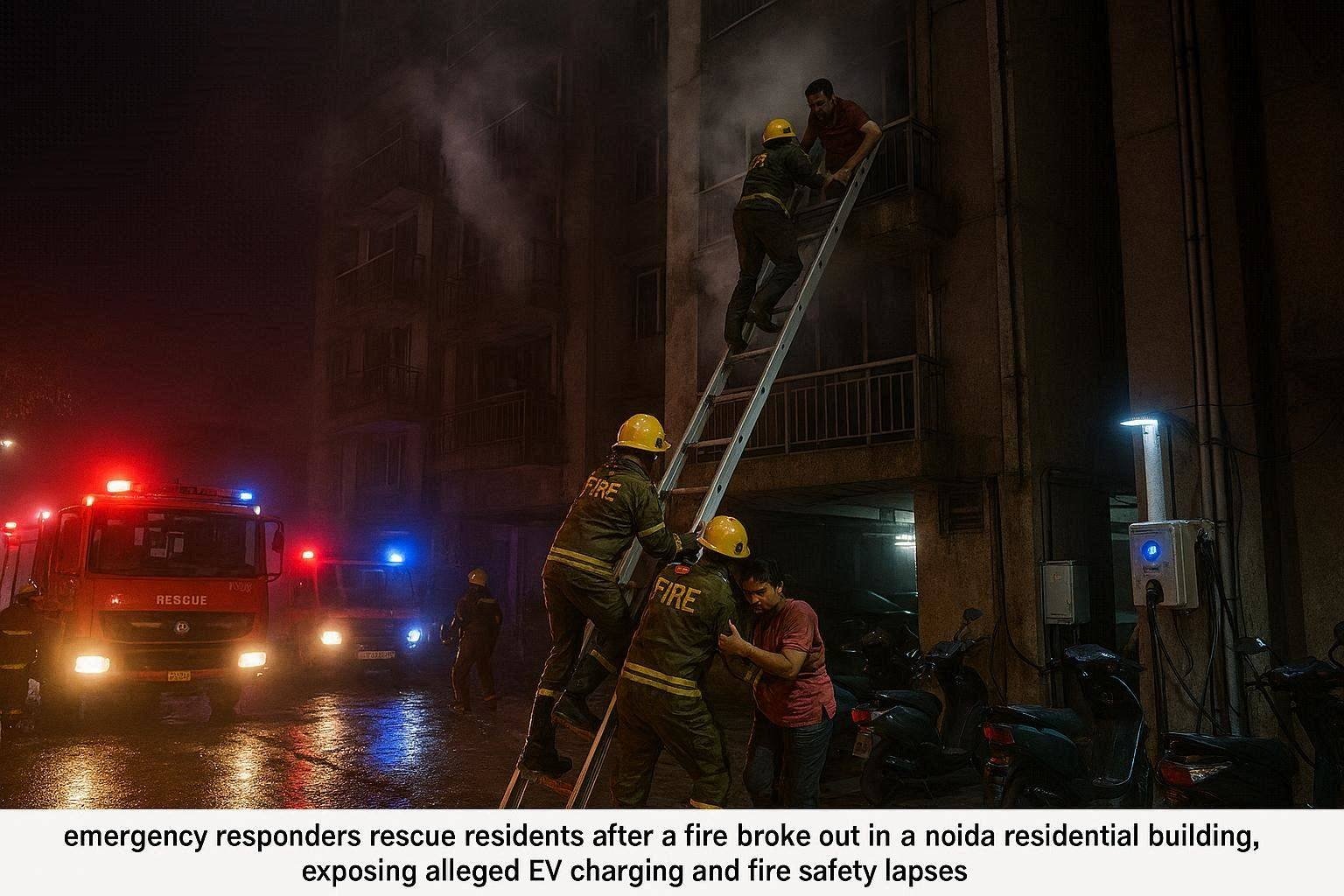
No Dedicated EV Charging Point: Safety Lapses Turn Noida Residential Building Into Death Trap
A devastating fire in a multi-storey residential building in Noida's Sector 66 has triggered renewed scrutiny of fire safety compliance and electric vehicle (EV) charging practices in residential premises. The incident, which claimed the lives of two residents and led to the rescue of nearly 50 occupants, is now under investigation for potential negligence and safety violations.
According to preliminary findings, the fire is suspected to have originated from an electric two-wheeler that was being charged within the building premises. Residents alleged that the structure lacked a dedicated EV charging point and adequate fire safety arrangements, allowing the blaze to spread rapidly through the parking area.
Officials stated that the fire intensified after spreading from the charging vehicle to nearby petrol-powered scooters and motorcycles parked on the ground floor. Thick smoke quickly engulfed the building, forcing several residents to flee to the terrace while emergency responders conducted rescue operations.
Fire department personnel deployed multiple fire tenders and hydraulic equipment to evacuate occupants trapped inside the building. Nearly 50 residents were rescued. However, two individuals reportedly succumbed to smoke inhalation despite being rushed to hospital.
The incident has raised concerns about the growing use of EVs in residential buildings without designated charging infrastructure or proper safety protocols. Residents alleged that emergency preparedness measures, fire exits, and preventive mechanisms were either absent or inadequate.
Following the tragedy, police arrested the building owner and registered a case. Authorities are examining whether the premises complied with applicable building regulations, fire safety requirements, and occupancy norms. Investigators are also assessing whether negligence contributed to the fatalities.
The case highlights the legal and regulatory challenges associated with EV adoption in densely populated residential areas. As EV ownership rises across urban India, experts have increasingly emphasized the need for dedicated charging facilities, electrical safety audits, and stricter enforcement of fire safety standards.
The findings of the ongoing investigation may influence future enforcement actions relating to residential building safety, landlord liability, and EV charging infrastructure regulations.