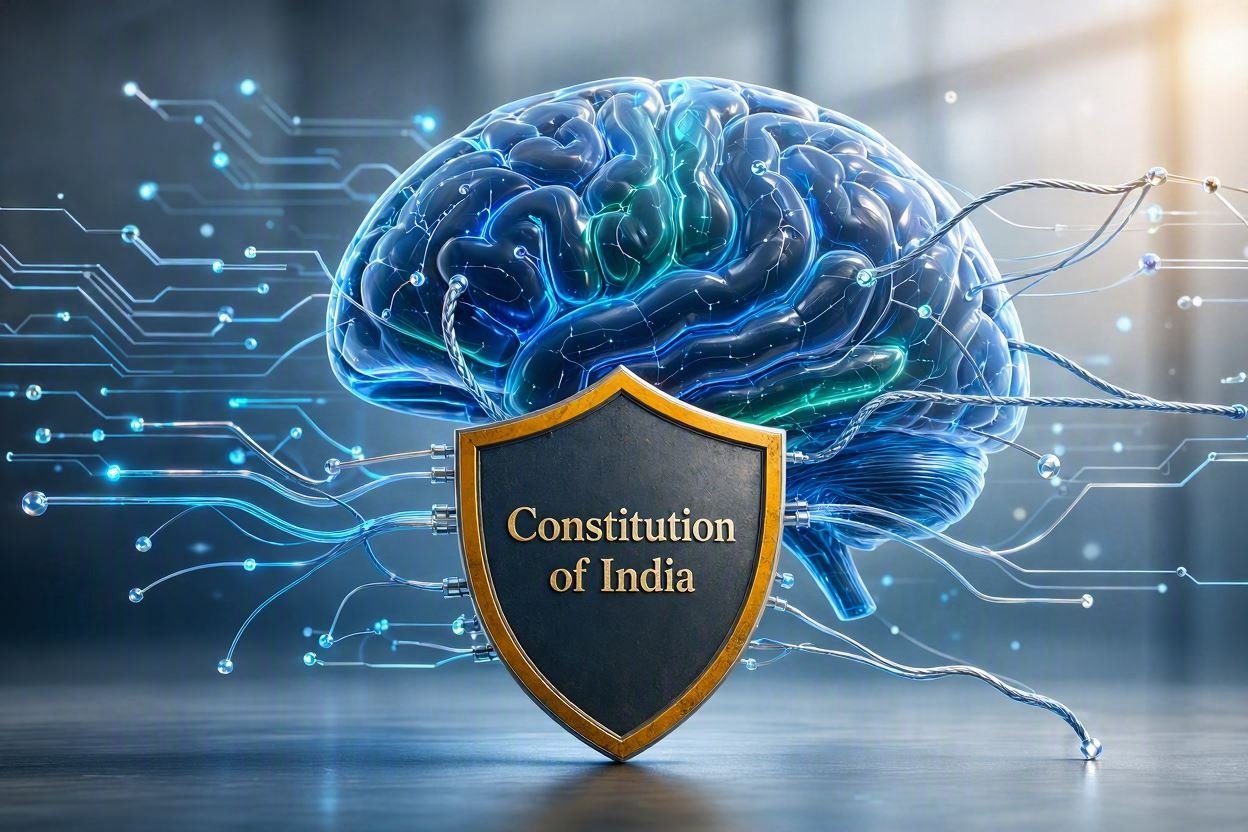
As neurotechnology rapidly advances, India faces a new constitutional and data protection challenge: should brain data be treated as sensitive personal data? Devices capable of collecting electroencephalographic (EEG) signals, monitoring cognitive activity, and enabling brain-computer interfaces are increasingly moving from research laboratories into workplaces, healthcare settings, and consumer markets.
The debate arises because neural data differs fundamentally from ordinary personal information. Unlike conventional identifiers such as names, phone numbers, or facial scans, brain-derived data may reveal emotions, attention levels, cognitive patterns, neurological conditions, and even aspects of decision-making. This unique capability raises concerns about mental privacy, cognitive liberty, and autonomy.
The constitutional foundation for protecting neural data may already exist. In K.S. Puttaswamy v. Union of India, the Supreme Court recognized privacy as a fundamental right under Article 21 of the Constitution, encompassing informational privacy, decisional autonomy, and personal dignity. Legal scholars argue that unauthorized access to neural data could represent a deeper intrusion than traditional data collection because it touches the realm of thought itself.
However, India's statutory framework presents a gap. The Digital Personal Data Protection Act, 2023 (DPDPA) adopts a broad definition of personal data but does not create a distinct category for sensitive personal data. Earlier legislative drafts had contemplated enhanced protection for sensitive categories such as health, biometric, and genetic information, but the enacted law abandoned that approach.
As a result, neural data collected through wellness applications, workplace monitoring tools, educational technologies, or neurotechnology devices is generally subject to the same consent framework applicable to ordinary personal data. Critics argue that such an approach fails to account for the extraordinary sensitivity of information derived directly from brain activity.
The issue has practical significance. Neurotechnology is increasingly used for fatigue monitoring, cognitive assessment, educational attention tracking, and health-related applications. Many systems process or transfer neural information across borders, creating additional concerns regarding data security, profiling, and potential misuse.
International developments suggest growing recognition of these risks. Chile has adopted constitutional protections addressing neuro-rights, while international organizations and policymakers have begun examining safeguards for mental privacy and cognitive integrity. These developments have intensified calls for India to adopt a more specialized regulatory approach.
Legal experts have proposed that data derived from direct neural measurements should automatically receive heightened protection. Suggested safeguards include explicit and informed consent requirements, strict purpose limitations, restrictions on cognitive profiling, mandatory impact assessments, and stronger oversight mechanisms for neurotechnology deployments.
The debate ultimately reflects a broader question for Indian constitutional law: whether privacy protections developed in the digital age are sufficient to address technologies capable of accessing the human mind. As neurotechnology adoption expands, policymakers may face increasing pressure to recognize brain data as a uniquely sensitive category deserving enhanced legal protection.