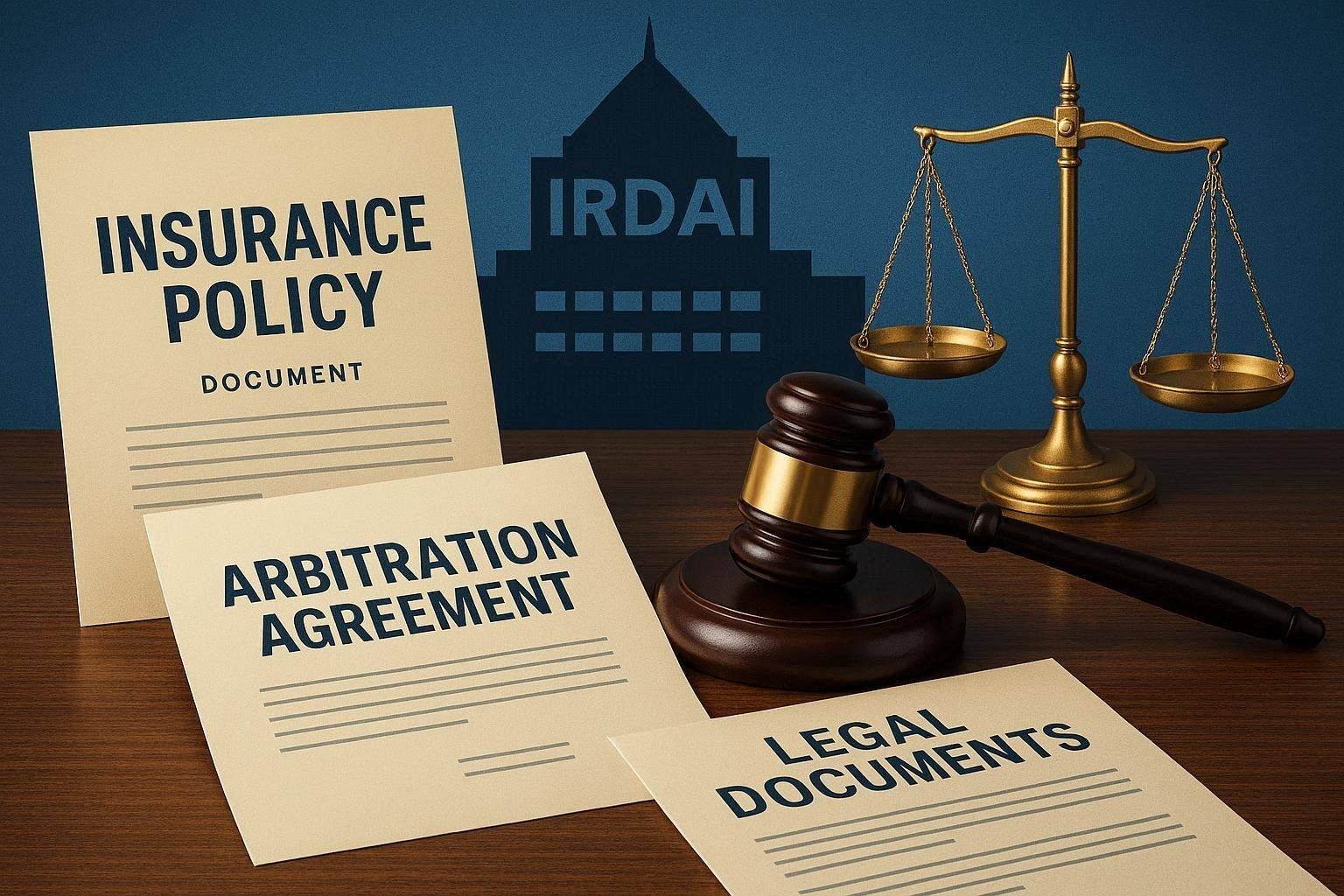
India's insurance dispute resolution landscape is witnessing a major shift as judicial interpretation and regulatory intervention redefine the role of arbitration in insurance contracts. Historically, insurance policies in India contained arbitration clauses derived from English law, particularly the "Scott v. Avery" model, which required disputes over claim amounts to be resolved through arbitration before litigation could commence.
The Supreme Court of India, through landmark decisions including Vulcan Insurance Co. Ltd. v. Maharaj Singh, Oriental Insurance Co. Ltd. v. Narbheram Power & Steel Pvt. Ltd., and United India Insurance Co. Ltd. v. Hyundai Engineering & Construction Co. Ltd., clarified that such clauses generally apply only to disputes concerning the quantum of claims and not to cases where insurers completely deny liability.
Responding to judicial concerns and evolving policy considerations, the Insurance Regulatory and Development Authority of India (IRDAI) undertook a comprehensive review of arbitration provisions in insurance contracts. In October 2023, IRDAI issued reforms that fundamentally changed the regulatory framework governing arbitration clauses.
Under the revised framework, retail insurance policies are no longer permitted to contain arbitration clauses. Policyholders may instead rely on alternative dispute resolution mechanisms such as insurer grievance systems, Insurance Ombudsman forums, consumer commissions, and civil courts.
For commercial insurance contracts, IRDAI has introduced a significantly narrower approach. Arbitration is no longer a mandatory precondition to litigation. Instead, parties may mutually agree to enter into a separate arbitration agreement, ensuring that arbitration is based on genuine consent rather than standard-form contractual compulsion.
Further strengthening the reform, IRDAI de-notified arbitration-related provisions embedded in tariff-based insurance products with effect from October 27, 2023. This move formally removes legacy arbitration requirements from several categories of insurance policies.
The reforms reflect a broader effort to balance India's pro-arbitration legal framework with consumer protection objectives. By eliminating mandatory arbitration in retail insurance, regulators aim to enhance access to justice and prevent unequal bargaining power from limiting policyholders' legal remedies.
Legal experts argue that the future of insurance arbitration in India lies in carefully drafted commercial arbitration clauses, institutional arbitration mechanisms, and specialized insurance dispute resolution forums. Such reforms could provide greater certainty, efficiency, and expertise in resolving complex insurance disputes while preserving consumer rights.
The evolution of insurance arbitration demonstrates India's broader attempt to modernize dispute resolution mechanisms while ensuring fairness and transparency in the insurance sector. As regulatory reforms continue and courts further clarify the legal position, insurance arbitration is expected to become more specialized, consensual, and aligned with international best practices.