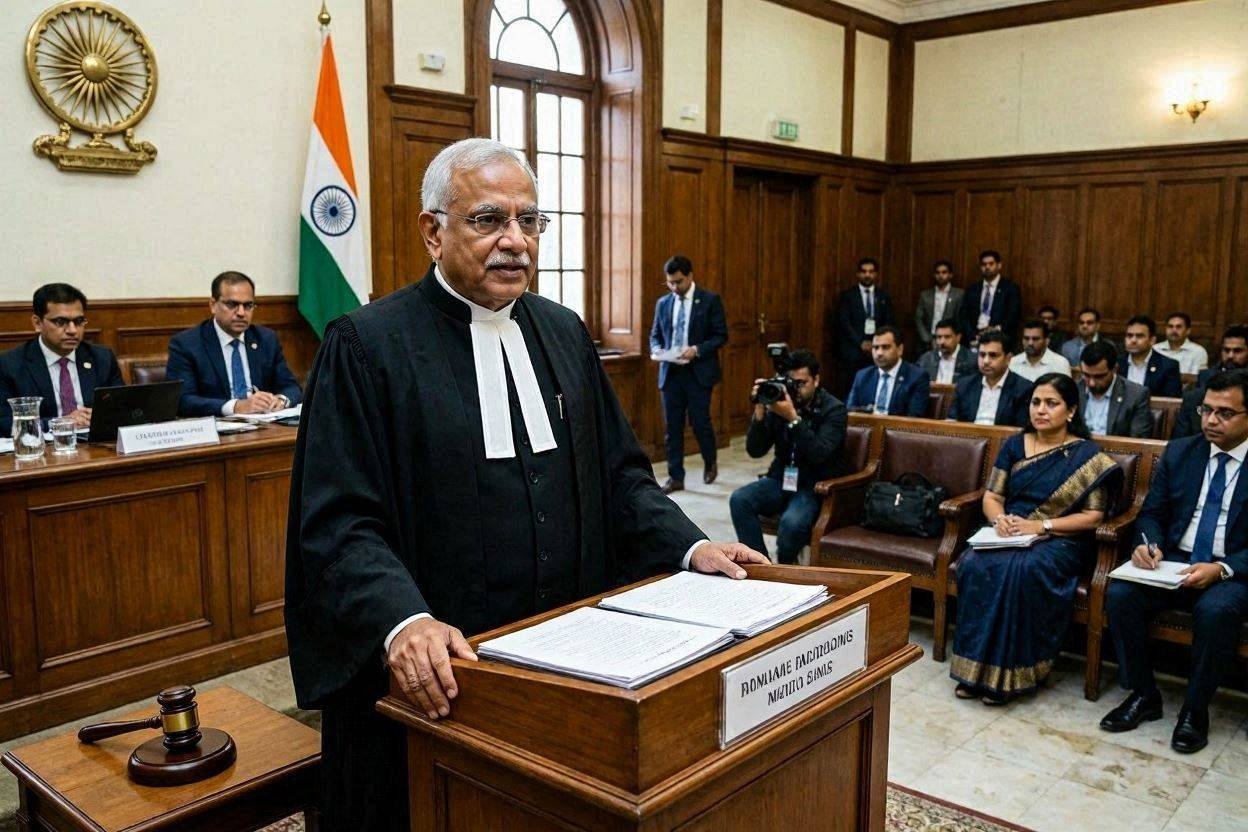
Chief Justice of India (CJI) Surya Kant has flagged the continued non-constitution of the Arbitration Council of India (ACI), six years after Parliament enacted legal provisions for its establishment under the Arbitration and Conciliation (Amendment) Act, 2019.
Speaking at an event organised by the Indian Institute of Arbitration and Mediation, the CJI observed that the delay in operationalising the statutory body has created a significant gap between legislative intent and practical implementation. He stressed that such delays weaken confidence in India's arbitration ecosystem and affect the country's credibility as a preferred destination for international dispute resolution.
The Arbitration Council of India was envisioned as an independent regulatory body responsible for promoting institutional arbitration, accrediting arbitral institutions, maintaining professional standards, and strengthening India's arbitration framework. Despite the passage of the law in 2019, the Council has not yet been constituted.
Justice Surya Kant noted that many Indian parties continue to choose foreign arbitration centres, particularly Singapore, for resolving commercial disputes. According to him, India cannot become a leading arbitration jurisdiction merely by enacting laws; effective implementation is equally essential.
The CJI expressed hope that the proposed legislative reforms relating to arbitration, including recommendations emerging from recent consultations and committee reports, would soon be taken up by Parliament. He underscored the growing importance of alternative dispute resolution (ADR) mechanisms such as arbitration, mediation, and conciliation in reducing the burden on Indian courts.
Highlighting the broader vision of dispute resolution reform, Justice Kant stated that ADR should not be viewed as a secondary form of justice but as an integral component of the justice delivery system. He emphasized the need for institutional capacity building, trained professionals, and greater trust in arbitration mechanisms.
The remarks come at a time when India is actively seeking to position itself as a global arbitration hub. Legal experts believe that operationalising the Arbitration Council of India could play a key role in improving institutional arbitration standards, attracting international commercial disputes, and enhancing investor confidence.
The issue has reignited discussions on the implementation of arbitration reforms and the importance of bridging the gap between legislative enactment and institutional execution.