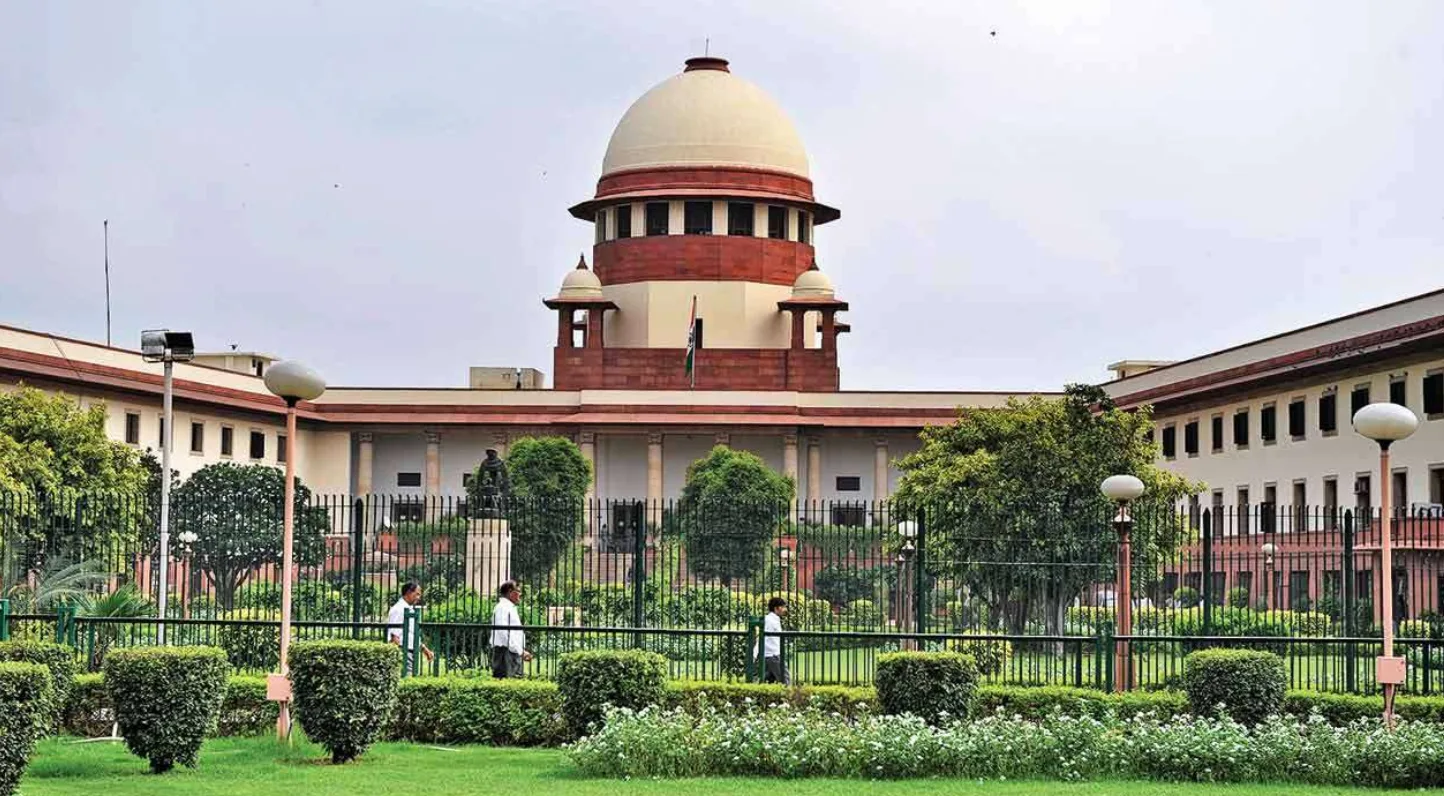
Grandson Cannot Claim Birthright in Property Inherited by Father: Supreme Court
The Supreme Court of India has clarified that a grandson cannot claim a birthright or coparcenary interest in property that his father inherited from his grandfather under Section 8 of the Hindu Succession Act, 1956, after the grandfather's estate was partitioned among his legal heirs.
A Bench comprising Justice Augustine George Masih and Justice Sunita Agarwal delivered the ruling on November 6, 2026, while dismissing Civil Appeal No. 7020 of 2012 in J. Rajesh (Minor) through Mother and Natural Guardian J. Gomathi v. M. Kumaran (Dead) through LRs & Others.
Background of the Dispute
The dispute concerned a property measuring approximately 1,811 square feet in Chennai, which originally belonged to the appellant's grandfather, N. Ramakrishnan.
Following the grandfather's death, his daughter initiated partition proceedings in 1993. The dispute was subsequently resolved through a compromise decree dated February 3, 1994, under which the appellant's father received the disputed property as his share.
The appellant, born on January 6, 1994, later claimed that he had acquired a coparcenary interest in the property by birth. His father subsequently sold the property through two sale deeds executed in April 1997.
In 1997, the minor son, represented by his mother as natural guardian, instituted a suit seeking partition and possession of half of the property. He argued that the property was ancestral and that he was entitled to a share by birth.
What Did the Supreme Court Examine?
The principal question before the Supreme Court was whether a son could claim a half share in property received by his father through partition of the grandfather's estate, while the father was still alive, on the ground that the property was ancestral or joint family property.
The appellant relied on Section 29A of the Hindu Succession (Tamil Nadu Amendment) Act, 1989, and provisions concerning coparcenary rights. He also relied on earlier judicial decisions concerning ancestral property and rights by birth.
The respondents argued that the grandfather's estate devolved upon his Class I heirs under Section 8 of the Hindu Succession Act, 1956. They contended that the father became the exclusive owner of the share allotted to him and that the grandson could not claim an independent birthright in that property.
Supreme Court's Observations
The Bench reiterated that Section 8 of the Hindu Succession Act provides a self-contained scheme for the devolution of property belonging to a Hindu male who dies intestate.
The Court explained that a son's son is not independently included among the Class I heirs when his father, who is the deceased's son, is alive and inherits the property.
Relying on the principles laid down in Commissioner of Wealth Tax v. Chander Sen, the Court observed that property inherited by a son under Section 8 is held by him in his individual capacity and does not automatically become Hindu Undivided Family property in relation to his own children.
The Court further observed that following the partition, the heirs held their respective shares as tenants-in-common rather than as joint tenants. Consequently, the joint coparcenary did not continue in respect of the property allotted to each heir.
The Bench also clarified that the right of a son's son in his grandfather's property during his father's lifetime, which existed under pre-codified Hindu personal law, was not expressly preserved under the Hindu Succession Act, 1956.
Why Were Sections 6 and 29A Not Applicable?
The appellant also relied on Section 6 of the Hindu Succession Act and Section 29A of the Tamil Nadu Amendment Act. However, the Supreme Court held that these provisions did not apply to the facts of the present case.
The Court noted that succession to the grandfather's estate had opened before the appellant's birth and that the property had subsequently been partitioned among the legal heirs. The appellant could not claim the status of a surviving coparcener in the circumstances of the case.
Final Decision
The Supreme Court found no infirmity in the Madras High Court's judgment. It held that the share received by the appellant's father under the partition decree had become his exclusive individual property and could not be treated as coparcenary property merely to recognise a birthright in favour of his son.
The Bench accordingly dismissed the appeal without any order as to costs and disposed of all pending applications.
Legal Significance
The ruling reinforces the distinction between property devolving through intestate succession under Section 8 of the Hindu Succession Act, 1956, and property that continues to retain its character as coparcenary property.
It highlights that the description of property as ancestral does not, by itself, establish an automatic right by birth in every factual situation. The manner in which the property devolved, the existence of a coparcenary and the legal effect of a partition remain crucial considerations.