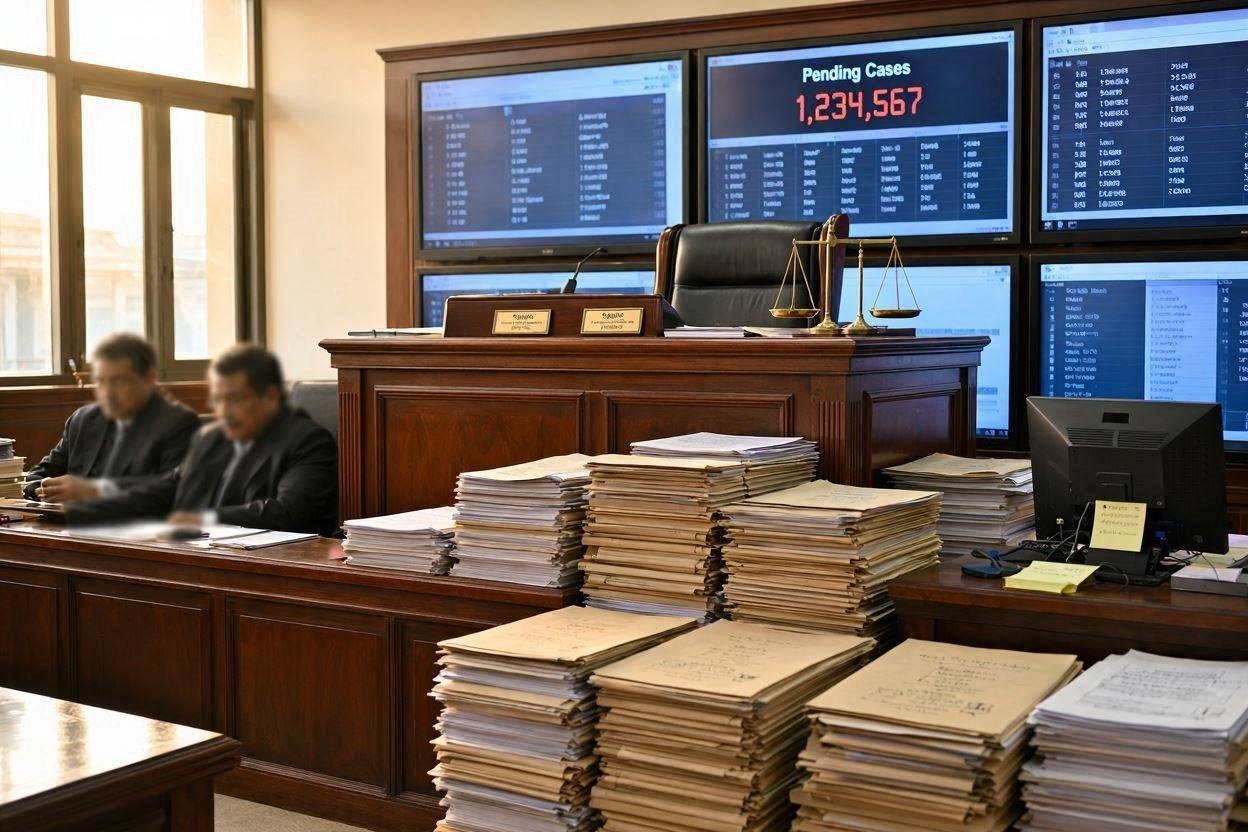
Fast-Track Courts Facing Massive Backlog as Pendency Crosses 2.5 Lakh Cases
India's Fast-Track Special Courts (FTSCs), created to ensure speedy trials in cases involving rape and offences under the Protection of Children from Sexual Offences (POCSO) Act, are facing mounting pressure due to a substantial increase in pending cases.
Recent data indicates that nearly 2.5 lakh cases remain pending before Fast-Track Special Courts across the country. The backlog highlights a growing challenge for a judicial mechanism specifically designed to deliver swift justice in sensitive criminal matters.
The FTSC scheme was launched in 2019 with the objective of reducing delays in the adjudication of sexual offence cases. While the courts have disposed of a significant number of matters over the years, the volume of fresh filings has continued to outpace disposals in many jurisdictions.
Reports indicate that more than 1.4 lakh rape and POCSO cases were registered before these courts during the relevant period, while disposals remained substantially lower. The resulting accumulation has led to concerns about prolonged trials, delayed victim rehabilitation, and increased pressure on judicial infrastructure.
The issue assumes greater significance at a time when the Union Government is advocating the use of fast-track courts for additional categories of cases, including examination paper leak offences. Legal experts have cautioned that without corresponding increases in judicial manpower, court infrastructure, and administrative support, expanding the jurisdiction of fast-track courts may further strain the system.
The Department of Justice has previously reported that Fast-Track Courts and Fast-Track Special Courts have collectively disposed of lakhs of cases over recent years. Nevertheless, persistent pendency continues to remain a major challenge across the Indian judicial system.
Experts suggest that addressing the backlog will require a multi-pronged approach, including the appointment of additional judges, technological integration, improved case management systems, and enhanced support staff. Strengthening these institutional capacities may be critical to ensuring that the objective of speedy justice is effectively achieved.
The growing pendency in Fast-Track Special Courts has reignited discussions on judicial reforms and the need to balance rapid case disposal with procedural fairness and quality adjudication.