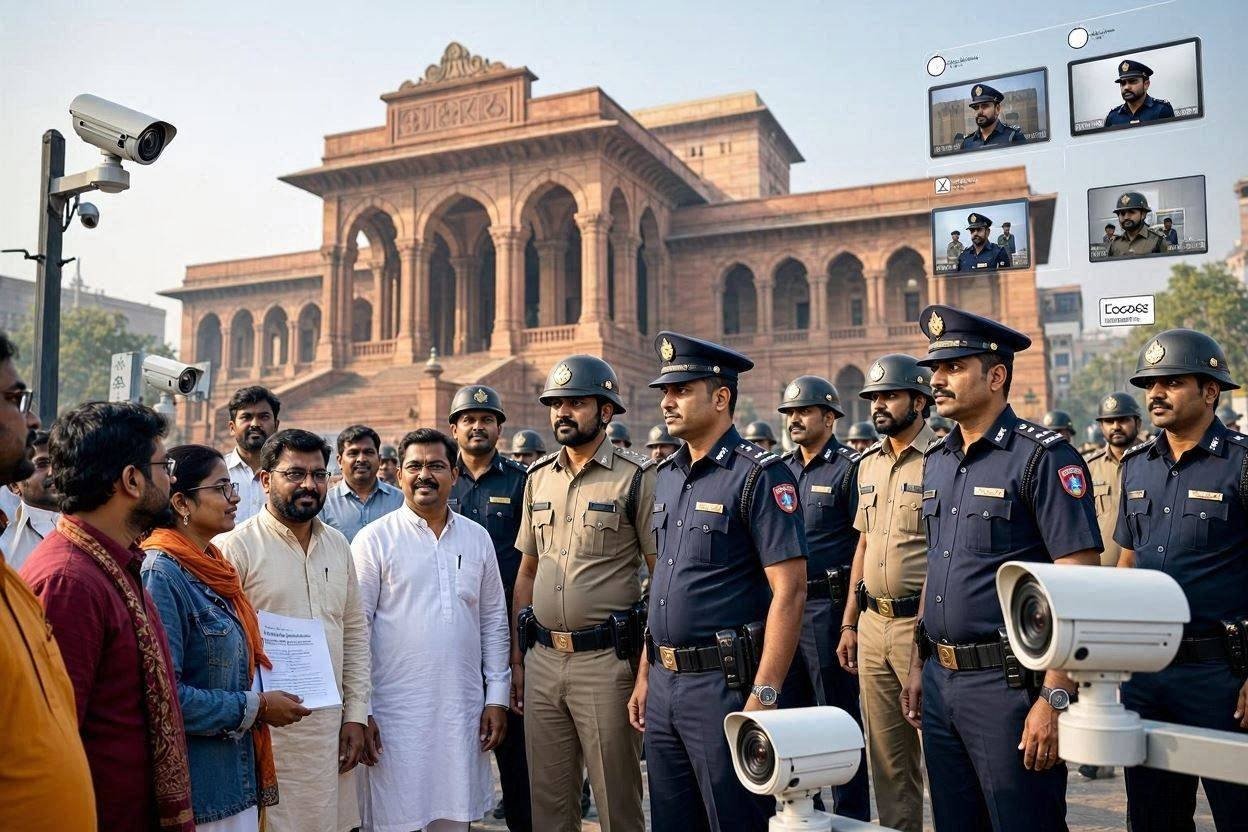
The Delhi High Court has ordered the preservation of CCTV footage, body-camera recordings, videography, and other relevant digital records in connection with allegations of police brutality during a recent protest march to Parliament.
The direction came while the Court was hearing petitions alleging that Delhi Police used excessive force against protesters participating in a march organized by Citizens for Justice and Peace (CJP). Petitioners contended that several participants, including students and activists, were subjected to forceful action by law enforcement authorities during the demonstration.
Taking note of the seriousness of the allegations, the High Court directed authorities to ensure that all CCTV recordings, body-camera footage, videography, and related electronic records connected with the incident are preserved. The Court emphasized the importance of safeguarding potential evidence that may assist in determining the facts surrounding the allegations.
The Bench also issued notices to the Union Government, the Government of the National Capital Territory of Delhi, and Delhi Police, seeking their responses to the claims raised in the petitions. During the proceedings, the Court observed that allegations involving police action against protesters cannot be dismissed as isolated incidents and may require judicial scrutiny.
The petitions allege that protesters exercising their democratic right to assemble and express dissent were subjected to disproportionate police action. The preservation order seeks to prevent the loss or destruction of crucial evidence before the matter is fully adjudicated.
Legal observers note that courts frequently direct preservation of electronic evidence in cases involving allegations of police misconduct, recognizing the growing importance of surveillance footage and digital records in ensuring transparency and accountability.
The matter is expected to be taken up further after the concerned authorities file their responses. The Court's interim direction underscores the judiciary's role in safeguarding evidence and ensuring a fair examination of allegations involving the exercise of state power.