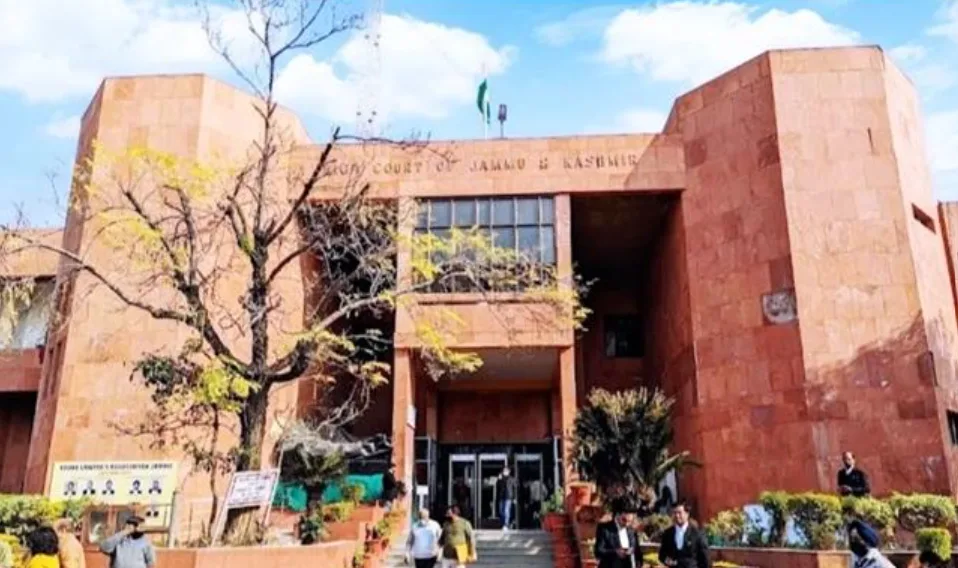
Daughter Wins Inheritance Battle After 44 Years as High Court Rejects Limitation-Based Bar
Jammu, 24 October 2026: The High Court of Jammu & Kashmir and Ladakh has restored a woman's inheritance claim over her late father's property after a legal dispute spanning more than four decades. In a judgment pronounced on 23 October 2026, Justice Shahzad Azeem allowed a civil second appeal filed by Mst. Themu, setting aside a 2012 appellate judgment that had rejected her claim on grounds including limitation and disputed paternity.
Background of the Dispute
Themu, daughter of late Sonu of Machail village in Padder, filed a civil suit on 14 September 1982, seeking a half share in 58 kanals and 11 marlas of land left by her father. She challenged Mutation No. 43, dated 15 October 1966, which had recorded the property exclusively in favour of Shib Devi.
Sonu had reportedly died around 1963, when Themu was approximately six or seven years old. The Sub Judge, Kishtwar, decreed the connected suits in her favour on 9 March 2004, recognising her entitlement to the property. However, the District Judge, Kishtwar, reversed that decision on 7 November 2012, citing limitation and failure to establish paternity to the required standard.
High Court's Findings on Evidence
While examining the appeal, the High Court considered whether the evidence supporting Themu's relationship with her deceased father had been properly assessed. The Court found that the trial court had appropriately considered witness testimony and contemporaneous revenue records supporting her claim.
The Court also addressed Section 50 of the Indian Evidence Act, 1872, concerning the relevance of opinions expressed by persons with special knowledge of a relationship. It observed that evidence concerning family relationships is not necessarily restricted to blood relatives; persons who have acquired relevant knowledge through long-standing familiarity may also provide evidence.
The Court further observed that the non-examination of the claimant's mother could not, by itself, defeat the claim where other cogent evidence was available.
Limitation and Protection of Minors
A central issue was whether the inheritance claim could be rejected as time-barred when the claimant had been a minor at the time her rights were initially disputed. The High Court considered Section 6 of the Limitation Act, 1963, which provides certain protections to persons who are minors when the prescribed limitation period begins to run.
The Court held that limitation must be determined on the evidence and applicable statutory principles rather than presumptions about the claimant's age or the date on which the cause of action arose. An adverse mutation entry made during minority does not necessarily establish a clear and unequivocal denial of rights sufficient to trigger limitation.
The Court also found that the respondents had failed to establish the precise date on which Themu's inheritance rights were unequivocally denied. The appellate court had therefore erred in its assessment of limitation and in reversing the trial court's findings.
Final Decision
Justice Shahzad Azeem set aside the District Judge's judgment and decree dated 7 November 2012 and restored the trial court's decree dated 9 March 2004 in the connected civil suits. The appeal was allowed, with the parties directed to bear their own costs.
Legal Significance
The decision highlights the importance of considering the statutory protection available to minors when determining limitation in inheritance disputes. It also emphasises that property and family relationships must be evaluated through relevant evidence and that adverse revenue entries do not, by themselves, conclusively resolve every question concerning substantive inheritance rights.
The ruling is significant for property law, civil procedure and inheritance litigation, particularly where a claimant's age and the timing of an alleged denial of rights are disputed.
Source: Daily Excelsior and Journeyline reports dated 24 October 2026, concerning the judgment pronounced by the High Court of Jammu & Kashmir and Ladakh on 23 October 2026.
Editorial note: This article is based on published reports of the judgment. Verify the official judgment text and case number before publication if a primary-source citation is required.