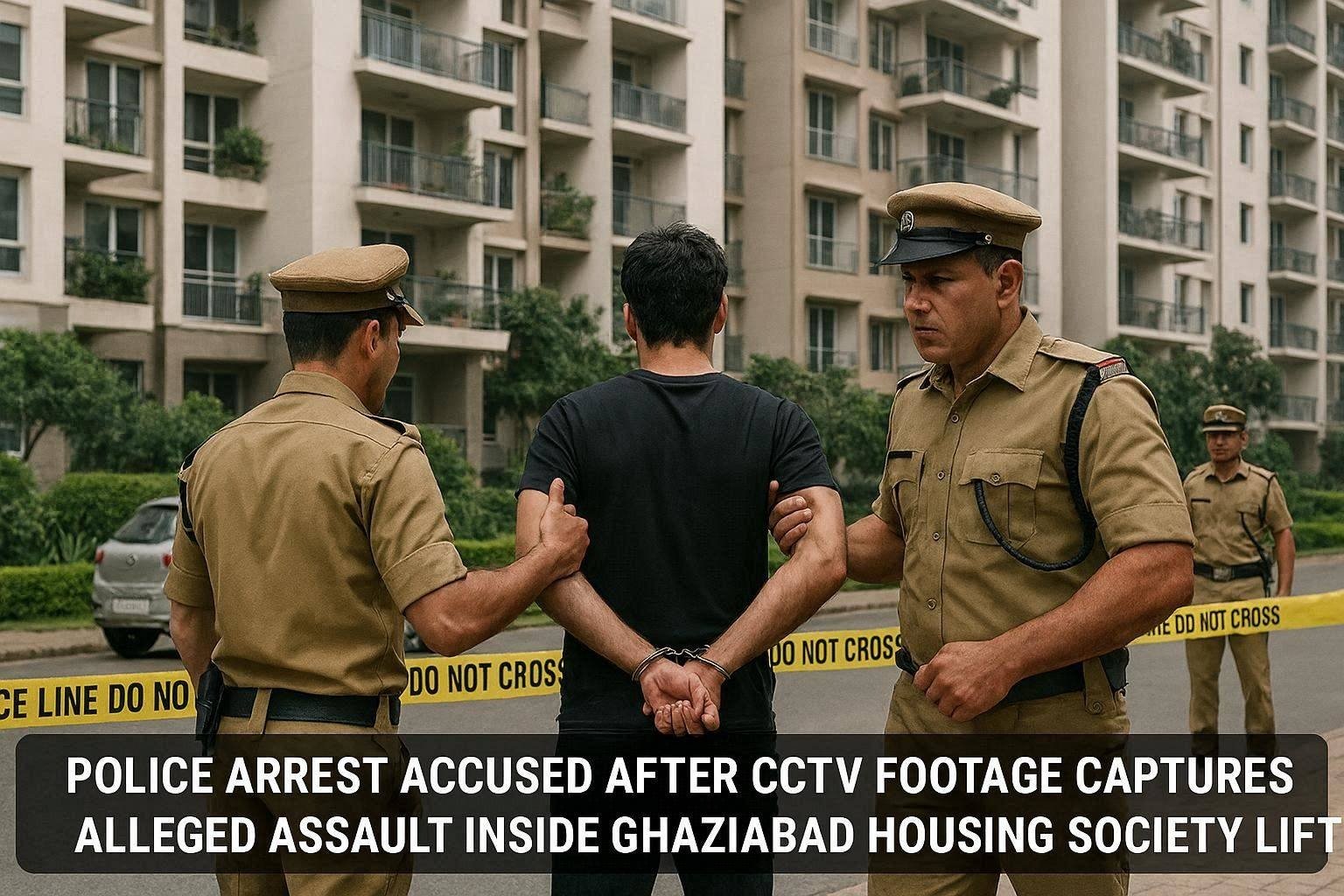
A resident of a housing society in Ghaziabad was allegedly assaulted inside a lift following a dispute over society funds, prompting police action and renewed concerns over governance and accountability in residential welfare associations.
The incident occurred at GH-7 Society in the Crossing Republik area of Ghaziabad. According to reports, the altercation stemmed from disagreements relating to alleged financial irregularities and management of society funds. The victim, who had previously served as the society's treasurer, was reportedly confronted by another resident inside a lift and subjected to physical assault.
A CCTV recording of the incident, reportedly lasting several minutes, captured the assault and later circulated widely on social media. The footage triggered public outrage and calls for strict action against those involved.
Police authorities responded after receiving information about the incident and reviewing available evidence, including CCTV footage. Based on the complaint and preliminary investigation, the accused was arrested.
The incident highlights the growing number of disputes arising within residential housing societies over financial transparency, maintenance charges, and governance issues. While such disagreements are generally expected to be resolved through internal mechanisms, mediation, or legal proceedings, the Ghaziabad incident underscores the potential consequences when conflicts escalate into violence.
Legal experts note that allegations involving assault, wrongful restraint, criminal intimidation, or unlawful confinement may attract criminal liability under the Bharatiya Nyaya Sanhita, 2023, depending on the facts established during investigation.
The police investigation is ongoing, and authorities are expected to examine CCTV footage, witness statements, and society records to determine the full circumstances surrounding the altercation.
The case serves as a reminder that disputes concerning housing society administration and finances should be addressed through lawful and institutional channels rather than physical confrontation.