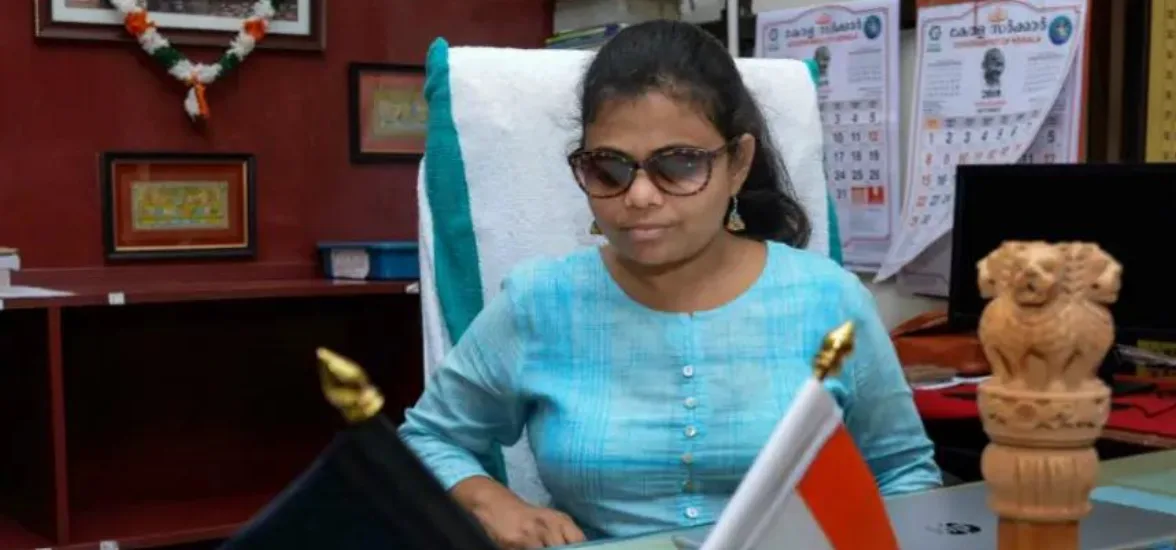
CAT Quashes Transfer of First Visually Impaired Woman IAS Officer from Delhi to Arunachal Pradesh
The Central Administrative Tribunal (CAT), Principal Bench, New Delhi, has quashed the transfer of Pranjal Patil, a 2017-batch IAS officer and India's first visually impaired woman IAS officer, from Delhi to Arunachal Pradesh. In Patil Pranjal Lahensingh v. Union of India (O.A. No. 4634/2024), decided on November 4, 2026, the Tribunal ruled that routine administrative transfer policies cannot override statutory protections available to persons with disabilities.
Background of the Case
Pranjal Patil, who has experienced complete visual impairment since childhood, was initially allocated to the Kerala cadre. In 2018, her request for an inter-cadre transfer to the AGMUT cadre was accepted under the policy applicable to officers with disabilities. She joined the Delhi segment in January 2020 to access specialised medical facilities and essential social support.
However, on September 12, 2024, the Ministry of Home Affairs issued an order transferring her from Delhi to Arunachal Pradesh, followed by a relieving order dated October 17, 2024. Her subsequent representation challenging the transfer was rejected on November 6, 2024.
Patil approached the Tribunal, arguing that the transfer disregarded her medical requirements, violated Section 20 of the Rights of Persons with Disabilities Act, 2016, and failed to provide reasonable accommodation. She also highlighted her need for continuous specialised ophthalmic treatment and the absence of an adequate support system at the proposed posting location.
Government's Arguments
The Union Government defended the transfer, relying on the 2016 transfer and posting guidelines applicable to AGMUT cadre officers. It argued that senior-scale IAS officers were required to complete a minimum tenure in Category B or hard-area segments and that Patil had served exclusively in Delhi without completing such tenure.
The government also cited an alleged shortage of senior-scale officers in Arunachal Pradesh and maintained that her acceptance of the AGMUT cadre involved a liability to serve in different segments.
Tribunal's Observations
The Tribunal, presided over by Judicial Member Rajveer Singh Verma, rejected the government's justification. It held that executive transfer guidelines cannot override statutory obligations under the Rights of Persons with Disabilities Act, 2016.
Referring to Section 20(2) of the Act, the Tribunal emphasised that every government establishment must provide reasonable accommodation and an appropriate working environment to employees with disabilities.
The Tribunal observed that applying identical rotational transfer rules to a completely blind officer without an individual assessment of her circumstances amounts to treating unequals as equals, violating the principle of equality under Article 14 of the Constitution.
It further held that the government had failed to establish genuine administrative constraints through relevant evidence, including vacancy details, sanctioned strength and the availability of alternative officers for the proposed posting.
The Tribunal also noted that the government had not demonstrated the availability of comparable specialised ophthalmic facilities or an equivalent support system in Arunachal Pradesh. It clarified that a statutory right cannot be waived merely because an officer accepts general transfer liability within a cadre.
Final Decision and Directions
Allowing the original application, the CAT quashed and set aside:
- The transfer order dated September 12, 2024.
- The relieving order dated October 17, 2024.
- The order dated November 6, 2024, rejecting her representation.
The Tribunal directed the authorities to continue or repost Patil to the Delhi segment of the Joint AGMUT cadre within four weeks of receiving a certified copy of the order.
It further directed that any future transfer outside Delhi must be supported by a reasoned order, passed after hearing her and considering her current medical condition, support requirements and alternative posting possibilities.
Importantly, the Tribunal protected her career prospects by directing that her inability to complete tenure in Category B segments due to her disability must not adversely affect her promotion, empanelment, central deputation or other service benefits.
Legal Significance
The ruling reinforces the principle that administrative convenience cannot defeat statutory disability rights. It highlights the importance of reasonable accommodation, non-discrimination and individualised assessment in government employment.
The decision is significant for service jurisprudence as it clarifies that transfer policies must operate consistently with the Rights of Persons with Disabilities Act, 2016, and the constitutional guarantee of equality under Article 14.
Case: Patil Pranjal Lahensingh v. Union of India
Case Number: O.A. No. 4634/2024
Forum: Central Administrative Tribunal, Principal Bench, New Delhi
Decision Date: November 4, 2026