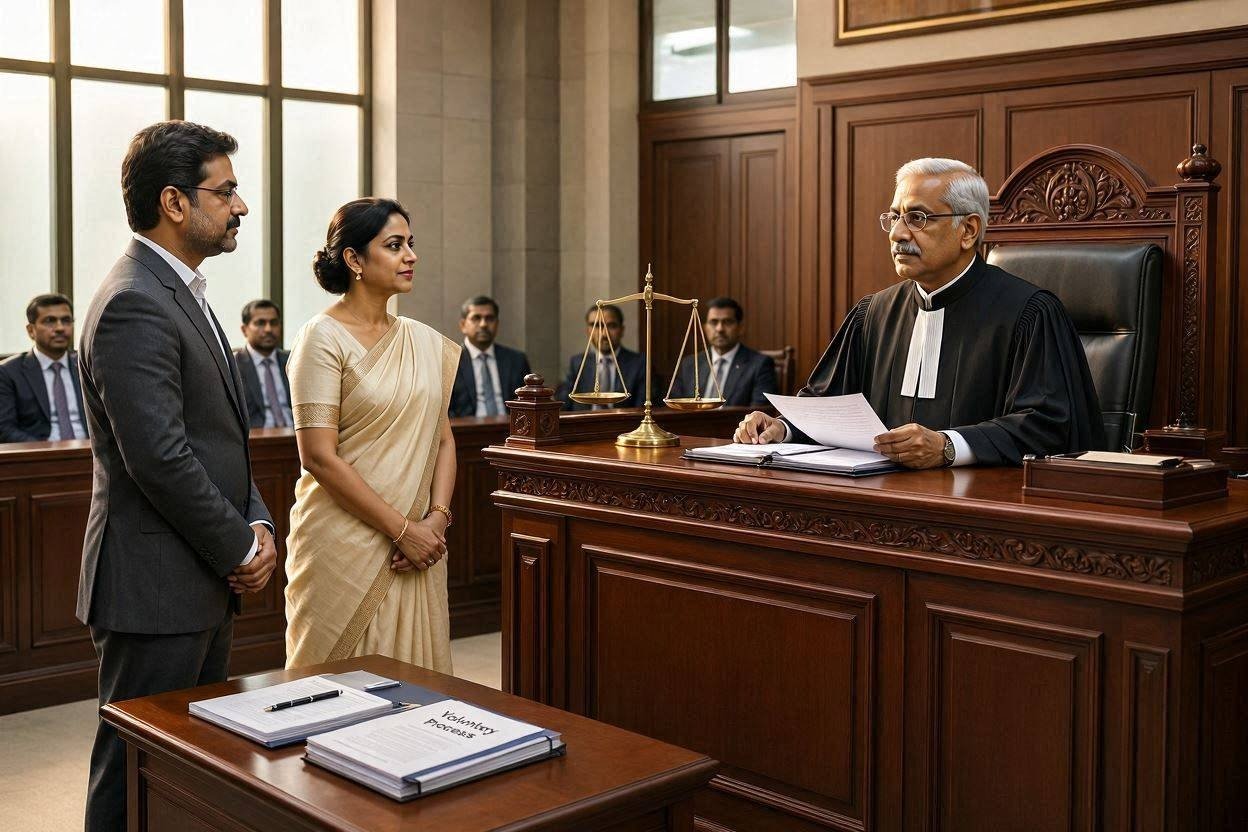
Calcutta High Court: Mediation Cannot Be Forced in Mutual Consent Divorce Cases
In a significant ruling strengthening party autonomy in matrimonial disputes, the Calcutta High Court has held that courts cannot compel spouses seeking divorce by mutual consent to undergo mediation against their wishes.
The judgment came in a case where a trial court had dismissed a joint petition for divorce by mutual consent solely because the parties failed to participate in a mediation process directed by the court. Challenging the dismissal, the spouses approached the High Court.
Setting aside the trial court's order, the High Court observed that mediation is fundamentally a consensual and voluntary dispute resolution mechanism. The Court emphasized that the success of mediation depends on the willingness of both parties to engage in meaningful negotiations and, therefore, it cannot be imposed upon unwilling participants.
The Court clarified that non-attendance at mediation cannot constitute a valid ground for rejecting a petition for divorce by mutual consent. Where both spouses have independently expressed their desire to dissolve the marriage and satisfy the statutory requirements under the Hindu Marriage Act, the court must examine the petition on its merits rather than compel participation in mediation.
The ruling reinforces the principle that mutual consent divorce proceedings are based on the voluntary decision of both spouses to end their marital relationship. While mediation remains an important tool for preserving relationships and resolving disputes amicably, its use must remain voluntary and cannot override the parties' autonomy.
Legal experts believe the decision will provide clarity to family courts handling matrimonial disputes and prevent unnecessary delays in cases where reconciliation efforts are unlikely to succeed.
The judgment is expected to serve as an important precedent in family law matters by reaffirming that consensual dispute resolution mechanisms cannot be transformed into mandatory procedural hurdles for parties seeking lawful dissolution of marriage through mutual consent.