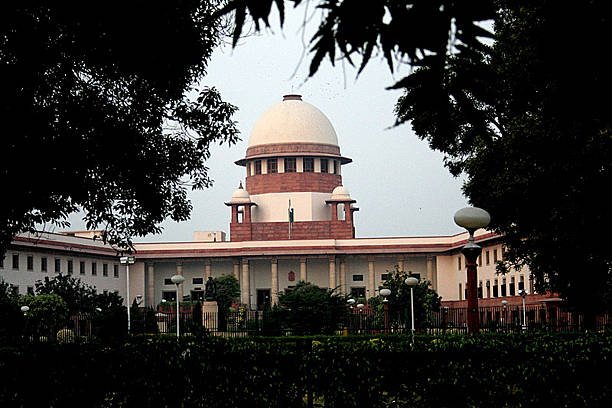
Monetary Claim Waived In Divorce Settlement Cannot Be Revived In DV Act Proceedings: Supreme Court
The Supreme Court ruled that once a wife voluntarily relinquishes all monetary and maintenance claims in a mutual consent divorce settlement agreement, she cannot revive those claims by subsequently initiating proceedings under the Domestic Violence Act.
📅 24 Aug 2026👤 For: All Legal Professionals📰 Source:
LiveLaw👁 45 views
⚖️ Case Details
Reji Baby v. Subi Mary & Anr.
Supreme Court of India
Justice Sandeep Mehta and Justice Manmohan
24 Aug 2026
2026 LiveLaw (SC) 854
Whether a wife who voluntarily relinquished all monetary and maintenance claims under a mutual divorce settlement agreement can subsequently initiate proceedings under the DV Act seeking financial reliefs for past disputes.
The Supreme Court of India has quashed proceedings under the Protection of Women from Domestic Violence Act, 2005 (DV Act) initiated by a woman against her former husband, holding that monetary claims expressly waived in a mutual consent divorce settlement cannot be revived through subsequent domestic violence complaints.
Voluntary Relinquishment of Maintenance Claims
A Bench comprising Justice Sandeep Mehta and Justice Manmohan set aside a Kerala High Court judgment that had refused to quash the DV proceedings. The apex court noted that the parties had entered into a formal Settlement Agreement in 2016 and filed affidavits before the Family Court confirming that all mutual monetary liabilities stood settled.
Key Findings of the Court
No Post-Divorce Cause of Action: The complaint under the DV Act pertained solely to alleged acts predating the settlement agreement, with no fresh cause of action arising after the dissolution of marriage.
Unsubstantiated Allegations of Duress: Mere general assertions of coercion or duress, without any formal legal challenge to set aside the settlement decree, cannot justify reopening closed disputes.
Rights of Adult Children Preserved: The Court clarified that since the major daughter was not a party to the divorce settlement, she retains the liberty to initiate independent proceedings for monetary relief on her own merits.
The Supreme Court reaffirmed that allowing parallel DV proceedings after a concluded and unassailed mutual settlement amounts to an abuse of the judicial process.
📌 Held by the Court
Held that claims voluntarily waived and settled in a divorce agreement cannot be revived via subsequent DV Act proceedings in the absence of a post-divorce cause of action. The proceedings against the wife were quashed, while preserving the independent rights of the major daughter.
⚡ Practical Impact
Bars re-litigation of financial and maintenance issues under the DV Act after a valid and binding mutual divorce settlement has been executed.
👔 For Lawyers & Advocates
Vital precedent for matrimonial and family law practitioners handling quashing petitions under Section 482 CrPC / Section 528 BNSS against parallel DV Act proceedings.
🤖 Key Takeaway
Voluntary relinquishment of maintenance claims in a valid, unassailed mutual divorce settlement bars the revival of pre-settlement financial claims under the DV Act.