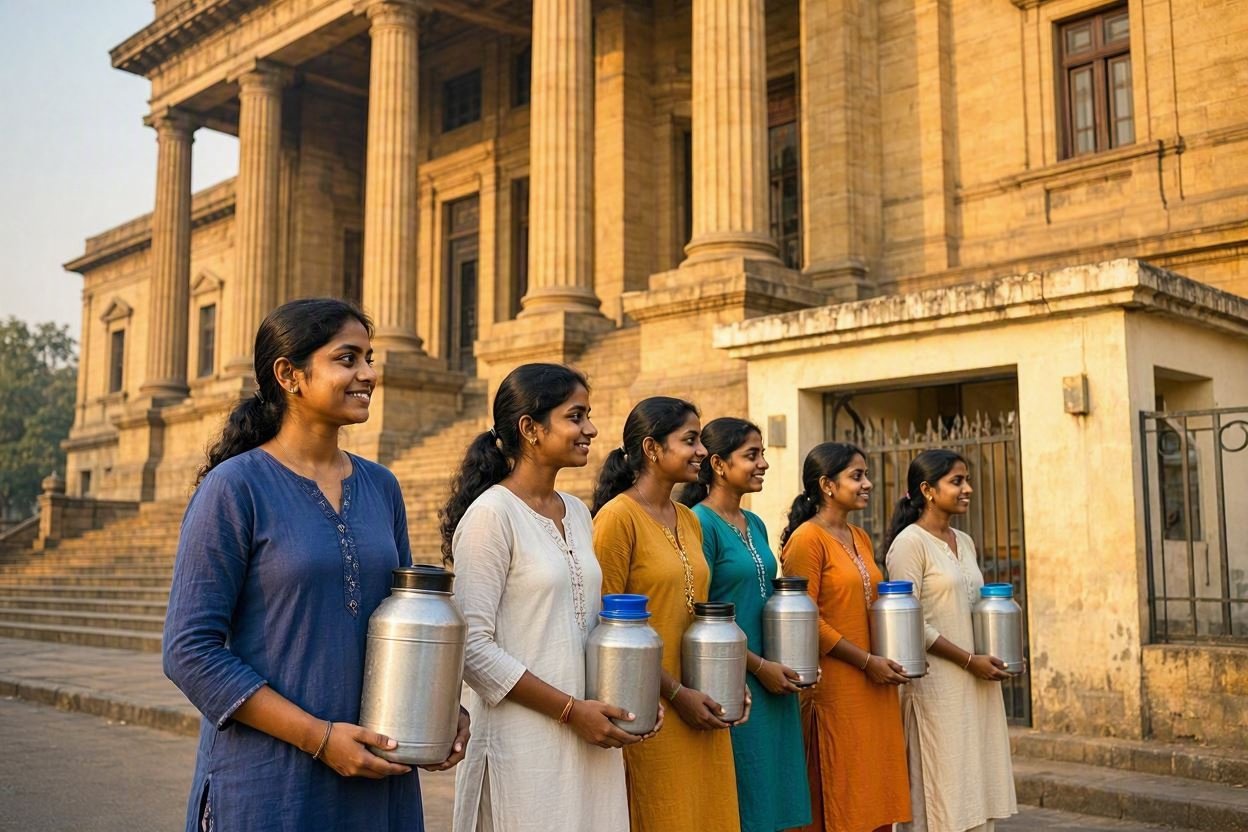
The Bombay High Court has taken suo motu cognisance of reports highlighting severe water shortages and inadequate basic amenities at the University of Mumbai's Madam Cama Girls' Hostel in Churchgate, converting the issue into a Public Interest Litigation (PIL).
A Division Bench comprising Acting Chief Justice Ravindra Ghuge and Justice Gautam Ankhad initiated the proceedings after taking note of media reports detailing the difficulties faced by hostel residents. The reports indicated that students had been experiencing acute water shortages for more than two weeks, affecting access to drinking water and other essential daily requirements.
According to reports placed before the Court, the University attributed the shortage to ongoing civic works in the vicinity being carried out by the Brihanmumbai Municipal Corporation (BMC). Students reportedly faced considerable hardship and were compelled to seek alternative arrangements to meet their basic water needs.
Observing that the issue involved the denial of essential facilities to students residing in a university hostel, the Bench described the matter as a "serious issue" warranting judicial scrutiny. The Court directed the registration of a suo motu PIL and appointed Advocate Yugandhara Khanvilkar as Amicus Curiae to assist the Court.
The Amicus has been tasked with conducting research, gathering relevant information, and preparing a petition detailing the grievances and institutional responses. The Court also directed that copies of the petition be served upon the concerned authorities to enable them to place their responses and corrective measures before the Bench.
The case highlights the expanding role of constitutional courts in addressing issues of public welfare and ensuring that educational institutions and government agencies fulfill their obligations towards students. By invoking its suo motu jurisdiction, the High Court has reinforced the principle that access to basic amenities, including water, forms an essential component of dignified living and educational access.
The matter is scheduled for further hearing on September 2, 2026, when the Court is expected to review submissions from the University, the State Government, and civic authorities regarding remedial measures and long-term solutions.
The proceedings serve as a reminder that student welfare concerns are not merely administrative issues but may also attract judicial intervention where fundamental rights, public accountability, and institutional governance are implicated.