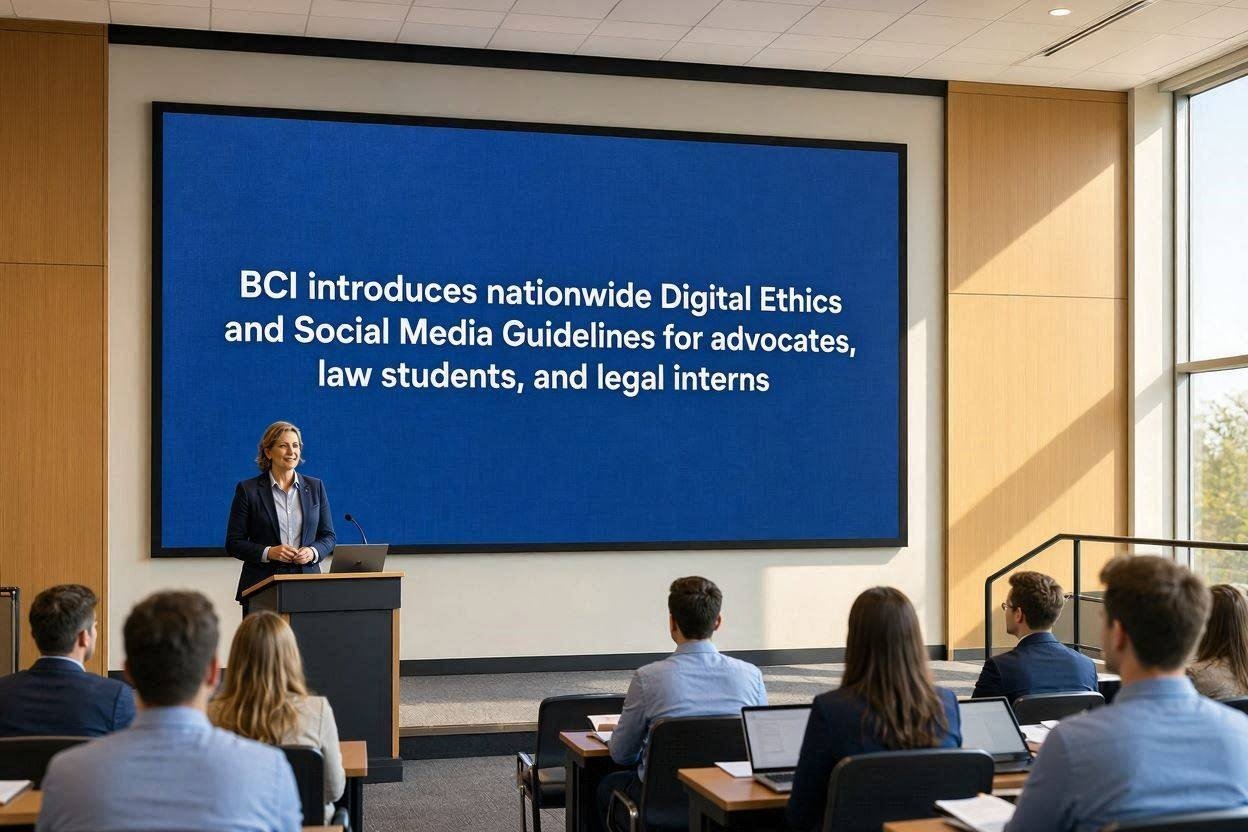
Bar Council of India Introduces Digital Ethics Code for Lawyers
The Bar Council of India (BCI) has unveiled a comprehensive Digital Ethics and Social Media Framework aimed at regulating the online conduct of advocates, law students, legal interns, and legal educators across the country. The move comes amid growing concerns over the increasing use of social media platforms for legal commentary, courtroom-related content, client solicitation, and promotional activities.
Through a circular issued on July 17, 2026, the BCI directed all State Bar Councils and Centres of Legal Education to implement the guidelines immediately. The framework seeks to preserve the dignity of the legal profession while addressing challenges posed by digital platforms, artificial intelligence tools, influencer culture, and online legal marketing.
Key Provisions of the Digital Ethics Framework
The guidelines require legal professionals to maintain professional decorum across all digital platforms. Advocates are prohibited from publishing misleading content, making exaggerated claims regarding case outcomes, sharing confidential client information, or engaging in direct or indirect solicitation of legal work through social media.
The framework also restricts the creation of courtroom reels, unauthorized recordings of judicial proceedings, and content that may compromise the integrity of court proceedings. Law students and interns have been cautioned against creating internship-related promotional content that discloses confidential information or misrepresents legal practice.
Focus on Confidentiality and Professional Responsibility
The BCI emphasized that client confidentiality remains a core professional obligation regardless of the medium used for communication. Legal practitioners are expected to exercise caution when discussing ongoing matters online and must avoid disclosures that could prejudice proceedings or violate professional ethics.
The circular further addresses emerging concerns related to AI-generated content, deepfakes, misinformation, and digital impersonation. Advocates are expected to verify the accuracy of legal information before publication and remain accountable for content disseminated under their names.
Mandatory Compliance Undertakings
A significant feature of the new framework is the introduction of mandatory compliance undertakings. Future applicants seeking enrolment as advocates may be required to submit declarations affirming adherence to digital ethics and professional standards. Similar undertakings are expected to be incorporated within legal education institutions for students and interns.
Implementation and Enforcement
The BCI has instructed State Bar Councils, universities, and law colleges to create awareness regarding the guidelines and establish mechanisms for ensuring compliance. Violations may attract disciplinary proceedings under the Advocates Act, 1961 and the Bar Council of India Rules.
The initiative represents one of the most comprehensive attempts by the legal regulator to address professional conduct in the digital era. As legal practice increasingly intersects with social media and emerging technologies, the framework seeks to balance freedom of expression with the ethical obligations that underpin the legal profession.
Why It Matters
The Digital Ethics Code marks a significant development in legal regulation in India. It signals the BCI's intention to modernize professional standards while safeguarding public trust in the justice system. The guidelines are likely to influence how lawyers, law firms, students, and legal content creators engage with digital platforms in the years ahead.