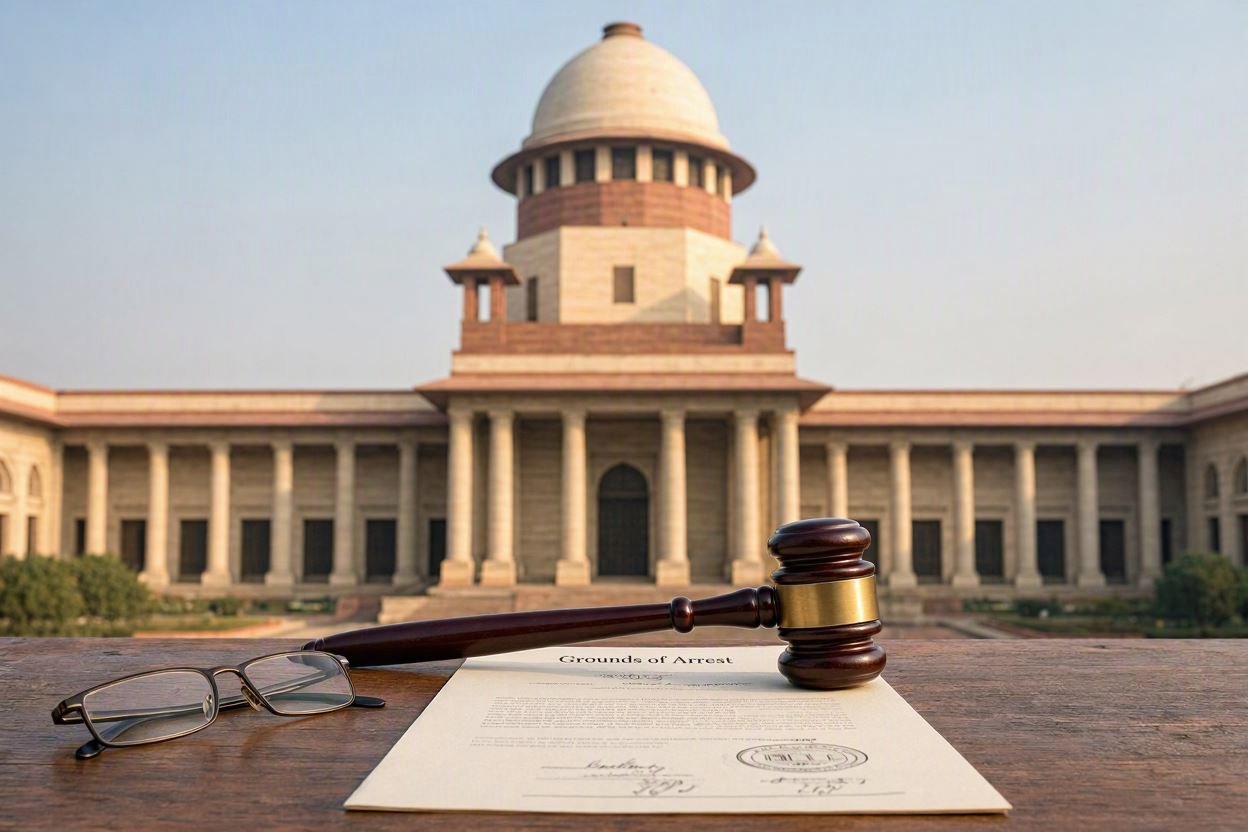
New Delhi: In a significant ruling reinforcing constitutional safeguards against arbitrary arrest, the Supreme Court has held that written grounds of arrest must be furnished to an accused person even in cases registered under the Unlawful Activities (Prevention) Act, 1967 (UAPA).
The Court observed that fundamental rights guaranteed under the Constitution, particularly the protections contained in Article 22, cannot be interpreted narrowly or restricted merely because the allegations involve serious offences or national security concerns.
Reiterating the importance of personal liberty, the bench stated that every arrest must comply with constitutional requirements, including informing the accused of the grounds of arrest in writing and in a language understood by the person arrested.
The judgment builds upon a series of decisions delivered by the Supreme Court over the last few years, including Pankaj Bansal v. Union of India, Prabir Purkayastha v. State (NCT of Delhi), and Mihir Rajesh Shah v. State of Maharashtra, which collectively strengthened procedural safeguards during arrest.
The Court further clarified that if an arrest is declared illegal due to non-compliance with Article 22 safeguards, authorities cannot automatically re-arrest the individual. Any subsequent arrest would require written grounds, judicial approval, and justification before a competent magistrate.
According to the Court, constitutional rights are not dependent upon the nature or gravity of the allegations and extend to all accused persons. The ruling serves as an important reminder that adherence to due process remains mandatory even under special legislations such as the UAPA.
The decision is expected to have far-reaching implications for investigating agencies and law enforcement authorities, ensuring greater accountability and procedural fairness in arrests made under stringent anti-terror laws.