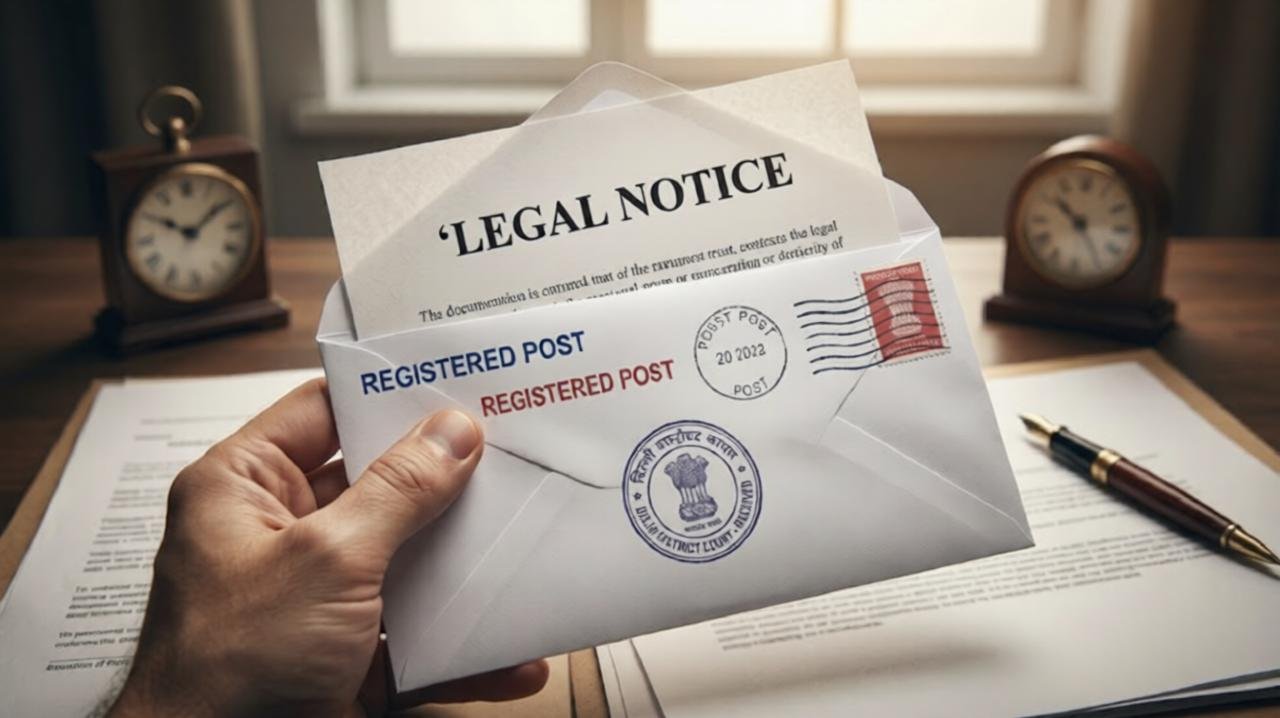
There's a particular kind of dread that comes with a courier showing up unannounced, asking you to sign for a registered envelope. When you open it and see words like "hereby serve notice" or "failing which legal proceedings shall be initiated against you," your stomach drops a little further.
Take a breath. A legal notice is scary precisely because most people have no idea what it actually means or what they're supposed to do next. Receiving one doesn't automatically mean you're headed to court — and it definitely doesn't mean you've done something criminal. In most cases, it's simply the first formal step someone is taking to resolve a dispute: a landlord unhappy about rent, a business partner arguing over a contract, or a customer unhappy with a service.
What a Legal Notice Actually Is
A legal notice is a formal written communication sent by one party to another — usually through a lawyer — stating a grievance and asking for resolution within a specified timeframe. It could be about unpaid dues, a property dispute, a breach of contract, defamation, a cheque bounce case, or a matrimonial issue.
Under Indian law, sending a notice is often a mandatory step before certain civil suits can be filed — particularly under Section 80 of the Civil Procedure Code for cases involving government bodies, or under the Negotiable Instruments Act for cheque dishonour matters.
What this means practically: a notice is often a warning shot, not the final word. The sender is telling you what they want and giving you a window — typically 15 to 30 days — to respond or comply before they escalate. How you use that window matters enormously.
Immediate Steps to Take
Read it more than once.
Legal language is dense on purpose, and it's easy to skim past a crucial detail like a deadline or a specific demand buried in paragraph three. Note the date you received it — deadlines are usually calculated from that point, not from the date printed on the notice itself.
Identify who sent it and why.
Is this from an individual, a company, or a government authority? What exactly are they alleging, and what do they want — a payment, a vacated property, a stopped action, an apology? Write this down in plain language so you have a clear one-paragraph summary of the situation.
Gather every related document.
If it's a property dispute, that means the sale deed, rental agreement, or possession papers. If it's about a business transaction, pull out the contract, invoices, emails, and payment records. Courts and lawyers both work off paper trails — the more organised you are early on, the stronger your position later.
Note the response deadline.
Mark it somewhere you'll actually see it. Missing a response window can sometimes be read as an admission of the claims made against you — or at minimum, it removes your chance to present your side before matters escalate.
Consider whether the claim is simply valid.
If the notice seems straightforward and the claim seems reasonable — a late payment, an honest mistake — it may genuinely be worth resolving the issue directly rather than fighting it. Many disputes get settled at this stage simply because someone finally paid attention.
What Not to Do
Don't ignore the notice.
This is the single most damaging mistake, and it's astonishingly common. People assume that if they don't respond, the problem will lose steam. It rarely does. Ignoring a notice often pushes the other side straight toward filing a case — and once you're in court, your options and your negotiating power shrink considerably.
Don't fire off an angry or emotional reply.
Anything you write can be used as evidence later. An unfiltered response written in frustration can accidentally confirm facts you didn't mean to admit, or make you look unreasonable to a judge reading it months later. If you feel the urge to respond immediately, write out your thoughts privately first and set them aside before deciding how — or whether — to send anything.
Don't assume it's just a bluff.
Some notices are sent more for pressure than substance, but dismissing every notice as a scare tactic is a gamble. It's worth having someone knowledgeable actually assess whether the claim has legal teeth before you decide to disregard it.
Don't negotiate informally without understanding your position.
Don't try to contact the other party's lawyer directly, and don't attempt to settle things on your own before you understand your legal position. It's not unusual for people to agree to unfavourable terms simply because they wanted the stress to end quickly.
When to Consult a Lawyer
When real money, property, or your job is at stake.
If the notice involves a significant sum of money, a property you own, your employment, or any allegation that could carry criminal weight — get professional input before you respond. The cost of a consultation is almost always smaller than the cost of a poorly worded reply that weakens your case.
When the legal language genuinely confuses you.
If you don't fully understand the applicable law or what the sender is actually entitled to demand, that confusion itself is a signal to bring in help. Lawyers exist precisely to translate dense legal phrasing into what it means for your specific circumstances — and to tell you honestly whether the claim against you holds up.
Don't wait until the deadline is days away.
If the deadline is approaching and you haven't decided how to respond, don't wait until the last day to seek help. Lawyers need time to review your documents, understand the full picture, and draft a considered reply rather than a rushed one.
How to Find the Right Lawyer
Start with referrals from people you know who've dealt with something similar, or look up lawyers who specialise in the relevant area — property, family, corporate, or criminal law. Most reputable lawyers will offer an initial consultation to assess your situation before quoting fees for ongoing representation, so there's little downside to at least having that first conversation.
A Final Thought
A legal notice can feel like the ground shifting under you, but it's rarely the catastrophe it first appears to be. It's a formal invitation to address a dispute — and how you respond in the days that follow shapes everything that comes after. Read it carefully, gather your paperwork, resist the urge to react emotionally, and get a professional opinion when the stakes are meaningful. Handled calmly, most notices get resolved long before anyone sets foot in a courtroom.