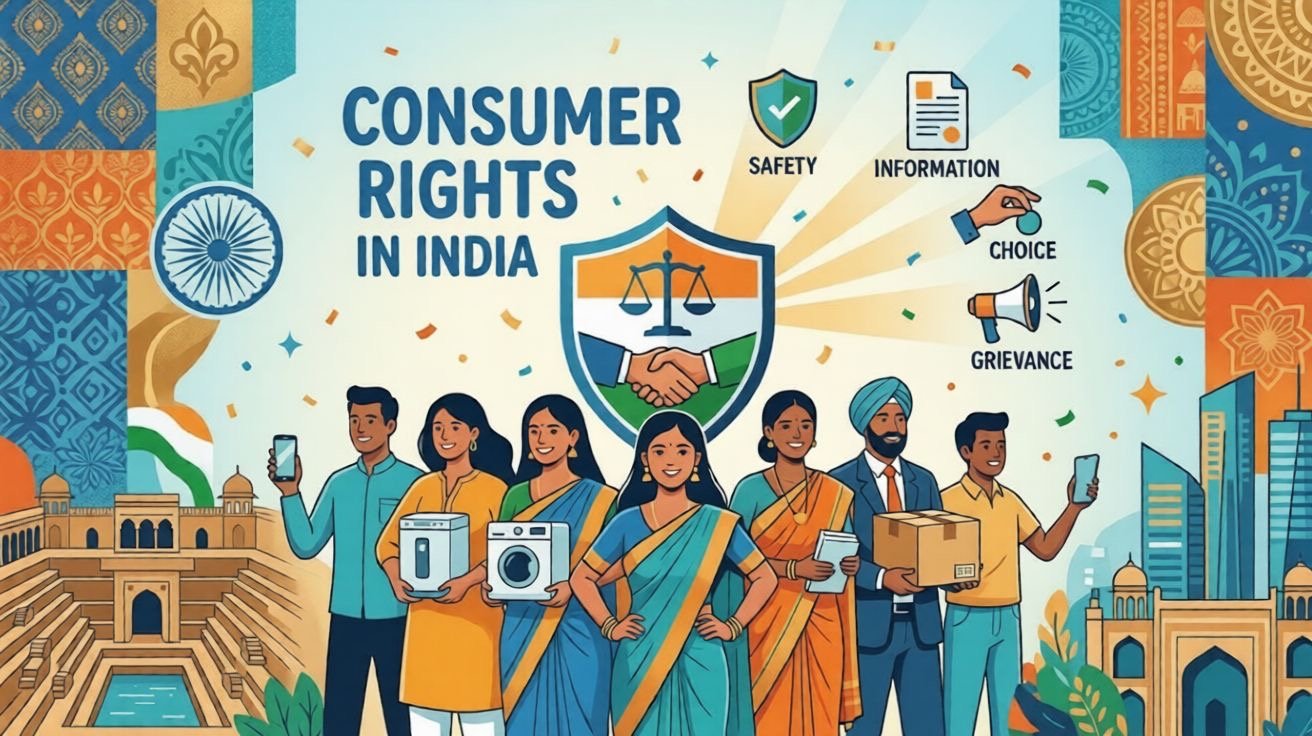
Most of us go through life buying things without ever reading the fine print. A phone, a kitchen appliance, a bag of groceries, an online subscription. We trust that what we're paying for is what we'll get. But when it isn't, that's when consumer rights in India actually matter — they're not some abstract legal concept sitting in a dusty law book. They're the practical, everyday protection you have as a buyer.
What Are Consumer Rights, Really?
At the core, consumer rights in India are built around one simple idea: the person paying money for a product or service deserves fairness. That means the right to safety, the right to accurate information, the right to choose freely without being pressured or misled, and the right to be heard when something goes wrong.
These aren't just moral ideas — they're backed by the Consumer Protection Act, 2019, which replaced the older 1986 law and gave Indian buyers a much stronger, faster system to fight back against unfair trade practices. The Act covers everything from a faulty washing machine to a misleading advertisement to poor service from an online seller.
Refunds: What You're Actually Entitled To
If a product is damaged, doesn't match its description, or simply doesn't work, you generally have the right to ask for a repair, replacement, or refund. The exact remedy depends on the seller's return policy and the severity of the fault — but the underlying protection comes from consumer law, not just company goodwill.
A good habit is to check refund policies before you buy, especially with online purchases. Most e-commerce platforms in India have return windows ranging from a few days to a month. If a seller refuses a refund for a genuinely defective item and their own policy allows it, that's a violation you can act on.
Keep your receipts, screenshots of product listings, and any chat conversations with customer support. These become important evidence if your complaint ever needs to go further.
When a Product Is Defective
Faulty goods are one of the most frequent consumer complaints in India, and the law is quite clear here. Under the Consumer Protection Act, a buyer can demand correction if the product doesn't meet the quality or safety standard it was sold under — sometimes referred to as a consumer guarantee, the basic assurance that what you bought will actually function as promised.
If a company is dragging its feet or ignoring you altogether, speaking to a lawyer who specialises in consumer disputes can help. Many operate on a consultation basis and can tell you quickly whether your case is strong enough to pursue through a consumer forum or court.
You don't always need a lawyer for smaller cases — but for expensive items like electronics, vehicles, or real estate, professional help can make a real difference in how fast and fairly your issue gets resolved.
Understanding Online Consumer Rights
Shopping habits have shifted heavily online, and Indian law has tried to keep pace. Online consumer rights cover accurate product descriptions, clear pricing with no hidden charges, safe payment gateways, and a proper grievance redressal mechanism on the platform itself.
E-commerce companies are required to disclose seller details, return and refund policies, and delivery timelines upfront. If a platform hides this information or makes cancellations deliberately difficult, that itself can be grounds for a complaint.
Consumer privacy is part of this picture too. India's Digital Personal Data Protection Act, 2023 gives consumers more control over how their data is used — including the right to know how it's being used and to ask a company to delete it. If an online seller shares your details without consent or spams you after a single purchase, that's worth raising as a complaint. Consumer privacy isn't a separate issue from consumer rights; it's very much part of the same protection.
How to File a Consumer Complaint
If a company won't resolve your issue directly, filing a complaint is a structured process. You can approach:
- District Consumer Disputes Redressal Commission — for claims up to a certain value, handled locally and relatively quickly.
- State Commission — for higher-value disputes or appeals from district-level orders.
- National Consumer Disputes Redressal Commission (NCDRC) — for the largest or most complex cases.
You can also file online through the e-daakhil portal or contact the National Consumer Helpline (1915) — both let you submit or escalate a case without visiting a physical office. Keep your documentation ready: bills, warranty cards, communication records, and photos if the product is physically damaged.
Why Consumer Awareness Matters
A lot of disputes never reach a courtroom simply because people don't know their rights exist. Consumer awareness is genuinely the first line of defence against being cheated. The more people understand what they're entitled to, the harder it becomes for businesses to get away with cutting corners.
Consumer redressal mechanisms in India have improved significantly over the past decade — more consumer courts, faster digital filing systems, and stronger penalties for companies that violate buyer trust. Knowing your rights and speaking up when something's wrong helps build a fairer marketplace for everyone.
Final Thoughts
Consumer rights in India exist to protect ordinary people from unfair treatment — whether that's a defective product, a denied refund, or a misleading online listing. You don't need to memorise legal sections to benefit from these protections. You just need to know they exist, keep your documentation, and speak up when something feels wrong.
The next time a seller tries to dodge responsibility, remember: the law is quite firmly on your side.
Frequently Asked Questions
What are the basic consumer rights in India?
The right to safety, information, choice, and to be heard — along with the right to seek redressal and consumer education — all protected under the Consumer Protection Act, 2019.
Can I get a refund for a defective product bought online?
Yes, provided the platform's return policy allows it or the product genuinely fails to meet the quality standards it was sold under.
Where do I file a consumer complaint in India?
Through the District, State, or National Consumer Disputes Redressal Commission, or online via the e-daakhil portal and the National Consumer Helpline (1915).
Can I complain about how a company uses my personal data?
Yes. Under the Digital Personal Data Protection Act, 2023, you have the right to know how your data is being used and to request its deletion if it is misused.