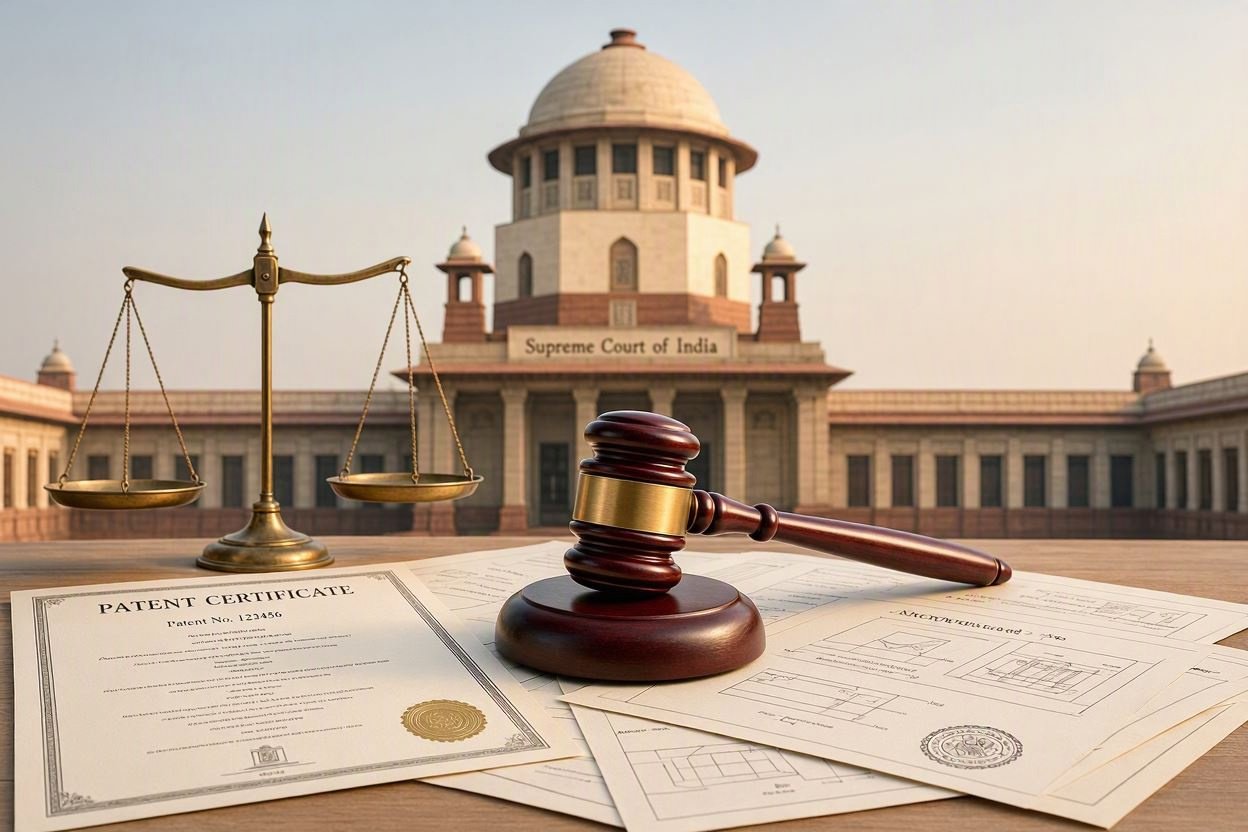
The Supreme Court of India has taken up an important intellectual property law issue concerning the possibility of granting a patent-term adjustment (PTA) to compensate patentees for delays in the patent examination and grant process.
The matter raises questions regarding whether the Patents Act, 1970 permits an extension of the standard patent term when administrative delays attributable to the Patent Office reduce the effective period during which a patent holder can commercially exploit the invention.
Patent-term adjustment mechanisms exist in several jurisdictions, including the United States, where additional patent term may be granted to offset unreasonable delays in patent prosecution. However, Indian patent law currently provides a fixed patent term of twenty years from the filing date, and the statute does not expressly recognize a patent-term adjustment framework.
Before the Supreme Court, the petitioners have reportedly argued that prolonged delays in examination and grant proceedings effectively diminish the value of patent rights and undermine incentives for innovation. The dispute therefore requires judicial examination of whether such relief can be read into the existing statutory framework or whether legislative intervention would be necessary.
The outcome of the case is expected to have far-reaching consequences for patent holders, research-driven industries, pharmaceutical companies, technology innovators, and foreign investors seeking patent protection in India.
Legal experts note that the Court's decision may influence future discussions on balancing innovation incentives with public access considerations under India's patent regime. The ruling could also clarify the extent of judicial authority in addressing perceived gaps within the Patents Act.
The case is being closely watched by stakeholders across the intellectual property ecosystem, as it may shape the future trajectory of patent protection and regulatory efficiency in India.