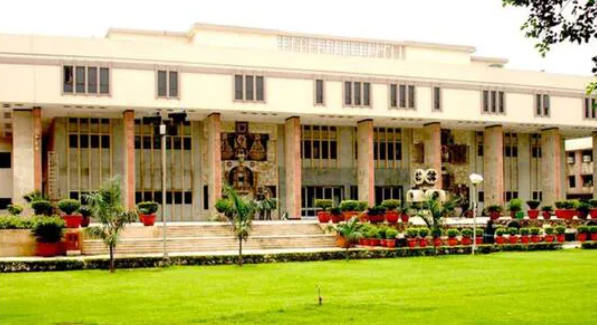
The Delhi High Court has strongly criticized the Income Tax Appellate Tribunal (ITAT) for what it described as "non-application of mind," procedural irregularities, and undue haste while deciding a batch of tax appeals involving Patanjali Ayurved Limited.
A Division Bench comprising Justice Dinesh Mehta and Justice Rajneesh Kumar Gupta set aside seven ITAT orders after observing that the tribunal had failed to adequately address the contentions raised by the parties or provide meaningful reasoning for its conclusions. The Court remarked that the impugned orders reflected a "shocking picture" of procedural lapses and opaqueness in the functioning of the tribunal.
The controversy arose from cross-appeals concerning assessment years 2013-14, 2014-15, 2015-16, and 2017-18. The High Court noted that four appeals were recorded as having been heard and pronounced on August 6, 2025, while three others were heard and pronounced on August 13, 2025. Despite the different hearing dates, the tribunal issued a common order disposing of all seven appeals.
Questioning the approach adopted by the ITAT, the Court observed that the common order contained fewer than seven paragraphs and lacked any substantial discussion of the issues involved. According to the Bench, the order was bereft of logic, reasoning, and rationale, making it difficult to understand how the tribunal reached its conclusions.
The High Court further stated that the tribunal members appeared to have acted with "undue haste" and even "recklessness" in passing and signing the order. It emphasized that appellate bodies occupying the highest fact-finding position in the tax adjudicatory hierarchy are expected to exercise diligence, transparency, and judicial discipline.
While clarifying that it was not examining the merits of the underlying tax dispute, the Court concluded that the procedural defects were serious enough to warrant interference. Consequently, all seven ITAT orders were quashed and the appeals were restored for fresh adjudication.
The Court directed the President of the ITAT to ensure that the matters are assigned to a different bench for reconsideration. A copy of the judgment was also directed to be sent to the President of the ITAT and the Secretary, Ministry of Law and Justice.
The ruling serves as a significant reminder that quasi-judicial and appellate authorities must provide reasoned decisions and adhere to principles of transparency and fairness while adjudicating disputes, particularly in complex tax matters.