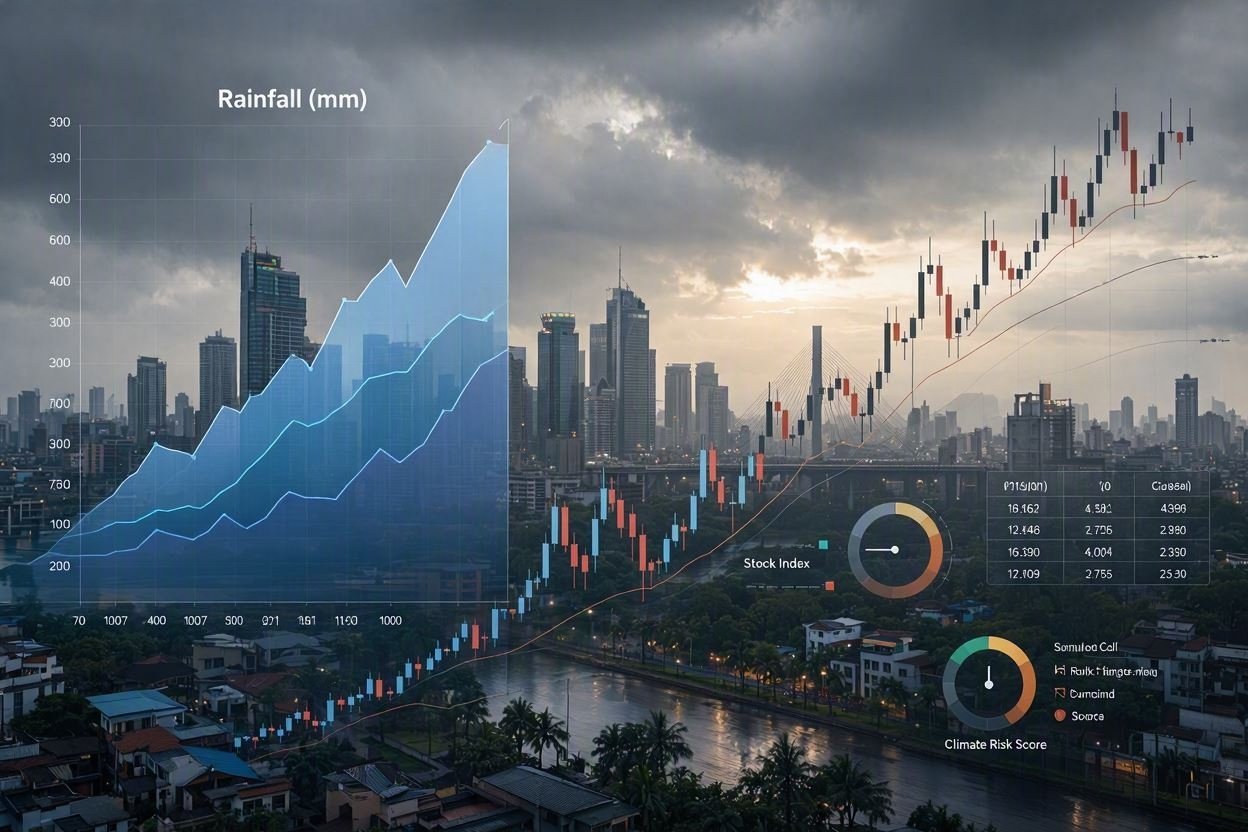
Rain Derivatives in India: Financial, Insurance, or Climate-Risk Instrument?
India's recent introduction of exchange-traded rainfall derivatives marks a significant development in the country's financial and climate-risk management landscape. With the launch of rainfall-linked futures contracts such as RAINMUMBAI on the National Commodity and Derivatives Exchange (NCDEX), policymakers, regulators, insurers, and market participants are increasingly examining the legal nature of these instruments.
Rainfall variability directly affects agriculture, construction, logistics, power generation, transportation, tourism, and financial markets. Traditionally, businesses relied on insurance products or government relief measures to mitigate weather-related losses. However, these mechanisms often involve claims assessment procedures, delayed payouts, and limited coverage.
What Are Rainfall Derivatives?
Rainfall derivatives are weather-linked financial contracts whose payouts depend on objectively measured rainfall data rather than proof of actual economic loss. Settlement occurs based on predetermined weather indices, such as cumulative rainfall deviations recorded by recognized meteorological agencies.
Unlike conventional insurance, parties do not need to demonstrate damage or financial loss. Payment is triggered automatically once the relevant weather index reaches predefined thresholds.
Financial Instrument or Insurance Product?
The primary legal question concerns classification. From a regulatory perspective, rainfall derivatives resemble commodity or financial derivatives because they are standardized, exchange-traded contracts designed for hedging and risk transfer. Their pricing, trading, settlement, and clearing mechanisms align more closely with securities and derivatives markets than with insurance contracts.
Insurance contracts generally require an insurable interest and compensation for actual loss suffered. Rainfall derivatives, by contrast, function as index-based contracts where payouts depend solely on rainfall measurements. This distinction separates them from traditional indemnity insurance products.
Legal commentators have noted that while weather-based insurance products and rainfall derivatives may address similar risks, their regulatory treatment differs significantly. Insurance regulation focuses on underwriting and claims management, whereas derivatives regulation focuses on market integrity, transparency, clearing, and risk management.
The Climate-Risk Dimension
Climate change has increased the frequency and intensity of extreme weather events across India. Businesses are therefore seeking instruments capable of managing revenue volatility arising from unpredictable weather patterns.
Rainfall derivatives have emerged as climate-finance tools that allow market participants to transfer weather-related financial risk. They may complement insurance products by providing quicker and more objective settlements based on verified meteorological data.
Experts argue that climate-risk instruments could become increasingly important as governments and regulators seek market-based solutions for climate adaptation and resilience. Future expansion may include derivatives linked to temperature, humidity, wind speed, or other weather indicators.
Regulatory Challenges
Despite their promise, rainfall derivatives face several regulatory and operational challenges. Market liquidity remains a key concern. Reliable weather data, transparent index methodologies, dispute resolution mechanisms, and robust market participation are essential for successful implementation.
Questions also remain regarding the interaction between securities regulation, commodity derivatives law, insurance law, and climate-governance frameworks. Policymakers may eventually need a specialized regulatory approach that recognizes weather derivatives as climate-risk transfer instruments while maintaining financial market safeguards.
Looking Ahead
India's rainfall derivatives represent a significant step toward integrating climate resilience with financial innovation. Whether viewed as financial products, insurance alternatives, or climate-risk management tools, their evolution will likely shape the future of climate finance and weather-risk governance in India.