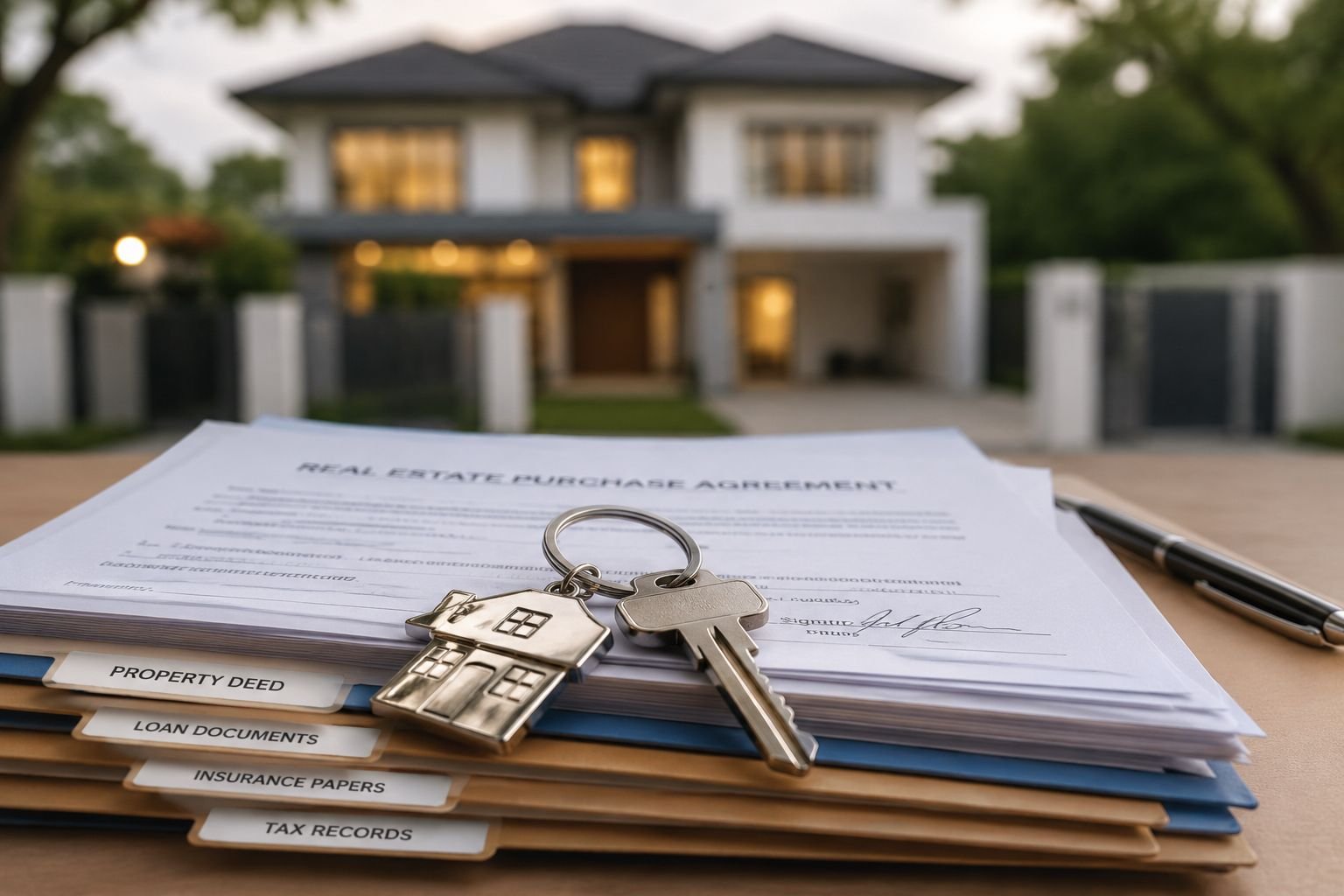
Buying a home is probably one of the biggest financial decisions you'll make in your lifetime. And yet, so many buyers get swept up in the excitement of choosing tiles, comparing floor plans, and negotiating the price that they forget the one thing that can make or break the entire deal: the paperwork.
A solid property documents checklist isn't just a formality. It's what protects you from buying a house that has a legal dispute attached to it — or worse, one that was never legally allowed to be built in the first place.
Why a Property Documents Checklist Matters
Ownership in India isn't always as straightforward as it looks. A property can pass through multiple hands, get inherited, get partitioned among family members, or get mortgaged without the buyer knowing. If even one document in the chain is missing or fraudulent, you could end up in a legal mess years after you've moved in.
This is why checking documents required to buy property in India isn't something you leave entirely to your lawyer. You need to know what you're looking at, so you can ask the right questions and spot red flags early.
The Essential Property Documents Checklist
1. Sale Deed or Title Deed
The most important document in the entire transaction. The sale deed proves that the seller actually owns the property and has the legal right to sell it. Always ask for a certified copy and trace the ownership history back at least 30 years, especially for resale properties. A break in this chain is one of the biggest warning signs a buyer can miss.
2. Encumbrance Certificate
Tells you whether the property has any pending loans, mortgages, or legal dues attached to it. Obtain this from the sub-registrar's office where the property is registered. If a property shows an encumbrance, someone else may still have a financial claim on it — that's a deal breaker until it's cleared.
3. RERA Registration Certificate
If you're buying a new or under-construction flat, verify that the project is registered under RERA. A RERA-registered property means the builder has disclosed the project timeline, land title, and approvals to a government authority. Verify directly on your state's RERA website using the project's registration number.
4. Property Tax Receipts
Ask the seller for the last few years of property tax receipts. This confirms taxes have been paid on time, there are no outstanding dues that could transfer to you as the new owner, and it indirectly confirms who the municipal authority recognises as the current owner.
5. Occupancy Certificate and Completion Certificate
These two are often confused. The completion certificate confirms that construction followed the sanctioned building plan. The occupancy certificate confirms the building is fit for habitation. Without an occupancy certificate, you technically cannot legally occupy the property — even if it looks fully finished.
6. Approved Building Plan
Every construction needs to follow a plan approved by the local municipal or development authority. Ask to see this sanctioned plan and compare it with the actual structure. Unauthorised floors, extra rooms, or extensions beyond the approved plan can lead to demolition notices later — a risk you don't want to inherit.
7. Khata Certificate and Mutation Records
A khata certificate (or equivalent land revenue record, depending on your state) confirms that the property is recorded in local municipal records under the seller's name. Mutation records show the property has been officially transferred in government revenue records after each sale. Without updated mutation, your name won't reflect correctly for future tax and utility purposes.
8. No Objection Certificates (NOCs)
Depending on the property type, you may need multiple NOCs — from the housing society, fire department, pollution control board, or water and electricity boards. For apartments, a society NOC confirming no pending dues is especially important.
9. Power of Attorney, If Applicable
Sometimes the person selling isn't the actual owner but someone acting through a power of attorney. If this is the case, get the original POA verified by a lawyer and confirm it's registered and still valid. Unregistered or expired POAs have been the root of many property fraud cases in India.
10. Sale Agreement and Payment Receipts
Before the final sale deed, you'll usually sign a sale agreement outlining terms, timelines, and payment schedules. Keep every payment receipt, bank transfer record, and cheque copy safely. These become crucial evidence if there's ever a dispute about how much was paid and when.
Red Flags to Watch Out For
- Multiple names appearing as owners without clear legal partition
- Property tax receipts that are inconsistent or missing for recent years
- A sale deed that mentions a different survey number than what's shown on-site
- Any pending litigation mentioned in the encumbrance certificate
- A builder who avoids sharing RERA registration details
If you spot even one of these, pause the deal and get a lawyer to dig deeper before you proceed.
How to Verify These Documents
A property lawyer can conduct a proper title search, and many state governments now offer online portals where you can check RERA registration, encumbrance status, and property tax records digitally. It takes a little more time upfront but saves you from disputes that can drag on for years in court.
For independent houses or plots, it's also worth getting a survey done to confirm that boundaries match what's mentioned in the documents. Boundary disputes are surprisingly common — and easy to avoid with an early check.
Final Thoughts
A home purchase should feel exciting, not stressful. But that excitement should never come at the cost of skipping the paperwork. Going through this property documents checklist before buying might feel tedious at first — but it's the only way to protect the biggest investment you're likely to make.
Take your time, ask for originals, get everything verified by a professional, and don't let anyone rush you into signing before you're satisfied. A little patience now can save you years of legal trouble later.