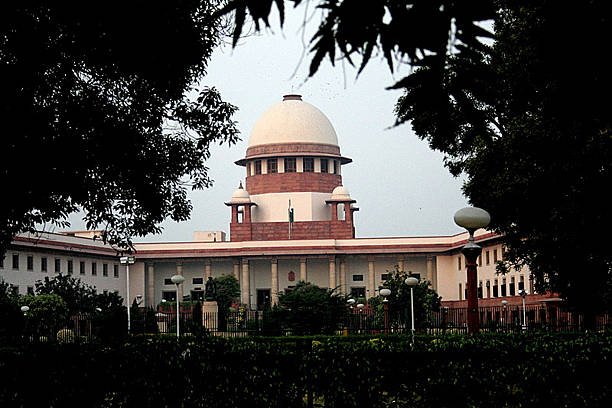
The Supreme Court of India has held that a public employer cannot discharge an employee merely because a criminal case is pending against them, particularly when the employee has not been afforded an opportunity to defend themselves.
Discharge Solely on Pending Case Held Illegal
A Bench comprising Justice Dipankar Datta and Justice Sheel Nagu held that the termination of a police constable in 2003 was illegal because there was no conviction recorded against him at the time of discharge, and the action was based solely on the pendency of an FIR.
The Court observed: “Appellant was discharged from service not because of his conviction on a criminal charge but merely on the ground of pendency of the criminal case. He was not given an opportunity of raising his defence. We have not been shown any law which authorises a public employer to either dismiss or remove an employee serving the police for more than a decade solely on the ground of pendency of a criminal case.”
Effect of Release on Probation on Disciplinary Action
The Bench clarified that while the initial discharge was illegal, release on probation under the Probation of Offenders Act, 1958 does not erase a criminal conviction:
- Probation Does Not Wash Away Conviction: The primary objective of probation is reformation, but it does not obliterate the underlying conviction.
- Article 311(2) Second Proviso: An employee convicted on a criminal charge can still be dismissed or removed from civil service under the second proviso to Article 311(2) of the Constitution based on their conduct leading to conviction, notwithstanding their release on probation.
Declining reinstatement after more than two decades, the Supreme Court exercised its plenary powers under Article 142 of the Constitution and directed the State to pay ₹5,00,000 as compensation to the appellant.