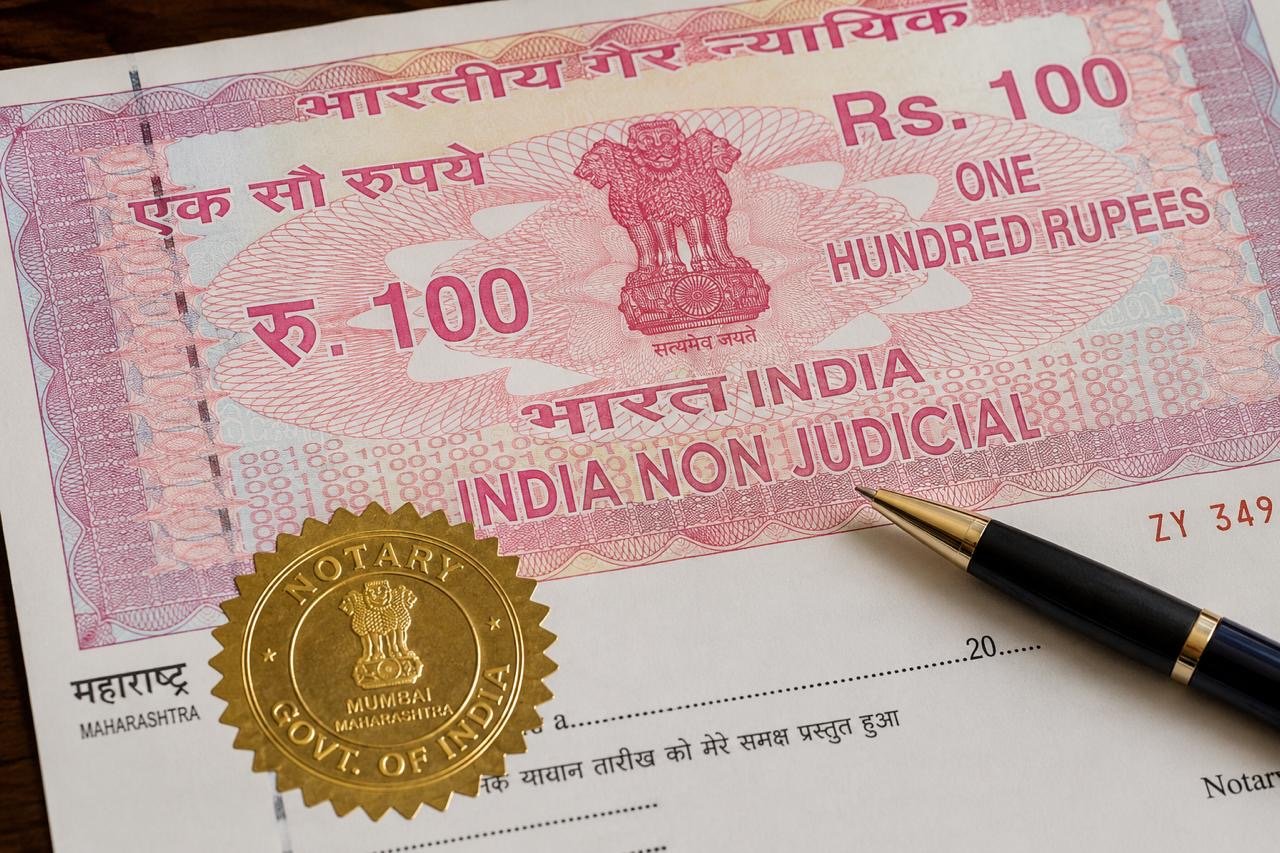
If you've ever been asked to "get this notarised" and had no idea what that actually meant, you're not alone. Most people in India run into notarisation for the first time when they're signing a rent agreement, an affidavit, or some paperwork for a loan — and suddenly they're standing outside a small office with a red stamp on the door, wondering what happens next.
This guide walks you through notarisation in India in plain language. No legal jargon, no confusion — just what it is, when you need it, and how to get it done.
What Does Notarisation Actually Mean?
Notarisation is the process of getting a document authenticated by a notary public — a person appointed by the Central or State Government under the Notaries Act, 1952. When a notary signs and stamps your document, they're confirming that they've verified the identity of the person signing it and that the signature is genuine.
Think of it as a layer of trust. A notarised document tells anyone who reads it — a court, a bank, a government office — that a neutral, legally recognised official has confirmed the paperwork is real and was signed willingly.
It's worth being clear about what notarisation is not. It doesn't check whether the contents of your document are true or legally valid. A notary isn't approving what you've written — they're only confirming who signed it and that they did so in front of them.
Who Can Notarise a Document in India?
Only a person registered as a notary public can notarise documents. These are usually senior advocates who have practised law for a minimum number of years and have applied for and received notary status from the state or central government.
You'll typically find notaries operating near district courts, sub-registrar offices, or in small legal chambers in most towns and cities. Look for a brass or wooden signboard that says "Notary Public" along with the person's name and registration number.
When Do You Need a Notarised Document?
Notarisation shows up more often than people expect. Common situations include:
- Affidavits for court proceedings, name changes, or address proof
- Rent or leave and license agreements, especially for tenancies under 11 months
- Power of attorney documents, particularly when acting on someone else's behalf
- Educational document verification for admissions or job applications
- Loan and financial documents requested by banks or NBFCs
- Business agreements where both parties want an added layer of authenticity
- Documents meant for use outside India, before further attestation or apostille
Not every document legally requires notarisation — many agreements are perfectly valid without it. But banks, employers, and government departments often ask for it anyway, because it adds credibility and makes verification easier on their end.
How Is Notarisation Different From Registration?
This is where a lot of people get confused, so it's worth spelling out clearly.
Notarisation confirms that a document was signed by a specific person in front of a notary. It's quick, inexpensive, and doesn't involve government land or document records.
Registration is done at the office of the Sub-Registrar under the Registration Act, 1908. It gives a document legal ownership status and creates a permanent public record — this matters for property sale deeds, gift deeds, and long-term lease agreements above 11 months.
In short: notarisation proves the authenticity of signatures. Registration establishes legal title and creates an official record. Some documents need both, some need only one, and plenty need neither.
Step-by-Step: How to Get a Document Notarised
1. Prepare your document.
Make sure your document is complete and printed on the correct paper. Some documents like affidavits need to be on stamp paper of a specific value, depending on your state.
2. Carry valid ID proof.
Bring an original identity document — Aadhaar card, PAN card, voter ID, or passport. The notary will check this before verifying your signature.
3. Sign in front of the notary.
This part matters. You cannot sign the document beforehand and simply hand it over — the notary needs to witness you signing it, or at the very least confirm your signature in person.
4. Notary verifies and stamps the document.
Once satisfied, the notary applies their official stamp, signature, registration number, and the date. Most also maintain a notarial register where the transaction is logged for future reference.
5. Pay the applicable fee.
Notary fees in India are generally modest and regulated by state government notifications. The exact amount varies slightly depending on the type of document and the state you're in.
Quick tip: Always carry a photocopy of your ID and the document. Some notaries keep a copy for their records, and having one ready saves time.
Is Online Notarisation Available in India?
India hasn't yet implemented full online notarisation the way some other countries have. As of now, the process largely requires physical presence in front of the notary. That said, e-stamping for stamp duty payment has become common in several states, which does speed up part of the paperwork before your visit.
Some private platforms offer to arrange notary visits or courier services for busy professionals, but the core act of notarisation — verifying identity and witnessing a signature — still requires a face-to-face interaction with a licensed notary under current Indian law.
Common Mistakes People Make
- Signing the document before reaching the notary's office
- Forgetting to carry original ID proof, not just a photocopy
- Using the wrong stamp paper denomination for affidavits
- Assuming notarisation replaces registration for property-related documents
- Not checking whether the notary's registration is current and valid
Avoiding these is mostly about a little preparation. Call ahead if you're unsure about stamp paper value or documentation — especially for something time-sensitive like a court filing.
Frequently Asked Questions
Is a notarised document legally valid in Indian courts?
Yes, notarised documents are accepted as evidence of authenticity in Indian courts, though the underlying content still needs to meet whatever legal requirements apply to that specific document.
How much does notarisation cost in India?
Fees are generally low and set by state-level rules. It's best to check with your local notary for the current rate.
Can a notarised rent agreement be used for address proof?
Yes, a notarised leave and license agreement is commonly accepted as address proof by banks, telecom providers, and government offices across India.
Do I need a lawyer to get something notarised?
No. You can walk into any notary's office directly with your document and ID proof — there's no need to hire a separate lawyer for the notarisation itself.