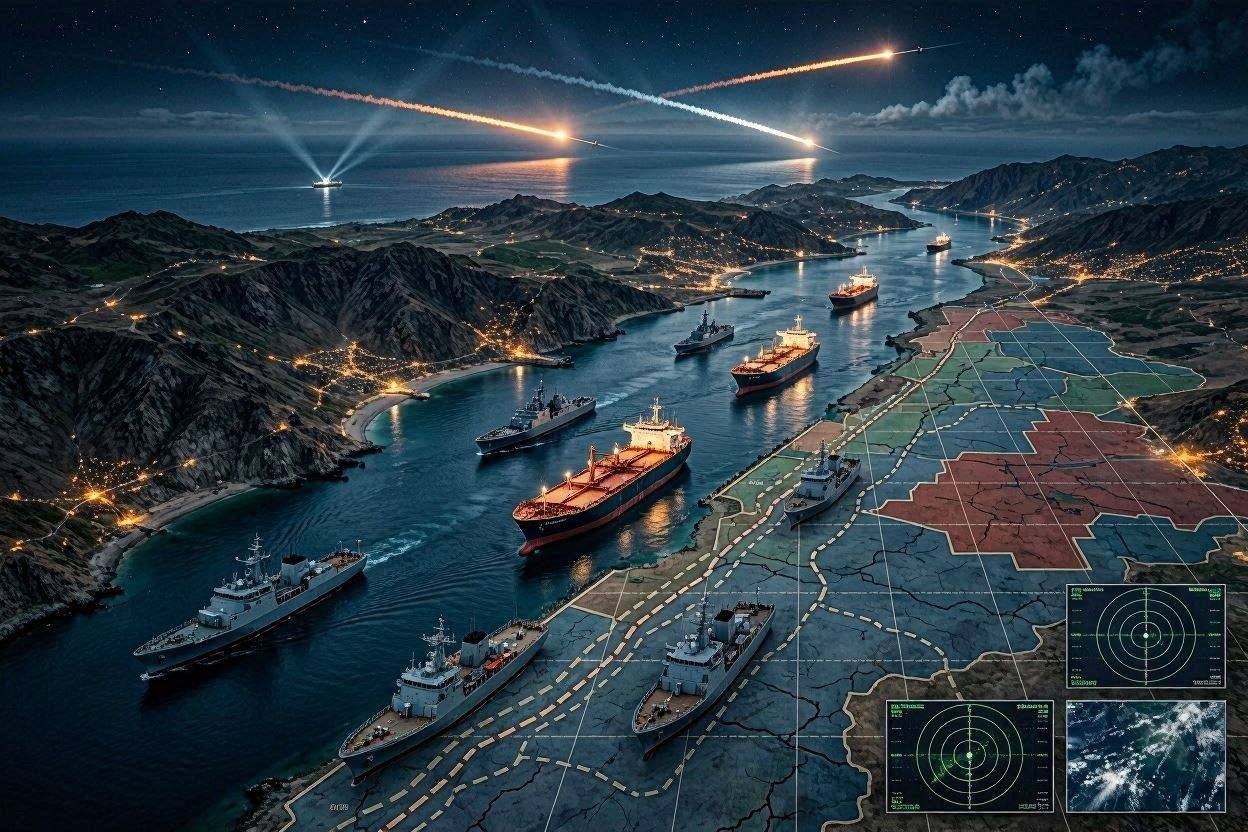
The Middle East has entered a new phase of instability after a fragile ceasefire between the United States and Iran reportedly broke down amid renewed military operations and escalating regional tensions.
According to multiple international reports, the United States conducted fresh strikes against Iranian military targets following attacks on commercial shipping in and around the Strait of Hormuz. Iran subsequently announced the closure of the strategically significant waterway, one of the world's most important energy transit routes.
The Strait of Hormuz serves as a critical maritime corridor through which a substantial portion of global oil and liquefied natural gas supplies pass. Any disruption to navigation through the strait has immediate implications for global energy markets, international trade, and regional security.
Following the renewed strikes, missile and drone activity was reported across several Gulf states hosting American military assets. Regional governments heightened security measures while international stakeholders called for restraint and diplomatic engagement.
From a legal perspective, the developments raise significant questions under international law. The use of force by states is governed by Article 2(4) of the United Nations Charter, while claims of self-defence are assessed under Article 51. Any military action undertaken in response to attacks must satisfy principles of necessity and proportionality.
The reported closure of the Strait of Hormuz also carries implications under international maritime law. The principle of freedom of navigation and the uninterrupted movement of commercial vessels through international waterways remains a cornerstone of global maritime governance.
Legal experts have further highlighted the relevance of international humanitarian law, including obligations to protect civilians and civilian infrastructure during armed conflict. Continued hostilities could invite scrutiny from international organisations and potentially trigger diplomatic or legal responses within multilateral forums.
The renewed confrontation has heightened concerns about regional stability, global energy security, and the future of diplomatic efforts aimed at de-escalating tensions between the United States and Iran.