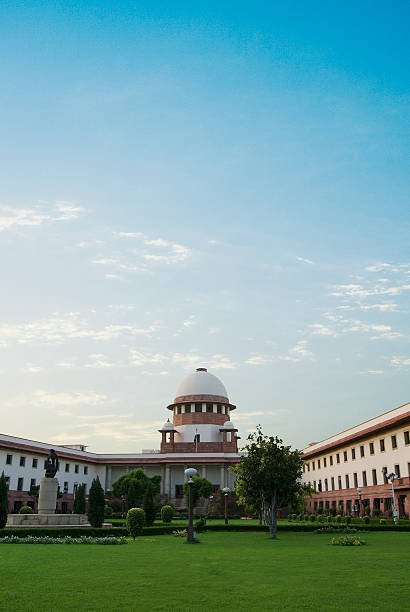
Mere Delay In Depositing Foreign Travel Tax Not Same As 'Failure To Pay' & Litigant Cannot Be Worse Off For Filing An Appeal: Supreme Court
✍️ By Roojhal Jain📅 02 Sep 2026🔄 Updated 19 Oct 2026👤 For: Lawyers & Advocates📰 Source:
LiveLaw
The Supreme Court held that a mere delay in depositing Foreign Travel Tax (FTT) does not amount to a failure to pay tax under Section 38(3) of the Finance Act, 1979, and reaffirmed the doctrine of no reformatio in peius, ruling that an appellant cannot be placed in a worse position merely for pursuing a legal remedy
⚖️ Case Details
M/s Saudi Arabian Airlines v. Union of India & Ors.
Supreme Court of India
Justice J.B. Pardiwala and Justice Ujjal Bhuyan
01 Sep 2026
2026 LiveLaw (SC) 880; Civil Appeal
Whether delayed deposit of tax constitutes "failure to pay" under Section 38(3) of the Finance Act, 1979, and whether an appellate authority can enhance a penalty against an appellant on a remand triggered by the appellant's own appeal (no reformatio in peius)
The Supreme Court of India has held that mere delay in depositing Foreign Travel Tax (FTT) collected from passengers cannot be equated with a complete failure to pay the tax, and therefore does not attract the automatic penalty prescribed under Section 38(3) of the Finance Act, 1979.
Distinction Between Non-Payment and Delayed Payment
A Bench comprising Justice J.B. Pardiwala and Justice Ujjal Bhuyan set aside a penalty of over ₹71 lakh imposed on Saudi Arabian Airlines, reversing a 2010 judgment of the Bombay High Court.
Key Legal Principles Clarified by the Supreme Court
Distinct Fields of Operation: The Court held that Section 38(3) applies to non-payment of tax, whereas delayed deposits fall under Section 38(4) read with Rules 4 and 9 of the 1979 Rules, carrying a significantly lower penalty.
Doctrine of 'No Reformatio in Peius': Reaffirming this fundamental procedural principle, the Bench held that an appellant should not be placed in a worse position for exercising a statutory right to appeal. The enhancement of penalty from ₹12,000 to ₹71.29 lakh upon a remand initiated by the airline's own appeal was held unconstitutional and impermissible.
Automatic Penalty Rejected: The Court ruled that automatic imposition of penalty without establishing willful default or adhering to natural justice safeguards cannot be sustained.
The Court ordered the refund of any penalty amount already paid with 9% per annum interest and discharged the bank guarantee furnished by the airline.
📌 Held by the Court
Held that delayed payment differs from non-payment under the Finance Act, 1979, and setting aside the penalty entirely. The Court also applied the doctrine of no reformatio in peius, holding that pursuing a legal remedy cannot result in a worse outcome for the litigant.
⚡ Practical Impact
Protects taxpayers and litigants from arbitrary penalty enhancements when appealing administrative decisions and clarifies tax default classifications.
👔 For Lawyers & Advocates
Crucial precedent in Indirect Tax Law, Administrative Law, and Constitutional Principles governing natural justice and appellate rights.
🤖 Key Takeaway
Section 38(3) of the Finance Act applies to total non-payment, not delayed deposits. Additionally, statutory remedies cannot be weaponized to place appellants in a worse position than before their appeal (no reformatio in peius).
About the author:Roojhal Jain, Legal Content Writer, Lexnomik
Roojhal Jain is a legal content writer at Lexnomik. He writes case updates, legal news and explainers that help legal professionals see what changed and why it matters. His work follows Lexnomik's editorial policy of checking every item aga…