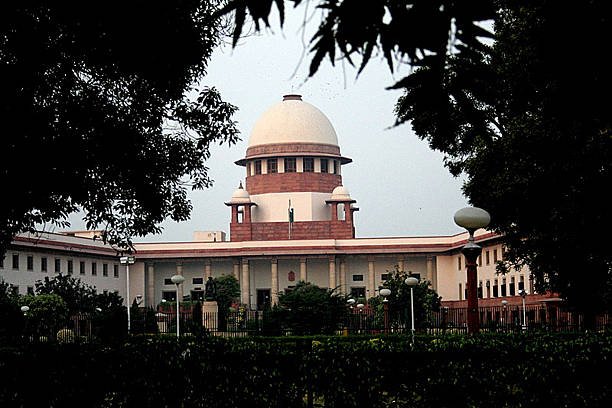
Fleeing After Friend's Drowning, Though Reprehensible Conduct, Not Per Se Suggestive Of Murder: Supreme Court
The Supreme Court held that fleeing from the spot after witnessing a friend drown and failing to inform the family, though reprehensible, cannot by itself be treated as an incriminating circumstance to establish murder.
📅 26 Aug 2026👤 For: All Legal Professionals📰 Source:
LiveLaw👁 72 views
⚖️ Case Details
Taher Vajiyuddin Rangwala & Anr. v. State of Gujarat
Supreme Court of India
Justice J.B. Pardiwala and Justice K. Vinod Chandran
19 Aug 2026
2026 LiveLaw (SC) 810
Whether the fleeing of companions from the scene of an accidental drowning and failure to immediately inform the victim's family constitutes sufficient incriminating circumstantial evidence to convict for murder under Section 302 IPC / Section 103 BNS.
The Supreme Court of India has acquitted two individuals convicted of murder, holding that post-incident conduct such as fleeing the scene of an accidental drowning and failing to inform the deceased's family cannot automatically be inferred as proof of homicidal intent or murder.
Analysis of Circumstantial Evidence and Post-Incident Conduct
A Bench comprising Justice J.B. Pardiwala and Justice K. Vinod Chandran set aside the conviction of the appellants who were present when their friend accidentally drowned in a river.
The prosecution had relied heavily on the post-incident behavior of the accused, emphasizing that they fled the site, went to watch a movie, and failed to promptly inform the victim's family, treating this as circumstantial evidence of murder:
Lack of Direct Evidence: The Court observed that except for the appellants, there were no eyewitnesses to the incident, nor was there evidence demonstrating homicidal violence.
Reprehensible vs. Criminal: The Bench clarified that while fleeing the spot and avoiding early reporting is morally "reprehensible" conduct, moral culpability alone cannot substitute for solid legal proof in criminal jurisprudence.
The judgment reinforces that panic-driven post-event actions do not automatically translate into a chain of circumstantial evidence sufficient to prove murder beyond reasonable doubt.
📌 Held by the Court
Held that panic-driven conduct or failure to report an accidental death, though morally reprehensible, does not establish a complete chain of circumstantial evidence needed for a murder conviction. The conviction was set aside and the appellants were acquitted.
⚡ Practical Impact
Sets a clear legal boundary between morally objectionable post-incident conduct and legally admissible circumstantial evidence in murder trials based on accidental deaths.
👔 For Lawyers & Advocates
Crucial precedent for criminal defense attorneys arguing against reliance on weak circumstantial evidence, panic reactions, or moral post-incident conduct in homicide matters.
🤖 Key Takeaway
Suspicious or morally reprehensible post-incident conduct alone cannot replace the requirement of proving a complete, unbroken chain of circumstantial evidence in murder trials.