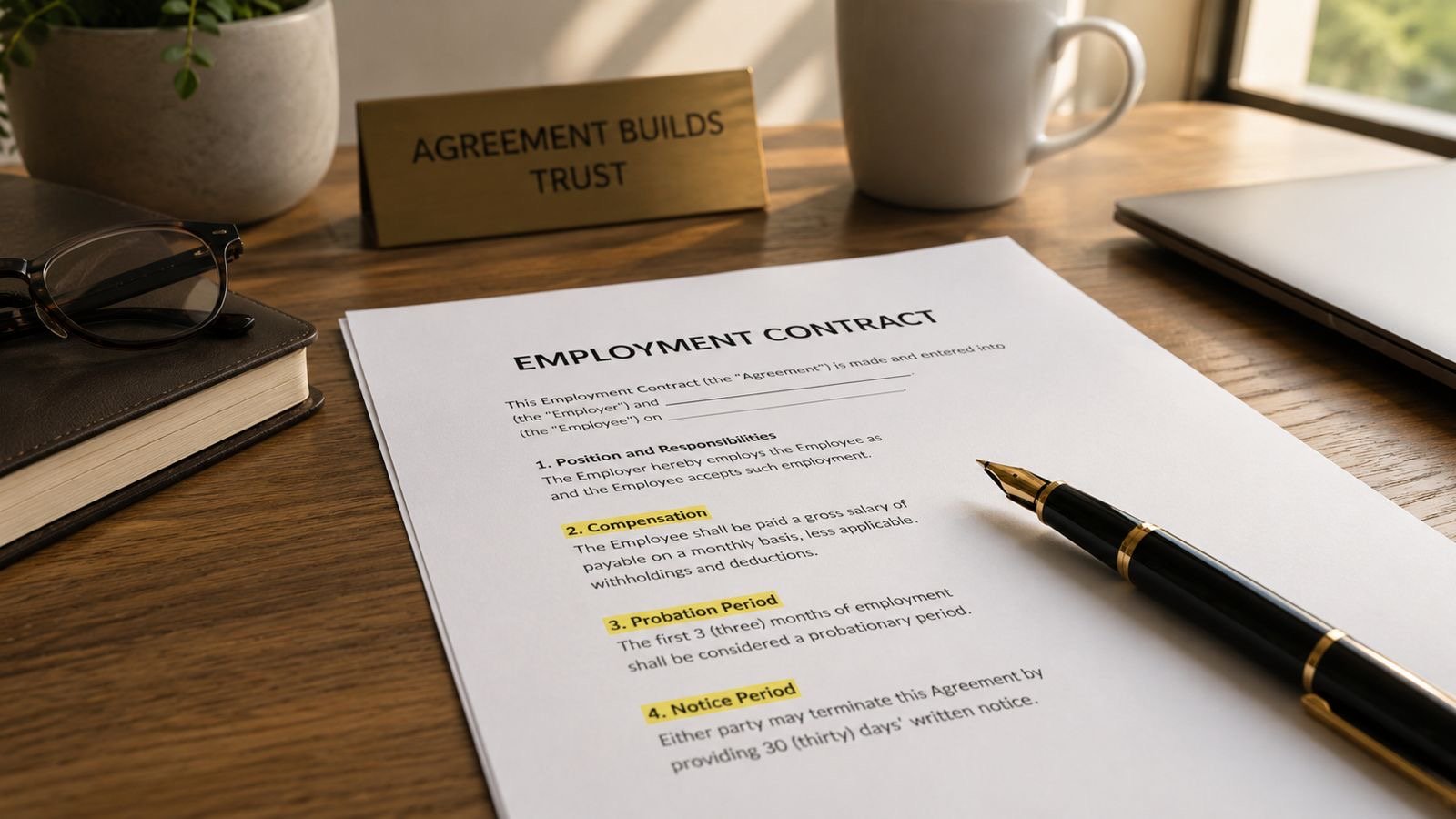
Most of us skim our employment contract, sign the last page, and get on with the excitement of a new job. After weeks of interviews, who wants to sit with a ten-page document full of legal language? But that contract is the single most important piece of paper in your working relationship with a company. It decides your pay, your notice period, what happens if things go wrong, and sometimes even what you can and can't do after you leave.
Start With the Basics: Designation, Salary, and CTC Breakup
Your offer letter usually mentions a shiny CTC figure, but the employment contract is where the real numbers live. Check whether your salary is broken down into basic pay, HRA, special allowance, and other components — since this affects your take-home pay, provident fund contribution, and tax liability.
Also confirm your designation and role description match what was discussed during interviews. Companies sometimes hire for one role and later shift responsibilities under a vague job title. Having your core duties written down clearly protects you from scope creep that's difficult to push back on later.
The Probation Period Clause
Almost every Indian employment contract includes a probation period, typically three to six months. During this time, notice periods are shorter and it's easier for either party to end the employment. Read this section carefully:
- What is the exact duration?
- What happens if the company extends probation without explanation?
- Does confirmation happen automatically or only after a formal review?
Some contracts leave probation open-ended, which can leave you in limbo longer than expected — without the full benefits of a confirmed employee.
Notice Period and Termination Terms
This is the clause people regret not reading closely, usually right when they're trying to switch jobs quickly. Indian companies commonly set notice periods between thirty and ninety days, and some allow "buyout" options where you pay a certain amount to leave early.
Check whether the notice period is the same for both you and the employer — a mismatch is a red flag worth negotiating. Also examine the termination clause: does it clearly state the grounds for termination, and is there any mention of severance pay, or is the contract silent on the matter?
Working Hours, Leave Policy, and Overtime
Under the Shops and Establishments Act and applicable labour laws, your contract should specify working hours, weekly offs, and leave entitlement — casual leave, sick leave, and earned leave. If your role frequently demands extra hours, check whether the contract addresses overtime compensation or compensatory time off.
Intellectual Property Assignment
If your work involves creating anything — code, designs, content, research, or inventions — check the IP clause carefully. Most contracts state that anything created during employment, using company resources or time, belongs to the employer. That's fairly standard.
What you should watch for is overly broad language that claims ownership of work you do entirely outside office hours, on your own equipment, unrelated to your job function. If such a clause exists and feels excessive, it's reasonable to raise it before signing.
Benefits, Bonuses, and Variable Pay
If your offer includes a performance bonus, variable pay component, or stock options, check how these are structured in the contract — not just the offer letter. Look for:
- Eligibility criteria and payout timelines
- What happens to unvested benefits if you resign or are terminated before a certain date
Verbal promises made during negotiation carry little weight if they aren't reflected in the written agreement. If it isn't in the contract, it doesn't reliably exist.
A Few Practical Habits Before You Sign
- Ask for a soft copy of the contract in advance rather than signing on the spot at the office.
- Take a day or two to read it properly — don't let anyone rush you.
- Ask HR for clarification on any clause that feels vague or one-sided.
- If something discussed verbally isn't documented — a promised role change, a remote work arrangement, a review date — ask that it be added as an addendum before you sign.
Contracts are negotiable more often than employees assume, especially at the offer stage. The worst that can happen is HR says no.
Final Thoughts
An employment contract isn't just paperwork standing between you and your first paycheck. It's the document that will matter most if things ever go sideways — a delayed salary, an unexpected termination, a disagreement over dues. Reading it properly at the start saves a lot of stress later.
When in doubt about a clause — especially anything involving non-compete terms, IP ownership, or termination — it's worth a quick consultation with a lawyer rather than relying on assumptions about what's "standard."