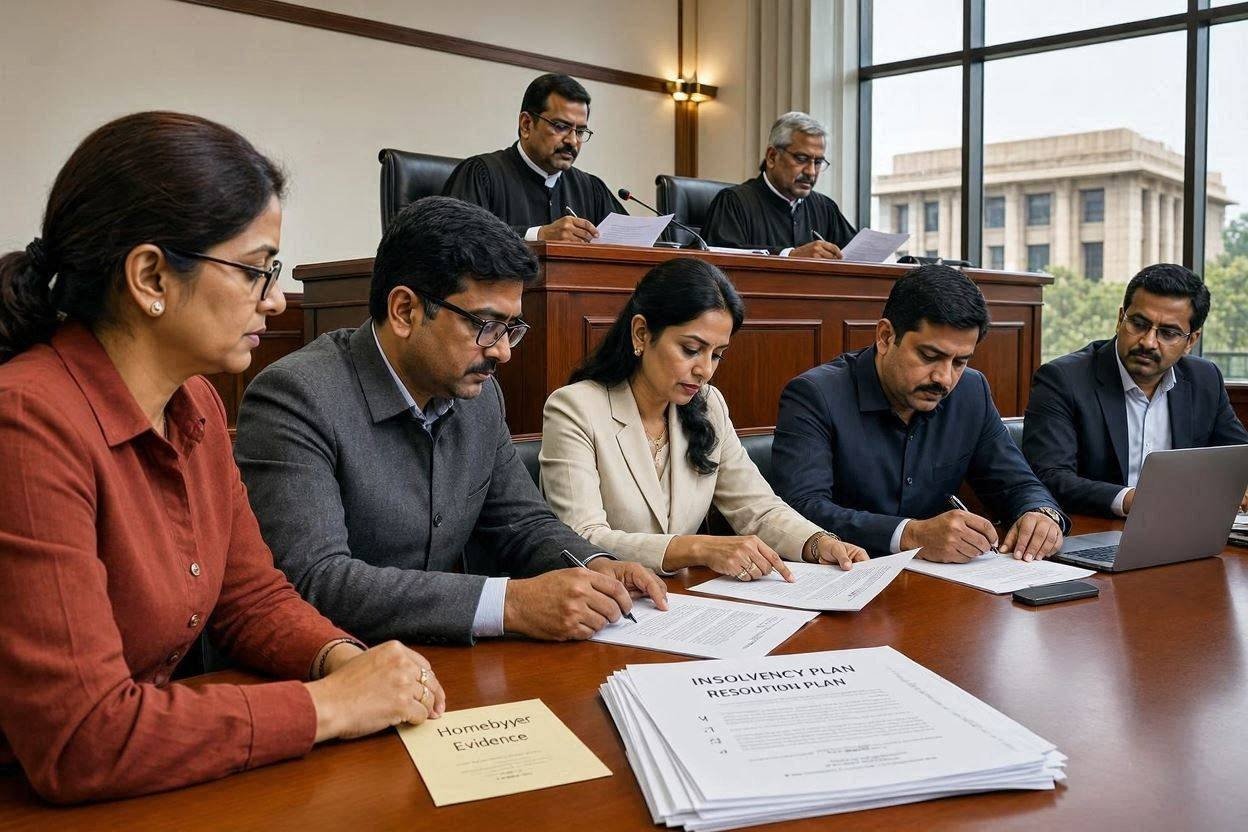
The District Consumer Disputes Redressal Commission-I (North District), Delhi, has ruled that its earlier refund order in favour of homebuyers cannot be executed after the implementation of an NCLT-approved resolution plan for the housing project.
The case involved homebuyers Rohit Lal and another, who had booked a residential flat in the "Cosmos Express 99" project developed by Cosmos Infra Engineering (India) Pvt. Ltd. under a Flat Buyer Agreement executed in 2016. Alleging delay in possession, the buyers approached the Consumer Commission seeking refund, interest, and compensation.
On November 22, 2024, the Commission allowed the complaint and directed the developer to refund the amount paid along with applicable interest and compensation. Subsequently, the developer filed a review application, informing the Commission that the National Company Law Tribunal (NCLT) had approved and implemented "Plan-A" for completion of the project during the pendency of the consumer proceedings.
The developer argued that the NCLT-approved plan was binding on all stakeholders, including homebuyers, and that these developments were not brought to the Commission's notice before the refund order was passed.
The homebuyers opposed the review application, contending that the Consumer Commission lacked authority to recall its final order and that remedies under the Consumer Protection Act are additional statutory remedies.
After considering the review and execution applications together, the Commission observed that neither side had informed it of the NCLT proceedings when the matter was reserved for judgment. It noted that had these developments been disclosed, the refund order would not have been passed.
The Commission further held that the NCLT-approved Plan-A had become binding on all homebuyers and had already been implemented. Consequently, the earlier refund order stood extinguished and had become "non-est" in law.
Invoking the Doctrine of Impossibility, the Commission concluded that executing the refund order would directly conflict with the binding insolvency resolution framework approved by the NCLT. Accordingly, it allowed the review application, declared the refund order non-est and incapable of execution, and dismissed the execution proceedings.
The ruling highlights the supremacy of implemented insolvency resolution plans and underscores the need for consumer forums to consider ongoing insolvency proceedings while adjudicating disputes involving real estate projects.